

Powerful effects of journaling: How can it help you in your journey of healing, despite dealing with severe anxiety! Probable answers to challenging mental health condition!
Journaling has long been recognized as a therapeutic tool for managing emotions, reducing stress, and fostering self-awareness. For individuals experiencing severe anxiety, writing in a journal can serve as an effective coping mechanism. This article explores how journaling aids in the healing process, supports mental health, and provides practical strategies for incorporating journaling into a daily routine.
How Journaling Supports Healing
- Emotional Release and Processing
- Writing about anxious thoughts helps externalize emotions rather than suppress them.
- Journaling allows individuals to identify patterns and triggers that contribute to their anxiety.
- Expressive writing can lead to emotional catharsis, helping to reduce stress and tension.
- Cognitive Restructuring
- Journaling provides an opportunity to challenge negative thoughts and replace them with more rational perspectives.
- It supports cognitive-behavioral therapy (CBT) techniques by helping individuals recognize cognitive distortions.
- Through self-reflection, individuals develop greater self-awareness and resilience.
- Mindfulness and Present-Moment Awareness
- Journaling encourages mindfulness by focusing on the present experience rather than ruminating on the past or worrying about the future.
- Keeping a gratitude journal shifts focus from anxiety-provoking thoughts to positive aspects of life.
- Writing about small victories fosters a sense of accomplishment and self-compassion.
- Tracking Progress and Growth
- Reviewing past journal entries reveals patterns of progress in managing anxiety.
- Seeing improvements over time builds confidence in one’s ability to cope.
- Journaling acts as a form of self-accountability, reinforcing positive habits and coping strategies.
- Reducing the Impact of Trauma and Stress
- Expressive writing has been shown to help individuals process traumatic experiences in a structured manner.
- Writing about difficult emotions provides a sense of control over anxiety-inducing situations.
- Studies indicate that journaling can lower cortisol levels and improve emotional regulation.
Practical Journaling Techniques for Anxiety Relief
- Stream-of-Consciousness Writing
- Write without judgment or structure, allowing thoughts to flow freely.
- Set a timer for 10-15 minutes and write whatever comes to mind.
- Gratitude Journaling
- List three things you’re grateful for each day.
- Reflect on how these positive aspects contribute to your well-being.
- Cognitive Behavioral Journaling
- Identify an anxious thought, analyze its accuracy, and reframe it with a more balanced perspective.
- Use prompts such as “What evidence supports this fear? What is an alternative way to view this situation?”
- Letter Writing
- Write a letter to your future self about how you overcame challenges.
- Compose a letter to your anxiety, acknowledging its presence but asserting control over your responses.
- Mood and Thought Tracking
- Keep a daily log of your mood, triggers, and coping mechanisms.
- Identify patterns in thought processes and emotional responses.
Probable Answers to Challenging Mental Health Conditions related to anxiety base psychological distress.
- What if journaling increases my anxiety?
- If writing about distressing events feels overwhelming, try guided prompts or limit writing sessions to short, manageable durations.
- Focus on positive aspects such as gratitude, solutions, and strengths rather than only venting.
- How do I stay consistent with journaling?
- Set aside a specific time daily, such as before bed or after waking up.
- Use a structured format, like bullet points, if long-form writing feels daunting.
- Can journaling replace therapy?
- While journaling is a valuable self-help tool, it should complement professional therapy rather than replace it.
- Sharing journal entries with a therapist can provide deeper insights and guided support.
- How long will it take of me journaling before I see a positive difference with my anxiety?
- Journaling alone may not be the ultimate solution to overcoming anxiety. Managing anxiety effectively requires a combination of therapy, time, and personal effort. Each individual responds differently to the benefits of journaling—some may notice improvements within six months, while others may take longer. There is no definitive medical evidence indicating a specific timeframe for complete recovery from anxiety-related challenges.
Journaling is a powerful practice that fosters healing and resilience, especially for those struggling with severe anxiety. By providing a safe space for emotional expression, cognitive restructuring, and mindfulness, journaling can transform one’s mental health journey. Whether used alongside therapy or as a personal tool for self-growth, its benefits are profound and long-lasting.


dr.dan
Related Posts
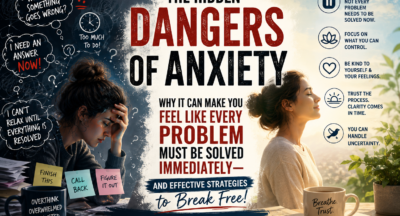
The Hidden Dangers of Anxiety: Why It Can Make You Feel Like Every Problem Must Be Solved Immediately—And Effective Strategies to Break Free From the Cycle
Anxiety is often described as worry, fear, nervousness, or a feeling that...

The many faces of Trauma: The many strategies in building coping skills for trauma triggers. Not ONE solution fits all!
Trauma can have a profound and lasting impact on an individual’s mental,...

Powerful effects of journaling: How can it help you in your journey of healing, despite dealing with severe anxiety! Probable answers to challenging mental health condition!
Journaling has long been recognized as a therapeutic tool for managing...

Facts About Anxiety Disorders That You Need To Know
Anxienty disorders is something typical to feel when somebody faces what is...