

Who is the real ennemy? The Media or Ourselves: What Therapy approaches is effective for media-induced panic. Deciphering the mental health code.
In today’s hyperconnected world, the media has become a powerful force—shaping narratives, molding opinions, and influencing emotions. News cycles, social media platforms, and online commentary often bombard us with sensationalized stories, crises, and fear-driven headlines. But the pressing question is: Who is the real enemy here—the media, or our own unguarded minds?
The answer is complex. While the media plays a role in amplifying fear, panic often takes root within us—through the way we process, internalize, and respond to this information. To understand how to protect our mental well-being in this environment, we must first understand the psychological dynamics at play.
1. How Media Fuels Panic
Media thrives on engagement. Headlines are designed to trigger emotional responses—fear, anger, shock, and urgency—because these feelings keep us scrolling and clicking. Constant exposure to alarming content activates the brain’s amygdala, the center responsible for threat detection. This can lead to:
- Heightened anxiety and hyper-vigilance
- Emotional exhaustion from constant crisis alerts
- Difficulty distinguishing fact from sensationalism
- A sense of helplessness or impending doom
This state of perceived danger is powerful. Even when the threat is not directly affecting us, our nervous system reacts as if it were—leading to a cycle of panic and overconsumption.
2. Our Role in the Cycle: The Inner Enemy
While media triggers the response, we often unconsciously feed the cycle. Doomscrolling, compulsive checking of news updates, and participating in emotionally charged online debates keep us trapped in a loop of fear. Our cognitive biases—especially negativity bias—make us more likely to focus on alarming information than on neutral or positive content.
This internalization turns external noise into internal chaos. We begin to lose control of our thought processes, allowing fear narratives to shape our worldview. In essence, the real enemy is not only the external message but also how we interpret, amplify, and react to it.
3. Therapeutic Approaches to Media-Induced Panic
Fortunately, several therapeutic approaches can help break this cycle and restore emotional balance:
a. Cognitive Behavioral Therapy (CBT)
CBT helps individuals identify distorted thinking patterns triggered by media exposure. By challenging catastrophic thoughts and reframing narratives, people learn to differentiate between actual threats and exaggerated perceptions.
b. Mindfulness-Based Stress Reduction (MBSR)
Mindfulness practices bring awareness to the present moment, reducing emotional reactivity to sensationalized news. This approach helps individuals observe information without being consumed by it.
c. Psychoeducation and Media Literacy
Therapists often incorporate psychoeducation to teach clients how media operates, why sensationalism sells, and how algorithms influence what we see. Understanding these mechanisms helps individuals detach emotionally from manipulative content.
d. Digital Detox and Exposure Control
Just as exposure therapy can help reduce phobias, intentional media breaks and boundaries help retrain the brain to not rely on constant news input for safety. Scheduling “media-free” times can significantly lower anxiety levels.
e. Somatic and Nervous System Regulation Techniques
Media panic is not just cognitive—it’s physiological. Techniques like deep breathing, grounding exercises, and movement help calm the body’s fight-or-flight response, allowing clearer thinking.
4. Deciphering the Mental Health Code
The key to managing media-induced panic isn’t about shutting out the world entirely—it’s about reclaiming agency. We cannot always control what the media shares, but we can control how we respond.
- We choose how much to consume.
- We decide which narratives to believe.
- We can build psychological tools to remain grounded.
The real enemy, then, isn’t purely the media—it’s unexamined reactivity. By understanding our mental and emotional mechanisms, we break free from panic-driven loops.
Reclaiming your inner peace by understanding what is at play here.
The world is often loud, and fear is a powerful tool used to capture attention. But your peace of mind is not something to be bought or sold. By strengthening mental health strategies, developing media literacy, and seeking therapeutic support, we can build resilience that stands firm against external chaos. It’s essential to question information thoughtfully and distinguish fact from sensationalism. History has shown that during times of crisis, narratives can become polarized, and misinformation can spread quickly. Rather than accepting everything at face value, critical thinking, credible research, and calm reflection allow us to make informed decisions. Maintaining clarity of thought is one of the strongest defenses against fear-driven narratives.
The true power lies not in what is broadcasted—but in how we choose to interpret and respond.
Learn More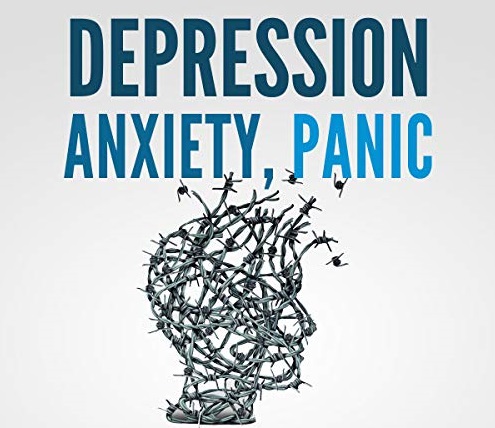
The Side Effect of Depression: How Isolation Exacerbates the Pain—And How Therapy Can Guide You Out of the Vortex
Depression is not just a mood—it’s a powerful force that can alter how we see ourselves, our future, and the world around us. While its symptoms can vary, one common thread binds most experiences of depression: the tendency to isolate.
But here’s the hard truth—isolation is not relief. It’s reinforcement. And while pulling away may feel like a way to survive, it can quietly drag you deeper into the very thing you’re trying to escape.
Let’s dive into how isolation worsens depression—and more importantly, how psychotherapy can help you break free.
🧠 The Link Between Depression and Isolation
When you’re depressed, even the simplest social interaction can feel exhausting. You may tell yourself:
- “They won’t understand.”
- “I don’t want to be a burden.”
- “It’s better if I’m alone.”
These thoughts are not signs of weakness; they’re symptoms of the illness itself. But isolation is like turning down the lights in an already dark room. It deepens loneliness, reduces stimulation, and cuts off opportunities for connection and hope.
Studies show that social withdrawal can intensify feelings of worthlessness, sadness, and despair. It also removes the external feedback we often need to challenge the lies depression tells us about ourselves.
💬 The Vortex of Misery—Why It Feels Impossible to Climb Out
Depression isn’t just sadness. It’s a fog of fatigue, self-doubt, and emotional numbness. Over time, isolation can create a feedback loop:
- You feel low, so you withdraw.
- The lack of connection deepens the low mood.
- You interpret the growing distance as proof you’re unworthy.
- Repeat.
This cycle can feel like a vortex—spinning faster the longer it’s left unaddressed. But here’s where hope begins: therapy.
💡 How Therapy Can Help You Step Out of Isolation
Therapy isn’t just about talking—it’s about transforming. With the right approach, it helps you reconnect with yourself, others, and your sense of purpose.
Here are some modalities proven to help treat depression and the isolation it often brings:
1. Cognitive Behavioral Therapy (CBT)
CBT helps identify and challenge the negative thought patterns that fuel both depression and isolation. You learn how to:
- Recognize distorted thinking (“No one cares about me.”)
- Replace it with more balanced thoughts (“Some people do care, even if I don’t feel it right now.”)
- Practice behaviors that build connection, even in small steps
Why it works: CBT is solution-focused and teaches practical tools to fight the urge to withdraw.
2. Interpersonal Therapy (IPT)
Since isolation directly impacts relationships, IPT focuses on improving communication and resolving social conflicts. It addresses:
- Grief or loss
- Role transitions (divorce, job loss)
- Interpersonal disputes
- Social skill deficits
Why it works: It targets the very area depression tends to destroy—your human connections.
3. Mindfulness-Based Cognitive Therapy (MBCT)
This approach blends cognitive therapy with mindfulness practices to help you stay present and prevent relapse.
You learn how to:
- Observe your thoughts without judgment
- Ground yourself when the mind spirals
- Break the autopilot mode of depressive thinking
Why it works: MBCT gives you space between your emotions and your reactions.
4. Psychodynamic Therapy
For those who want to explore the deeper roots of their depression—such as childhood wounds or repressed feelings—psychodynamic therapy offers profound insight.
Why it works: It allows healing at the source, not just the surface.
✨ Your Journey Starts With One Step
Here’s what depression doesn’t want you to know: You are not alone. You never were.
There’s always a bridge out of the vortex—but sometimes, it takes the steady hand of a therapist to guide you toward it.
Isolation may whisper that hiding is safer. But connection is where healing begins.
You don’t have to climb out all at once. You only need the courage to start.
And therapy? It’s not the end of the road.
It’s the beginning of your return to life.
🗣 Words of wisdom: From Isolation to Illumination
If you’ve been battling depression in silence, now is the time to break that silence—with strength, not shame. Reach out. Invest in your healing. Let therapy be your light out of the dark.
You are worth the effort.
You are worthy of connection.
And yes—you are absolutely capable of climbing out of that vortex.