
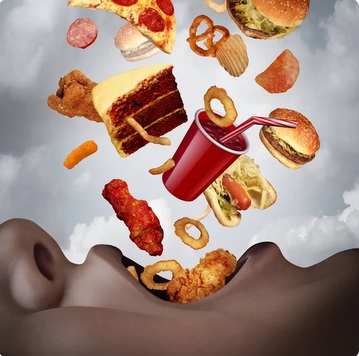
Why do some people live to eat while others, eat to live? The intricacies of food addiction.

There are many food lovers out there enjoying a good meal with friends, appreciating the culinary delicacies that Michelin type restaurants offers while charging exuberant fees for their 1/4 ounce steak and slice of potatoe. However, others would prefer a one dollar meal at the local Mc Donalds and feel satisfied without breaking the bank. The live to eat vs eat to live has become and obsession and while many do their best to keep a healthy lifestyle, some may take it to the extreme and fall under the spell of binge eating and morbid obesity.
So why are some so prone to become addicted to food? Plenty of eating disorders are plaguing our country and many will find comfort in food during moment of crisis while others will find food to be repugnant. Are our brains wired differently? Is Anorexia or Bulimia Nevrosa happens to particular people in our society vs those who do not mind distorting their bodies when gaining a considerable amount of weight.
Let’s first begin with food addiction.
Food addiction can develop for a variety of reasons, including biological, psychological, and environmental factors. Here are some of the possible ways food addiction can start:
- Genetics: Studies have shown that genetics can play a role in the development of addiction, including food addiction. Some people may have a genetic predisposition to addiction, making them more susceptible to developing an addiction to food.
- Brain chemistry: Certain foods can trigger the release of dopamine, a neurotransmitter that makes us feel good. Over time, our brains can become addicted to this dopamine release, leading to cravings and compulsive eating.
- Emotional factors: Some people may use food as a coping mechanism to deal with negative emotions such as stress, anxiety, or depression. Over time, this can lead to a pattern of using food to self-soothe, which can turn into an addiction.
- Environmental factors: Our environment can also play a role in the development of food addiction. For example, easy access to high-calorie, high-fat foods can make it harder to resist temptation and can contribute to the development of addiction.
- Dieting: Ironically, dieting can sometimes lead to food addiction. Restrictive diets can create a cycle of deprivation and binge-eating, which can lead to an addiction to food.
The difference between those who live to eat and those who eat to live can be attributed to a combination of biological, psychological, and cultural factors.
Biologically, some people may have a higher sensitivity to the taste and texture of food, making the experience of eating more pleasurable for them. They may also have a more active appetite regulation system, which can lead to stronger cravings for food.
Psychologically, some people may use food as a source of comfort or emotional regulation. They may eat in response to stress, anxiety, or other negative emotions, which can create a pattern of using food as a coping mechanism.
Culturally, food can play a central role in socializing and celebrations. In some cultures, food is seen as a way to connect with others and share experiences. This can create a strong emotional attachment to food and make it more difficult to resist cravings.
On the other hand, some people may view food purely as a source of sustenance and have less emotional attachment to it. They may be more focused on eating healthy foods to fuel their bodies and maintain their health.
It’s important to note that there is no right or wrong way to approach food. However, it’s important to maintain a healthy relationship with food and avoid using it as a coping mechanism or source of emotional regulation.
Overall, food addiction is a complex condition that can have multiple contributing factors. If you suspect that you or someone you know may be struggling with food addiction, it’s important to seek professional help. There is always a way to reverse addiction by replacing old bad habits with healthy ones. Yes, it will take some time, hard work and determination to make the necessary changes needed to live a healthier life. Remember, no one will make these mindset changes as it is your life, so take the latter by the horn and get active so you can live a long and prosper life.

dr.dan
Related Posts
Anxiety and dental care: The double-edge sword between optimal oral health and mental trauma
The connection between anxiety and oral care is a widespread phenomenon...

The Many Facets of Anxiety: How It Manifests as Irritability or Anger and Managing Them for a Happier, Serene Life
Anxiety is a complex and often misunderstood emotion. While most people...

Avoiding these narcissistic parenting styles or your children may follow similar narcissistic behaviors. Some hope in sight.
To prevent your children from adopting narcissistic behaviors, it is crucial...
Facts About Anxiety Disorders That You Need To Know
Anxienty disorders is something typical to feel when somebody faces what is...