
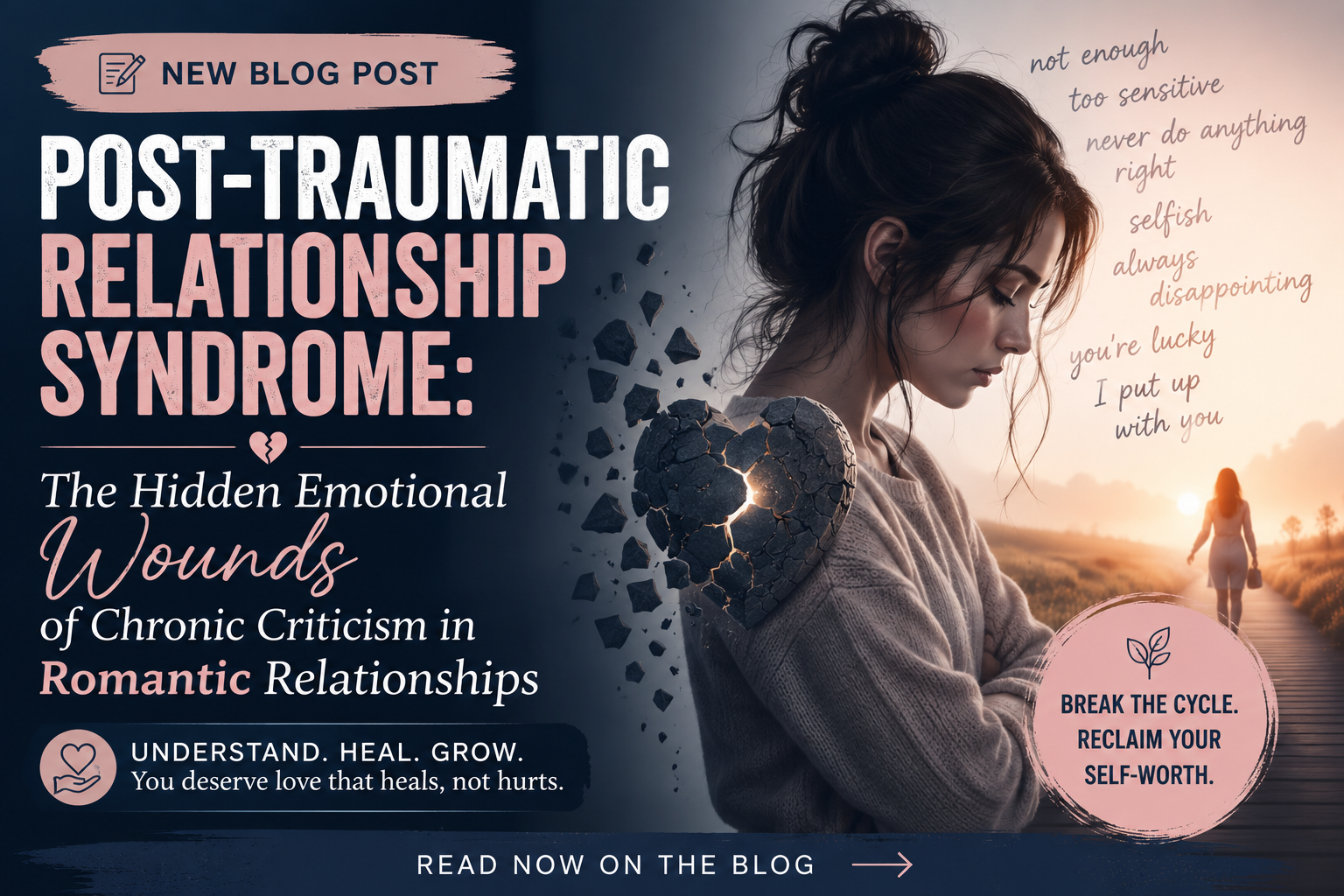
Post-Traumatic Relationship Syndrome: The Hidden Emotional Wounds of Chronic Criticism in Romantic Relationships
Romantic relationships have the power to enrich our lives, strengthen our confidence, and provide a sense of belonging and emotional security. Healthy relationships often become a safe haven where individuals feel accepted, understood, and valued. Unfortunately, not all relationships offer this emotional safety. Some partnerships are characterized by chronic criticism, judgment, emotional invalidation, and ongoing fault-finding. Over time, these experiences can leave deep emotional scars that continue to affect individuals long after the relationship has ended.
Although Post-Traumatic Relationship Syndrome (PTRS) is not currently recognized as an official diagnosis in the Diagnostic and Statistical Manual of Mental Disorders (DSM-5), mental health professionals increasingly recognize that traumatic relationship experiences can produce symptoms that closely resemble those found in trauma-related disorders. Individuals who have endured prolonged emotional criticism, rejection, manipulation, or psychological abuse often carry these wounds into future relationships, affecting their ability to trust, connect, and feel emotionally secure.
One of the most damaging experiences within an intimate relationship is persistent criticism. Occasional constructive feedback is normal and can even help relationships grow. However, when criticism becomes constant, personal, and emotionally degrading, it can gradually erode an individual’s sense of self-worth. Instead of feeling loved and accepted, the person begins to feel defective, inadequate, and perpetually judged.
Human beings have a fundamental psychological need for acceptance and validation from those closest to them. Romantic partners often become our primary emotional mirrors, helping shape how we see ourselves. When a partner repeatedly communicates, either directly or indirectly, that we are not good enough, not attractive enough, not successful enough, or not meeting expectations, these messages can become internalized. Over time, the individual may begin to adopt these criticisms as personal truths.
The emotional consequences of chronic criticism are often profound. Individuals may experience anxiety, depression, lowered self-esteem, emotional withdrawal, and increased sensitivity to rejection. Many report feeling as though they are constantly walking on eggshells, carefully monitoring their words and behaviors to avoid triggering another negative reaction from their partner. This state of hypervigilance can become exhausting and emotionally debilitating.
The brain itself may begin adapting to this environment of perceived emotional threat. Research on emotional trauma suggests that repeated exposure to criticism and rejection can activate the body’s stress response system. When individuals repeatedly anticipate negative feedback, their nervous system may remain in a heightened state of alertness. Over time, this chronic activation can affect mood regulation, emotional resilience, concentration, sleep quality, and overall well-being.
What makes Post-Traumatic Relationship Syndrome particularly challenging is that the emotional wounds often persist long after the relationship ends. Many survivors enter new relationships carrying invisible baggage from their previous experiences. Even when paired with a supportive and loving partner, they may struggle to believe compliments, trust expressions of affection, or feel secure in the relationship.
A common symptom involves hypersensitivity to perceived criticism. Innocent comments that would not bother others may trigger strong emotional reactions because they unconsciously remind the individual of past experiences. A simple suggestion, disagreement, or observation may be interpreted as evidence of rejection or disapproval. The individual may find themselves becoming defensive, anxious, or emotionally overwhelmed without fully understanding why.
Trust can also become significantly impaired. After spending years with a critical partner, many individuals develop the belief that love is conditional and that acceptance must be earned through perfection. As a result, they may constantly seek reassurance, fear abandonment, or engage in people-pleasing behaviors to avoid conflict. Others may take the opposite approach, building emotional walls and maintaining distance to protect themselves from future hurt.
Another common consequence is the development of negative self-talk. The critical voice of the former partner may become internalized, continuing to influence thoughts and beliefs long after the relationship has ended. Individuals may find themselves repeating messages such as “I’m not good enough,” “I always mess things up,” or “Nobody will truly love me.” These beliefs can become self-fulfilling prophecies, influencing relationship choices and behaviors.
Some individuals unconsciously recreate familiar relationship dynamics because the critical environment has become psychologically familiar. They may be drawn to partners who exhibit similar traits to previous partners, perpetuating a cycle of emotional pain. Others may sabotage healthy relationships because emotional safety feels unfamiliar or even uncomfortable.
The effects of Post-Traumatic Relationship Syndrome extend beyond romantic partnerships. Friendships, family relationships, professional interactions, and social confidence can all be impacted. Individuals may become overly sensitive to feedback, avoid vulnerability, or struggle with feelings of inadequacy in multiple areas of life.
Recovery is possible, but healing often requires intentional effort and self-compassion. The first step involves recognizing that the emotional wounds are real. Many survivors minimize their experiences because they were not physically abused. However, emotional trauma can be just as damaging as physical trauma and deserves acknowledgment and attention.
Therapy can play an important role in the healing process. Through counseling, individuals can identify distorted beliefs, process unresolved emotional pain, rebuild self-esteem, and develop healthier relationship patterns. Cognitive Behavioral Therapy, trauma-informed therapy, mindfulness practices, and self-compassion interventions have all been shown to help individuals recover from relational trauma.
Learning to challenge negative self-beliefs is another critical aspect of healing. Survivors must gradually separate their authentic identity from the critical messages they absorbed during the relationship. This process involves recognizing strengths, celebrating accomplishments, and replacing self-judgment with self-acceptance.
Healthy relationships can also serve as powerful healing experiences. Supportive partners who communicate with empathy, respect, and emotional consistency help create corrective emotional experiences. Over time, these positive interactions can help rebuild trust and teach the nervous system that not all relationships are sources of danger.
Perhaps the most important lesson for survivors is understanding that another person’s criticism does not define their worth. The opinions, frustrations, and projections of a critical partner often reveal more about the critic than about the person being criticized. Every individual deserves relationships that are built on respect, encouragement, understanding, and emotional safety.
Post-Traumatic Relationship Syndrome reminds us that words matter. Repeated criticism can leave lasting emotional scars that extend far beyond the end of a relationship. Yet with awareness, support, and intentional healing, individuals can overcome these wounds and create healthier, more fulfilling connections. The past may shape us, but it does not have to define us. Healing is possible, self-worth can be restored, and love can once again become a source of comfort rather than fear.
Learn More