
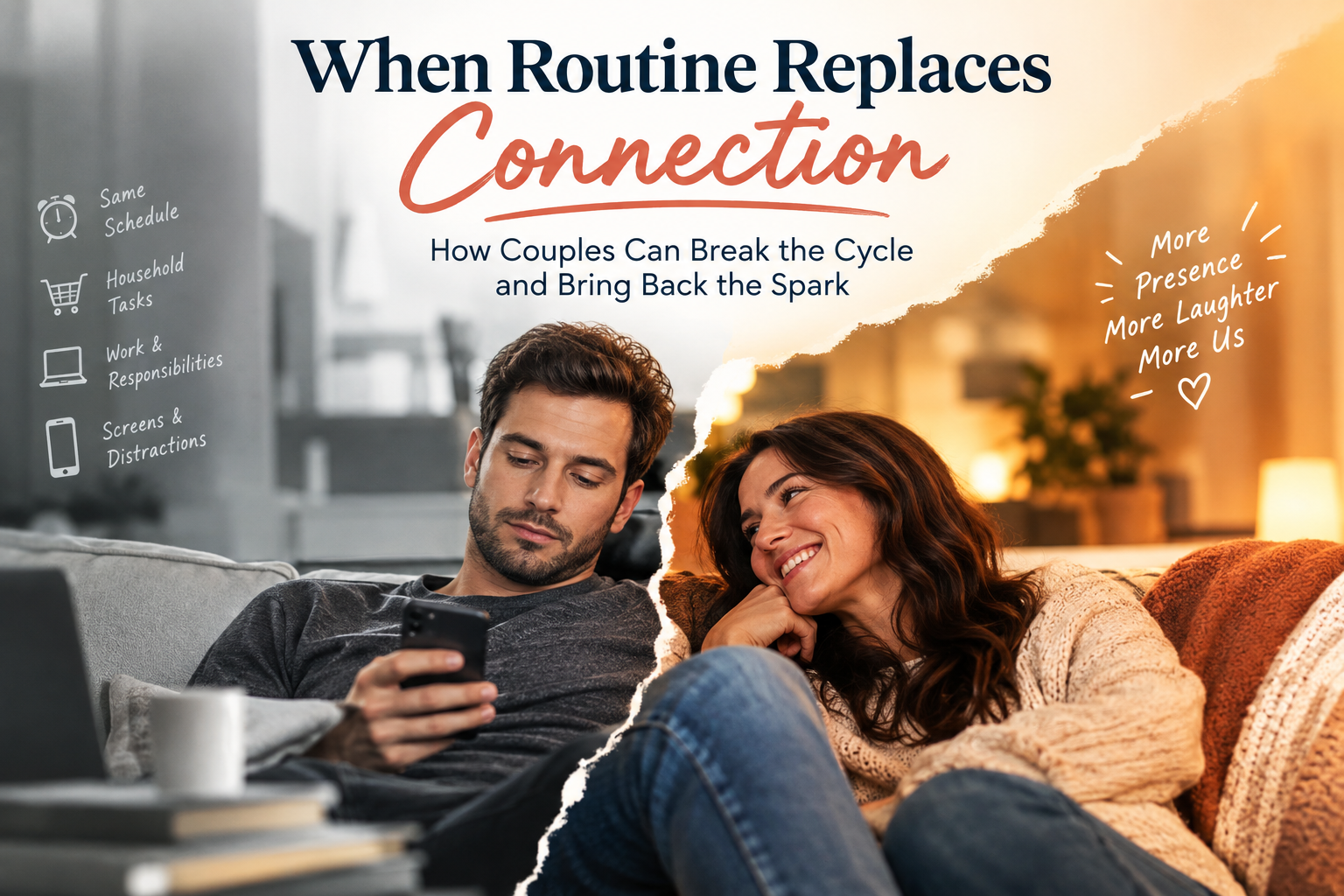
When Routine Replaces Connection: How Couples Can Break the Cycle and Bring Back the Spark
There is something comforting about routine in a relationship. Knowing what your partner likes for breakfast, who usually makes dinner, what time they come home, how weekends typically unfold, and even which side of the bed they sleep on can create a sense of stability and security. Routine can make life easier, especially when couples are balancing careers, children, finances, household responsibilities, and countless other demands. But there is a point at which a healthy routine can quietly become emotional autopilot. The couple may still live together, eat together, sleep beside each other, and say “I love you,” yet somehow feel increasingly disconnected. Nothing dramatic has necessarily happened. There may be no major argument, betrayal, or obvious crisis. Instead, the relationship can slowly become predictable to the point where partners stop actively discovering each other. They know the schedule, but they may no longer know what is happening inside each other.
This is one of the paradoxes of long-term relationships: the familiarity that initially creates comfort can eventually reduce curiosity. In the beginning of a relationship, partners naturally pay close attention to one another. They want to know what the other person is thinking, what makes them laugh, what they dream about, what scares them, what they find attractive, and what they want their future to look like. Novelty creates excitement, anticipation, and emotional engagement. As the relationship becomes established, however, that intentional attention can diminish. Conversations may become primarily logistical: “What time are you coming home?” “Did you pay the bill?” “What are we doing this weekend?” “Can you pick something up from the store?” Communication continues, but emotional connection can gradually disappear from the conversation.
The problem is not necessarily routine itself. In fact, healthy relationships require some predictability. The problem occurs when routine replaces intentional connection. When almost every day begins and ends the same way, couples can begin interacting more like teammates managing a household than romantic partners nurturing an intimate relationship. They may become highly efficient at functioning together while becoming increasingly unfamiliar with each other’s emotional worlds. A couple can therefore be physically close while psychologically distant.
Psychologically, this can happen because the human brain naturally adapts to repeated experiences. Something that once felt exciting can eventually become familiar and require less attention. This process, sometimes described as hedonic adaptation, does not mean that love has disappeared. It means that the emotional intensity associated with something familiar can diminish when there is little novelty, growth, or variation. The first date may have produced anticipation and excitement because everything was new. Years later, sitting across from the same person at the same restaurant every Friday may not generate the same emotional response. The relationship has not necessarily become worse; it may simply need new experiences and renewed attention.
There is another psychological factor that deserves attention: emotional neglect can occur without intentional neglect. A partner does not have to be cruel, dismissive, or abusive to make the other person feel emotionally unseen. Sometimes people become so absorbed in work, parenting, financial responsibilities, technology, or personal stress that they unconsciously stop investing emotional energy in their relationship. They may assume, “My partner knows I love them,” and therefore stop expressing it in meaningful ways. But relationships do not thrive solely on what we feel internally. They thrive on what we consistently communicate and demonstrate.
Over time, a lack of emotional engagement can create a subtle cycle. One partner feels disconnected and begins seeking more attention. The other may interpret those requests as criticism or pressure and withdraw. The first partner then feels even more rejected and increases their attempts to reconnect. The second partner withdraws further. Eventually, both people may conclude that the other has changed, when what has actually changed is the interaction pattern between them. The relationship becomes caught between pursuit and withdrawal, frustration and defensiveness, longing and avoidance.
Routine can also affect intimacy. Sexual and emotional intimacy often require more than physical proximity. They require attention, anticipation, vulnerability, playfulness, and psychological presence. When couples spend most of their time discussing responsibilities, intimacy can begin to feel like another task on the schedule rather than a meaningful expression of connection. Partners may still love one another deeply but feel less desire because they rarely create the emotional environment in which desire can flourish. Desire often benefits from anticipation, individuality, novelty, and feeling genuinely seen by the other person.
Technology can intensify this problem. Two people can sit on the same couch for an entire evening while mentally living in completely different worlds through their phones. Social media, streaming services, work emails, gaming, and constant notifications can fragment attention. When this becomes habitual, couples may unintentionally communicate a powerful message: “What is happening on my screen is more deserving of my attention than what is happening between us.” Even when neither partner consciously means this, repeated divided attention can create emotional distance.
Another important issue is that many couples confuse the absence of conflict with the presence of connection. They may say, “We rarely argue, so our relationship must be healthy.” But emotional intimacy is not simply the absence of fighting. A couple can have very little conflict because they have stopped engaging deeply with each other. They may avoid difficult conversations, stop sharing vulnerable thoughts, or simply coexist peacefully without much emotional interaction. Peace is valuable, but emotional connection requires more than peace. It requires curiosity, affection, vulnerability, appreciation, laughter, meaningful conversation, and shared experiences.
Breaking out of relationship routine therefore begins with recognizing that the goal is not to destroy stability. The goal is to reintroduce intentionality into the stability. Couples do not necessarily need extravagant vacations, expensive dinners, or dramatic romantic gestures. Sometimes the most powerful changes are surprisingly simple. A couple might intentionally have dinner without phones, take a different route during an evening walk, cook something neither person has tried before, revisit the location of their first date, listen to music from an important period in their relationship, or spend an evening asking each other questions they have not discussed in years. The activity itself is often less important than the psychological experience of doing something together with genuine attention.
One particularly effective strategy is to restore curiosity. Never assume that because you have been with someone for years, you already know everything about them. People change. Their priorities evolve. Their fears change. Their ambitions develop. Their definition of happiness may look different at 30 than it does at 40 or 50. Ask your partner what they are currently excited about. Ask what they are worried about. Ask what they would do if money and fear were not obstacles. Ask what they miss about their younger self. Ask what they want the next five years of their life to look like. These questions can transform a routine conversation into an opportunity for rediscovery.
Couples should also deliberately create novel experiences together. Novelty can increase attention because the brain has to process something unfamiliar. You do not have to travel internationally to create novelty. Take a class together. Try a new restaurant. Attend an event you have never experienced. Go somewhere neither of you has visited. Learn a new skill. Exercise together in a different environment. Plan a spontaneous afternoon. Even small changes can interrupt the psychological predictability of everyday life. The purpose is not simply entertainment. Shared novelty creates new memories, new conversations, and new opportunities to see your partner in a different context.
Another powerful strategy is to bring back flirting. Many couples stop flirting once the relationship becomes secure. They may still love each other, but the playful behavior that once created romantic tension gradually disappears. Compliment your partner in a way that goes beyond appearance. Send a playful message during the day. Make eye contact a little longer. Give an unexpected kiss. Tell your partner something you find attractive about them. Create anticipation instead of waiting for intimacy to happen automatically. Romance often survives when couples continue to behave like people who are choosing each other rather than people who simply happen to live together.
Physical affection is equally important. Holding hands, hugging, kissing, sitting close, touching a partner’s shoulder, or giving a spontaneous embrace can communicate safety and affection without requiring a conversation. For many couples, physical touch gradually becomes associated almost exclusively with sexual activity. Reintroducing nonsexual physical affection can help rebuild comfort, warmth, and emotional closeness without creating pressure for sex.
Couples also need to protect quality time rather than simply shared time. Being in the same room is not necessarily quality time. Watching television while scrolling through phones is shared physical space, but it may not create meaningful connection. Quality time requires psychological presence. Even 20 or 30 minutes of focused conversation can be more emotionally nourishing than several hours of distracted coexistence. Put the phones away. Make eye contact. Listen without immediately solving the problem. Ask follow-up questions. Let your partner finish their thoughts. Sometimes what people want most is not advice but the experience of feeling heard.
Gratitude can also change the emotional climate of a relationship. Familiarity has a strange psychological effect: we can become more aware of what is missing than what is present. The things our partner does every day can become invisible because we have become accustomed to them. Intentionally expressing appreciation reverses this process. Instead of assuming your partner knows you appreciate them, say it. Recognize their effort. Thank them for something specific. Tell them what you admire about them. Appreciation is not merely politeness; it can help shift attention toward the positive aspects of the relationship and remind both partners that their efforts matter.
Couples should also learn to distinguish relationship boredom from relationship dissatisfaction. Sometimes the relationship is fundamentally healthy but predictable. In other situations, boredom is a symptom of deeper unresolved problems. If there is persistent resentment, emotional disconnection, unresolved betrayal, chronic criticism, contempt, avoidance, or a significant lack of trust, simply planning more date nights may not solve the underlying issue. Novel experiences can create temporary excitement, but deeper relational wounds require honest communication and, when necessary, professional support.
Communication is therefore essential. Instead of accusing a partner by saying, “You don’t care about me anymore,” a more constructive approach might be, “I miss feeling close to you, and I want us to find our way back to that connection.” The difference is significant. One statement attacks the partner’s character; the other communicates vulnerability and invites collaboration. Healthy communication is not about winning an argument. It is about creating enough emotional safety for two people to tell the truth without immediately becoming enemies.
It is also important for each partner to maintain some individuality. Ironically, complete emotional or behavioral merging can sometimes reduce attraction. Healthy relationships allow two people to remain individuals with their own interests, friendships, goals, passions, and personal growth. When partners continue developing independently, they bring new experiences and perspectives back into the relationship. There is something attractive about discovering that the person you love is still becoming someone new.
Ultimately, bringing back the spark is less about recreating the beginning of the relationship and more about creating a new chapter of the relationship. Couples often make the mistake of trying to become the people they were when they first met. But neither person is the same anymore. The goal should not be to return to the past. It should be to become curious about who you are now and who you can become together.
Love does not necessarily disappear when excitement fades. Sometimes it simply becomes buried underneath responsibilities, repetition, stress, technology, and familiarity. The good news is that connection can often be strengthened when couples begin paying attention again. Ask better questions. Create new experiences. Touch more. Laugh more. Flirt again. Put the phones down. Express appreciation. Talk about dreams instead of only discussing schedules. Make time for each other instead of assuming that time will somehow appear.
A relationship can become comfortable without becoming complacent. It can be predictable without becoming emotionally empty. And it can mature without losing its sense of excitement. The spark is not always something that mysteriously disappears; sometimes it is something that gets neglected. When two people intentionally choose to become curious about each other again, they may discover something even more meaningful than the excitement of a new relationship: the deeper intimacy that comes from continually falling in love with the person your partner is becoming.
Learn More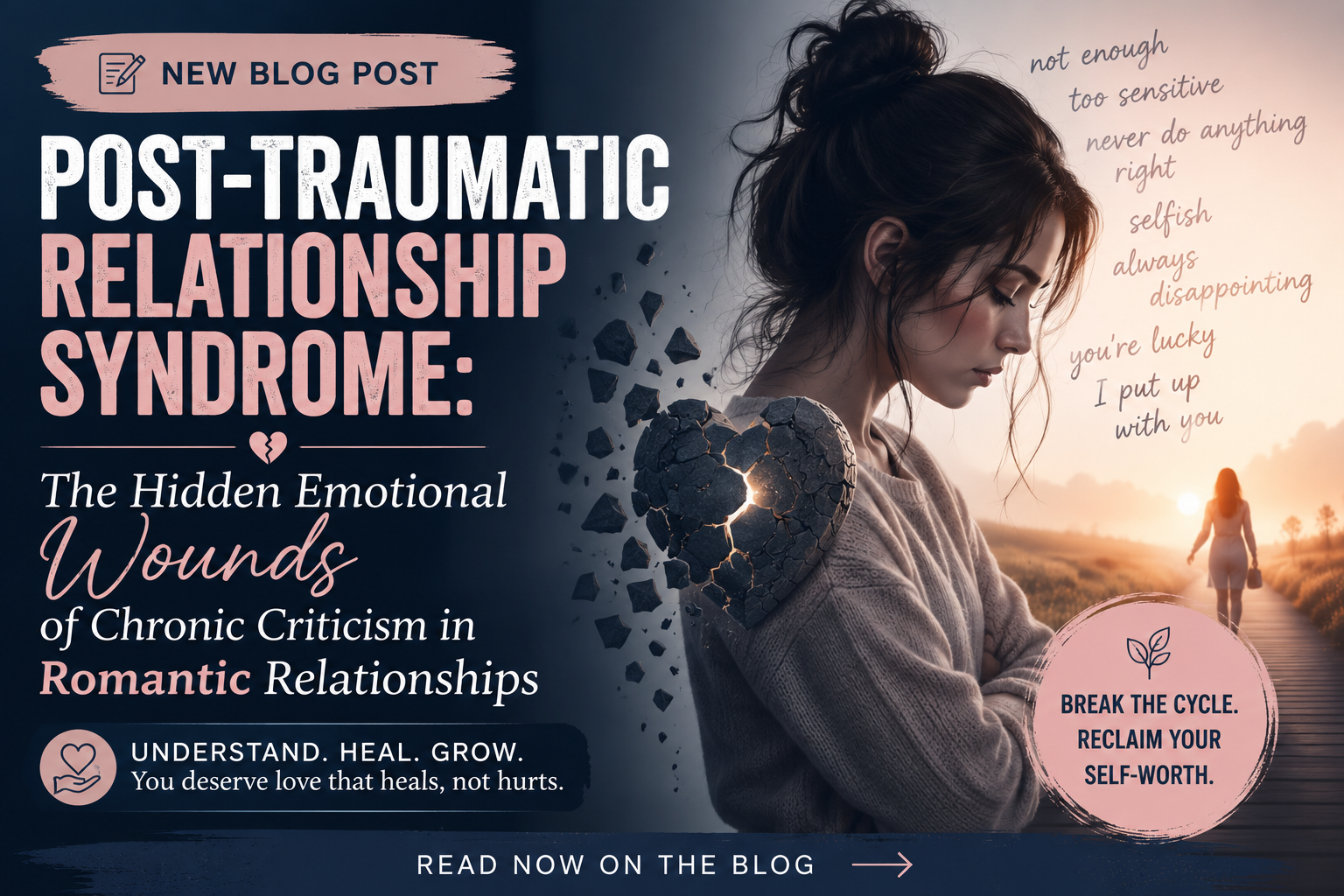
Post-Traumatic Relationship Syndrome: The Hidden Emotional Wounds of Chronic Criticism in Romantic Relationships
Romantic relationships have the power to enrich our lives, strengthen our confidence, and provide a sense of belonging and emotional security. Healthy relationships often become a safe haven where individuals feel accepted, understood, and valued. Unfortunately, not all relationships offer this emotional safety. Some partnerships are characterized by chronic criticism, judgment, emotional invalidation, and ongoing fault-finding. Over time, these experiences can leave deep emotional scars that continue to affect individuals long after the relationship has ended.
Although Post-Traumatic Relationship Syndrome (PTRS) is not currently recognized as an official diagnosis in the Diagnostic and Statistical Manual of Mental Disorders (DSM-5), mental health professionals increasingly recognize that traumatic relationship experiences can produce symptoms that closely resemble those found in trauma-related disorders. Individuals who have endured prolonged emotional criticism, rejection, manipulation, or psychological abuse often carry these wounds into future relationships, affecting their ability to trust, connect, and feel emotionally secure.
One of the most damaging experiences within an intimate relationship is persistent criticism. Occasional constructive feedback is normal and can even help relationships grow. However, when criticism becomes constant, personal, and emotionally degrading, it can gradually erode an individual’s sense of self-worth. Instead of feeling loved and accepted, the person begins to feel defective, inadequate, and perpetually judged.
Human beings have a fundamental psychological need for acceptance and validation from those closest to them. Romantic partners often become our primary emotional mirrors, helping shape how we see ourselves. When a partner repeatedly communicates, either directly or indirectly, that we are not good enough, not attractive enough, not successful enough, or not meeting expectations, these messages can become internalized. Over time, the individual may begin to adopt these criticisms as personal truths.
The emotional consequences of chronic criticism are often profound. Individuals may experience anxiety, depression, lowered self-esteem, emotional withdrawal, and increased sensitivity to rejection. Many report feeling as though they are constantly walking on eggshells, carefully monitoring their words and behaviors to avoid triggering another negative reaction from their partner. This state of hypervigilance can become exhausting and emotionally debilitating.
The brain itself may begin adapting to this environment of perceived emotional threat. Research on emotional trauma suggests that repeated exposure to criticism and rejection can activate the body’s stress response system. When individuals repeatedly anticipate negative feedback, their nervous system may remain in a heightened state of alertness. Over time, this chronic activation can affect mood regulation, emotional resilience, concentration, sleep quality, and overall well-being.
What makes Post-Traumatic Relationship Syndrome particularly challenging is that the emotional wounds often persist long after the relationship ends. Many survivors enter new relationships carrying invisible baggage from their previous experiences. Even when paired with a supportive and loving partner, they may struggle to believe compliments, trust expressions of affection, or feel secure in the relationship.
A common symptom involves hypersensitivity to perceived criticism. Innocent comments that would not bother others may trigger strong emotional reactions because they unconsciously remind the individual of past experiences. A simple suggestion, disagreement, or observation may be interpreted as evidence of rejection or disapproval. The individual may find themselves becoming defensive, anxious, or emotionally overwhelmed without fully understanding why.
Trust can also become significantly impaired. After spending years with a critical partner, many individuals develop the belief that love is conditional and that acceptance must be earned through perfection. As a result, they may constantly seek reassurance, fear abandonment, or engage in people-pleasing behaviors to avoid conflict. Others may take the opposite approach, building emotional walls and maintaining distance to protect themselves from future hurt.
Another common consequence is the development of negative self-talk. The critical voice of the former partner may become internalized, continuing to influence thoughts and beliefs long after the relationship has ended. Individuals may find themselves repeating messages such as “I’m not good enough,” “I always mess things up,” or “Nobody will truly love me.” These beliefs can become self-fulfilling prophecies, influencing relationship choices and behaviors.
Some individuals unconsciously recreate familiar relationship dynamics because the critical environment has become psychologically familiar. They may be drawn to partners who exhibit similar traits to previous partners, perpetuating a cycle of emotional pain. Others may sabotage healthy relationships because emotional safety feels unfamiliar or even uncomfortable.
The effects of Post-Traumatic Relationship Syndrome extend beyond romantic partnerships. Friendships, family relationships, professional interactions, and social confidence can all be impacted. Individuals may become overly sensitive to feedback, avoid vulnerability, or struggle with feelings of inadequacy in multiple areas of life.
Recovery is possible, but healing often requires intentional effort and self-compassion. The first step involves recognizing that the emotional wounds are real. Many survivors minimize their experiences because they were not physically abused. However, emotional trauma can be just as damaging as physical trauma and deserves acknowledgment and attention.
Therapy can play an important role in the healing process. Through counseling, individuals can identify distorted beliefs, process unresolved emotional pain, rebuild self-esteem, and develop healthier relationship patterns. Cognitive Behavioral Therapy, trauma-informed therapy, mindfulness practices, and self-compassion interventions have all been shown to help individuals recover from relational trauma.
Learning to challenge negative self-beliefs is another critical aspect of healing. Survivors must gradually separate their authentic identity from the critical messages they absorbed during the relationship. This process involves recognizing strengths, celebrating accomplishments, and replacing self-judgment with self-acceptance.
Healthy relationships can also serve as powerful healing experiences. Supportive partners who communicate with empathy, respect, and emotional consistency help create corrective emotional experiences. Over time, these positive interactions can help rebuild trust and teach the nervous system that not all relationships are sources of danger.
Perhaps the most important lesson for survivors is understanding that another person’s criticism does not define their worth. The opinions, frustrations, and projections of a critical partner often reveal more about the critic than about the person being criticized. Every individual deserves relationships that are built on respect, encouragement, understanding, and emotional safety.
Post-Traumatic Relationship Syndrome reminds us that words matter. Repeated criticism can leave lasting emotional scars that extend far beyond the end of a relationship. Yet with awareness, support, and intentional healing, individuals can overcome these wounds and create healthier, more fulfilling connections. The past may shape us, but it does not have to define us. Healing is possible, self-worth can be restored, and love can once again become a source of comfort rather than fear.
Learn More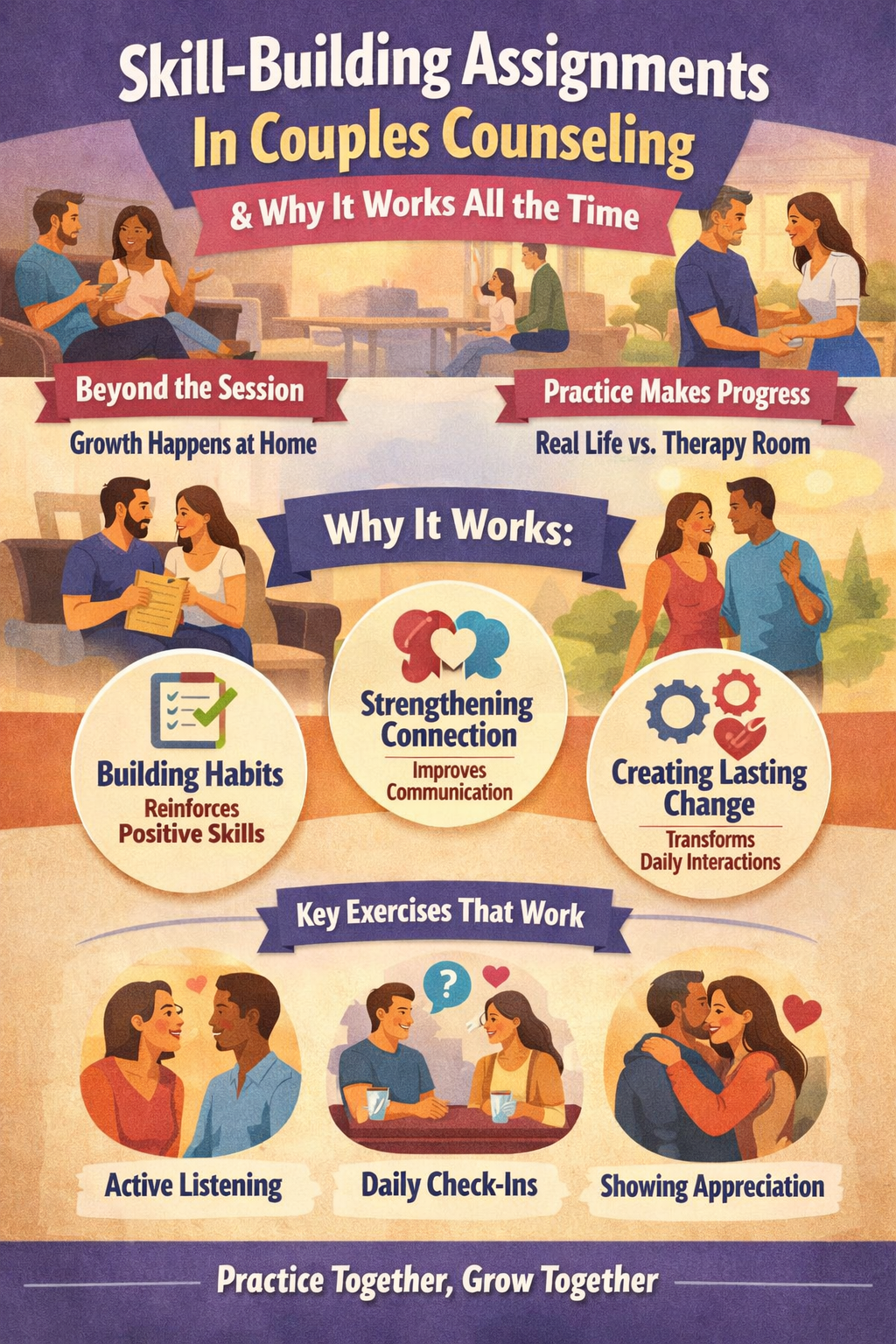
The importance of skill-building assignments in couples therapy: Why collaborative practice outside of therapy sessions has greater impact than in-session work, and universally effective strategies for relationship growth
Couples therapy is often misunderstood as something that happens only inside the therapist’s office, within the boundaries of a weekly session. In reality, the most meaningful change rarely happens in that one hour of guided conversation. Instead, it unfolds in the days and moments between sessions, when couples are living their real lives—navigating stress, miscommunication, emotional triggers, and daily responsibilities. This is where “skill training” assignments become essential. They bridge the gap between insight and transformation, turning awareness into behavior and intention into habit.
Skill training assignments are structured exercises given by the therapist for couples to practice outside of sessions. These assignments are not busy work; they are the core mechanism through which therapy becomes effective. During sessions, couples often gain clarity. They may understand patterns, identify emotional triggers, and even experience moments of connection and resolution. However, understanding something intellectually is very different from applying it under real-life emotional pressure. Skill training assignments create opportunities to practice new behaviors in the exact environments where old patterns used to dominate.
One of the primary reasons work outside the therapy room is more impactful than work inside it is context. In a therapy session, the environment is controlled, calm, and facilitated by a professional whose role is to guide and mediate. Couples are often more regulated emotionally, more reflective, and more intentional in their communication. But real relational difficulty does not occur in controlled environments. It happens in moments of fatigue after a long workday, during financial stress, in parenting disagreements, or when unresolved emotional wounds are triggered unexpectedly. Skill training assignments allow couples to rehearse healthier responses directly within these real-life conditions, where change actually matters.
Another reason external practice is more powerful is repetition. Change in relationships is not created through single insights, but through repeated experiences that reshape emotional memory. When couples practice communication tools, emotional regulation techniques, or conflict resolution strategies only during therapy, the learning remains theoretical. But when they repeatedly apply those same skills at home, in real arguments or emotional conversations, the brain begins to rewire. Over time, new relational habits replace old defensive patterns. This repetition builds confidence and reduces reactivity, which is often one of the biggest barriers in distressed relationships.
Skill training also empowers couples to take ownership of their growth. Therapy sessions can sometimes unintentionally create dependency on the therapist as the “mediator of truth” or the “only safe space” for difficult conversations. While guidance is important, lasting change requires autonomy. When couples are given structured exercises to complete between sessions, they begin to internalize the process of repair and connection. They learn that healing does not depend on the therapist being present, but on their willingness to practice new ways of relating to each other consistently.
One of the most effective strategies in skill training is structured communication practice. This involves setting aside intentional time at home to talk without interruption, defensiveness, or problem-solving pressure. Couples are often guided to use reflective listening, where one partner speaks while the other listens and then repeats back what they heard before responding. This simple structure slows down emotional escalation and creates a sense of being understood, which is often the foundation of conflict resolution.
Another powerful approach is emotional check-ins. Instead of only discussing problems when conflict arises, couples are encouraged to regularly share their emotional state, stress levels, and needs. This reduces emotional buildup, which often leads to explosive arguments. When partners become more attuned to each other’s emotional world in small, consistent ways, the relationship becomes more stable and less reactive over time.
Behavioral assignments that focus on appreciation and positive reinforcement are also highly effective. Many struggling couples fall into patterns where most communication becomes problem-focused or critical. Structured exercises that require partners to intentionally acknowledge what they appreciate about each other help rebalance emotional perception. This does not ignore problems, but it creates a healthier emotional foundation from which problems can be addressed.
Another important element is repair practice. Every couple will experience misunderstandings or emotional missteps even during healing. Skill training assignments often include learning how to pause, revisit a disagreement, and repair emotional ruptures without escalating into blame or withdrawal. This teaches couples that conflict does not have to end in distance; it can end in reconnection.
Ultimately, the power of skill training assignments lies in their ability to transform therapy from an intellectual experience into a lived one. The therapist’s office becomes a place of learning, while real life becomes the practice field. Without this bridge, couples may leave sessions with insight but little change. With it, they begin to build new relational habits that gradually replace the patterns that once created disconnection.
True relationship growth does not come from perfect conversations in therapy. It comes from imperfect conversations at home that are handled differently than before. It is in those repeated moments of choosing patience over reaction, understanding over defensiveness, and connection over withdrawal that real transformation takes place.
Learn More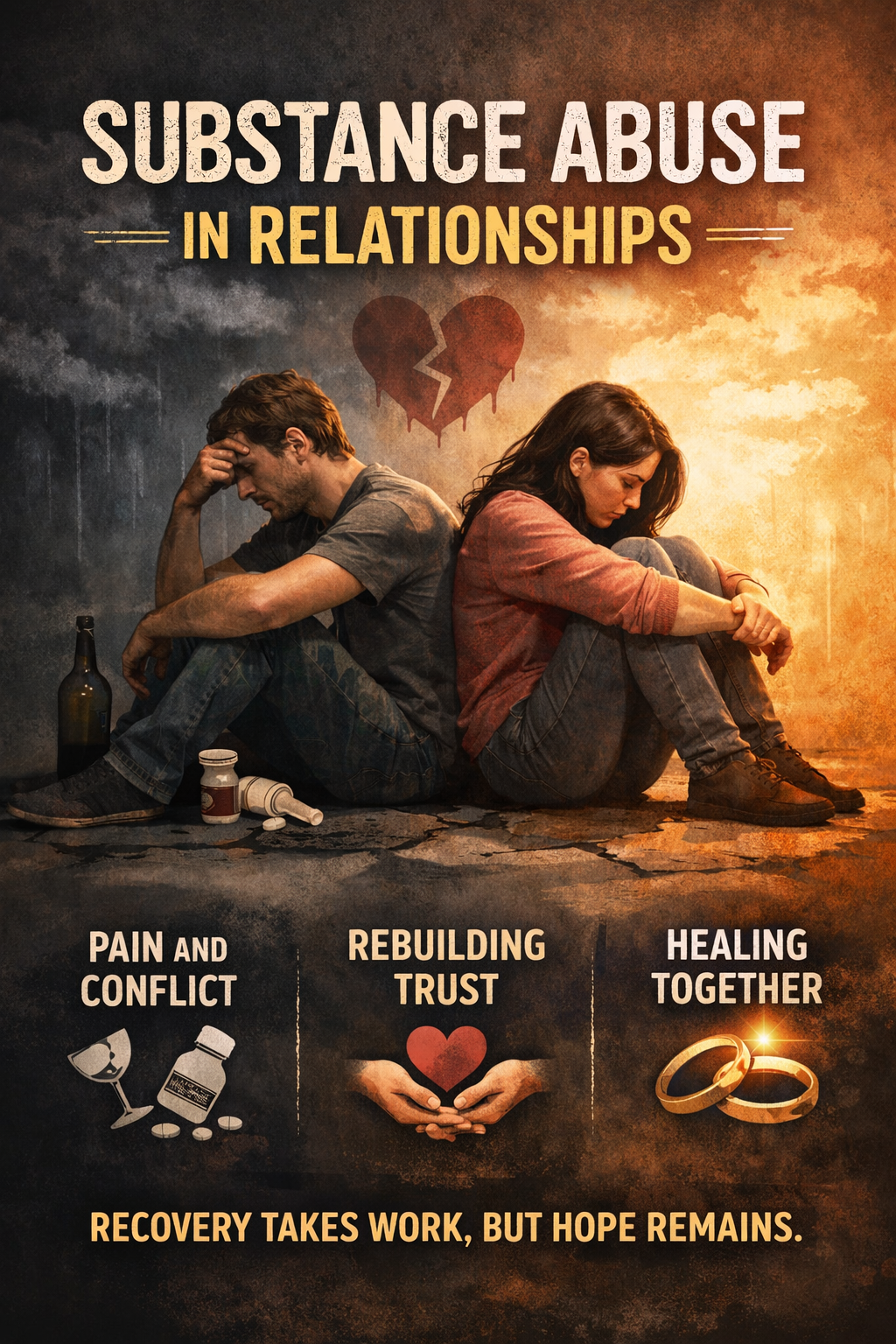
Substance abuse in marriage: Healthy and effective ways to address the challenges of addiction while keeping family dynamic intact. How can couples counseling can help navigate through these hurdles!
Substance abuse within a marriage is rarely an isolated issue; it is a deeply layered challenge that affects emotional connection, communication, trust, and the overall stability of the family system. Addiction does not exist in a vacuum. It reshapes daily interactions, influences decision-making, and often introduces unpredictability into what should be a space of safety and partnership. Over time, both partners can find themselves caught in patterns that feel impossible to escape—one struggling with dependency, the other struggling with how to respond, support, or protect themselves and the family.
In many relationships, substance abuse gradually shifts roles and responsibilities. The non-using partner may take on more control, attempting to compensate for instability, while the partner struggling with addiction may withdraw, become defensive, or experience shame. This imbalance can lead to resentment, emotional fatigue, and a breakdown in mutual respect. Trust, once compromised, becomes one of the most difficult elements to rebuild. Broken promises, secrecy, and repeated disappointments can leave lasting emotional wounds that do not simply disappear once substance use is reduced or stopped.
At the same time, it is important to recognize that addiction is not solely a matter of willpower. It is often connected to underlying emotional pain, unresolved trauma, stress, or mental health challenges. When couples begin to understand this, the dynamic can shift from one of blame to one of awareness. This does not excuse harmful behavior, but it creates a more productive foundation for addressing it. Acknowledging the deeper roots of substance use allows both partners to approach the issue with greater clarity and intention.
Healthy and effective ways to address substance abuse in marriage require both structure and compassion. Open communication becomes a cornerstone, but it must be intentional and constructive. Conversations should focus on expressing feelings and needs rather than assigning fault. This helps reduce defensiveness and creates space for honest dialogue. At the same time, boundaries are essential. Boundaries are not about punishment; they are about protection. They define what is acceptable within the relationship and help maintain a sense of stability, especially when behaviors become unpredictable or harmful.
Another key element is consistency. Change does not happen overnight, and recovery is often a nonlinear process. There may be progress followed by setbacks, and both partners need to be prepared for this reality. Developing routines that support stability—such as regular check-ins, shared responsibilities, and healthy habits—can provide a sense of grounding. These routines help rebuild a sense of normalcy within the family and reinforce a shared commitment to moving forward.
Equally important is the ability to separate the person from the addiction. When a partner is struggling with substance use, their behavior may not reflect their true intentions or values. Holding onto the distinction between the individual and the addiction can prevent the relationship from becoming defined solely by the problem. This perspective allows for accountability without stripping away empathy, which is critical for long-term healing.
Couples counseling offers a structured and supportive environment to navigate these complexities. It brings both partners into the healing process, rather than isolating the issue to one individual. This shared approach can significantly reduce feelings of loneliness and misunderstanding that often arise in relationships affected by addiction. Within therapy, couples are guided to identify patterns that may be contributing to the cycle of substance use and conflict, and they are equipped with tools to interrupt those patterns.
One of the most powerful aspects of couples counseling is its focus on communication. Many couples dealing with substance abuse fall into cycles of criticism, defensiveness, or avoidance. Therapy helps replace these patterns with more effective ways of expressing needs and listening to one another. Learning how to communicate without escalating conflict can reduce emotional triggers that might otherwise contribute to relapse or further disconnection.
In addition to communication, counseling emphasizes rebuilding trust through consistent, observable actions. Trust is not restored through words alone; it is rebuilt through reliability, honesty, and follow-through over time. Therapists often help couples set realistic expectations, allowing trust to develop gradually rather than expecting immediate repair. This process can be challenging, but it is essential for restoring a sense of safety within the relationship.
Counseling also addresses the emotional toll that addiction takes on both partners. The individual struggling with substance use may experience guilt, shame, or fear of failure, while the other partner may carry feelings of anger, hurt, or helplessness. Providing space for both experiences to be acknowledged is crucial. When both partners feel heard and validated, it becomes easier to move forward without being anchored to past pain.
Beyond the couple itself, the family dynamic must also be considered. Children, if present, are often deeply affected by substance abuse, even if it is not openly discussed. Maintaining a stable and supportive environment for them requires intentional effort. This includes minimizing exposure to conflict, providing reassurance, and modeling healthy coping strategies. Couples counseling can help parents align on how to support their children while also addressing their own challenges.
Recovery within a marriage is not just about eliminating substance use; it is about redefining the relationship. It involves creating new patterns of interaction, rediscovering shared values, and rebuilding a sense of partnership. This process can lead to a stronger and more resilient connection, one that is rooted in honesty, mutual support, and a deeper understanding of one another.
There will be moments of difficulty, and progress may feel slow at times. However, the willingness to confront the issue together, to seek support, and to remain committed to growth can transform even the most strained relationships. When both partners engage in the process with intention, it becomes possible not only to address the challenges of addiction but to emerge from them with a renewed sense of strength and unity.
A marriage tested by substance abuse carries the weight of hardship, but it also holds the potential for profound transformation. With patience, structure, and the right support, couples can move beyond survival and begin to build a relationship that is healthier, more stable, and deeply connected.
Learn More
Some Negative Outcomes of Long-Term Relationships Related to Physical Desires: Strategies for Keeping the Spark Alive and Healthy
Long-term relationships and marriages are often built on deep emotional bonds, shared experiences, and mutual support. Over time, however, many couples face challenges when it comes to physical desire. It’s a natural aspect of human relationships that sexual attraction and intimacy can fluctuate, and without conscious effort, these changes can lead to frustration, emotional distance, or even resentment. Understanding the negative outcomes and applying strategies to maintain a healthy sexual connection is essential for sustaining a thriving long-term relationship.
One of the most common negative outcomes in long-term relationships is the decline in sexual frequency or desire. Daily responsibilities, work stress, childcare, and aging can contribute to a reduced libido for one or both partners. When sexual needs are unmet or mismatched, partners may feel rejected, unappreciated, or emotionally disconnected. Over time, this can erode trust and intimacy, making partners less likely to openly communicate their desires and frustrations. In some cases, individuals may seek fulfillment outside the relationship, either emotionally or physically, which can create further tension and risk the stability of the partnership.
Another challenge is the development of sexual monotony. Couples who have been together for many years often fall into predictable routines, where sexual activity becomes habitual rather than exciting. While familiarity is comforting, it can dull the thrill of physical intimacy and reduce emotional excitement. Over time, this can lead to dissatisfaction, even if the relationship is otherwise strong. Additionally, physical changes such as hormonal shifts, weight fluctuations, or health issues can affect sexual performance or self-confidence, further complicating the dynamic.
Despite these challenges, there are effective strategies for keeping the spark alive in long-term relationships. Open and honest communication is the cornerstone. Couples who regularly discuss their desires, fantasies, and concerns create a safe space where intimacy can flourish. This includes discussing not only physical needs but emotional needs, as both are deeply intertwined. Active listening, empathy, and non-judgmental dialogue help partners feel understood and valued, enhancing sexual and emotional connection.
Another strategy is prioritizing quality time and novelty in the relationship. Physical desire thrives on excitement, anticipation, and emotional closeness. Scheduling date nights, weekend getaways, or even small, intimate moments at home can help maintain a sense of romance. Exploring new sexual experiences together, whether through trying new positions, role-playing, or introducing sensual elements like massage or shared fantasies, can reignite passion and curiosity. Creativity and playfulness often counteract monotony and make intimacy feel fresh and rewarding.
Physical and emotional self-care also plays a vital role. Maintaining individual health, fitness, and confidence directly impacts sexual desire and performance. Partners who feel good about themselves are more likely to engage actively and positively in physical intimacy. Similarly, practicing stress management, mindfulness, and emotional regulation can prevent external pressures from undermining sexual connection.
Lastly, couples may benefit from seeking professional guidance when challenges persist. Sex therapy, counseling, or relationship coaching can provide structured tools to address desire discrepancies, rekindle intimacy, and develop strategies for long-term satisfaction. Therapy can also help partners navigate sensitive issues like trauma, performance anxiety, or sexual dissatisfaction in a safe and constructive environment.
In conclusion, long-term relationships are vulnerable to declines in physical desire due to routine, stress, life changes, and personal insecurities. While these challenges are common, they are far from insurmountable. Through open communication, intentional romance, creative exploration, self-care, and professional support when necessary, couples can sustain a healthy, passionate, and fulfilling physical connection. The key is to treat intimacy as an ongoing journey rather than a static achievement—keeping the spark alive requires curiosity, commitment, and care, but the rewards are a deeper bond and a more vibrant partnership. Being adventurous in the bedroom goes beyond just the physical act. When both partners put time and energy into intimacy, the possibilities are endless for a healthy, exciting, and creatively fulfilling sexual journey.
Learn More
Making couple relationship last despite personality clashes: The ins and out of navigating through different personalities and making it work: Love in itself is NEVER enough.
Every couple begins with the same hope: that love will be sufficient to carry the relationship through the long haul. But as daily life sets in, personality differences—once charming or intriguing—can become sources of frustration, misunderstanding, and emotional distance. The truth is simple yet often overlooked: love is essential, but love alone is never enough. Long-term relationships endure not because two people are perfectly compatible, but because they learn to navigate their differences with maturity, intention, and skill.
Personality clashes occur when each partner’s natural tendencies create friction. One may crave structure while the other thrives in spontaneity. One may be expressive and emotionally transparent, while the other prefers quiet reflection. One may address conflict head-on, while the other withdraws to process internally. These differences are not signs of weakness in the relationship—they are normal, expected, and deeply rooted in a mix of biology, upbringing, values, and learned behaviors. The real challenge lies not in the differences themselves but in how each partner responds to them.
Love can soften the edges of conflict, but it cannot replace the skills required to manage it. Relationships need emotional intelligence, communication techniques, boundaries, shared expectations, and a willingness to compromise. They also require structure—agreements about finances, household responsibilities, time management, intimacy, and the rhythm of daily life. Without these, even the most passionate love can collapse under the weight of unmet needs and repeated misunderstandings.
Understanding the origins of personality clashes can help couples respond more compassionately. Temperament plays a significant role; some people are biologically wired to be more reactive, more sensitive, or more adaptable. Attachment history also shapes how individuals seek closeness or independence. Communication patterns learned in childhood influence whether a partner expresses feelings openly or suppresses them. Stress, fatigue, and external pressures can amplify these differences, making even minor issues feel overwhelming. When couples recognize these deeper roots, arguments shift from blame to understanding.
Making a relationship thrive despite these differences begins with curiosity. Instead of viewing a partner’s behavior as irrational or intentional, it helps to approach it with the mindset of wanting to understand. Curiosity dismantles defensiveness and opens the door to deeper connection. Judgment shuts it down. When partners learn to see each other through a lens of understanding rather than criticism, personality differences become easier to navigate.
Another essential mindset is distinguishing what can change from what cannot. Some personality traits are stable and enduring; expecting a partner to transform their nature leads to resentment. But many habits—communication style, conflict behavior, daily routines—can evolve with practice. Growth is possible when both partners commit to it, yet acceptance is equally crucial. A healthy relationship is built on adjusting where it makes sense and accepting where change would be inauthentic or harmful.
Communication is the cornerstone of navigating differences. Couples who thrive tend to communicate with clarity, softness, and intention. They address difficult topics when calm rather than in the heat of emotion. They listen to understand, not to prove a point. They express needs directly and respectfully instead of using blame or passive aggression. When conversations escalate, they pause instead of pursuing the argument to the point of emotional damage. These are skills—not instincts—yet they are transformative when practiced consistently.
Compromise also plays a central role. A relationship is not about one partner winning and the other losing; it is about finding solutions that honor both people. When one partner prefers planning and the other prefers spontaneity, they can design routines that offer both structure and flexibility. When one partner needs alone time and the other craves closeness, they can craft a rhythm that satisfies each without deprivation. Compromise becomes easier when partners remember that they are on the same team and that flexibility does not mean losing oneself.
Rituals of connection help couples stay bonded even when differences arise. Short daily check-ins, weekly planning conversations, or moments of shared affection create emotional anchors. These small habits build trust and predictability—two things that help stabilize relationships when personality clashes feel overwhelming. Regular relationship “check-ups” also allow partners to reflect on what’s working, what needs adjusting, and what each person needs more or less of moving forward.
Ultimately, making a relationship last despite personality differences requires intention. It requires the humility to recognize that being in love is not the same as being prepared for partnership. It demands patience, self-awareness, vulnerability, flexibility, and a willingness to work through discomfort. It also requires acknowledging that relationships succeed not because partners are identical but because they choose each other every day—even when it’s inconvenient, even when it’s difficult, even when personality differences create tension.
Love may start the story, but conscious effort writes the chapters that follow. The couples who last are not those who match perfectly on paper—they are the ones who learn to turn their differences into strengths, who communicate with honesty and compassion, who commit to mutual growth, and who understand that the real glue of a lasting relationship is not romance alone but the daily practice of partnership.
If couples can approach their differences not as obstacles but as opportunities to understand each other more deeply, then their relationship becomes stronger, more resilient, and more meaningful. Love is a beautiful foundation, but the architecture that makes a relationship last is built through intention, awareness, and the shared desire to grow together—no matter how different the personalities may be.
Learn More
The Power of resentment between couples
How Psychotherapy Can Heal the Past and Prevent Emotional War
Marriage is a union meant to be rooted in love, companionship, and mutual growth. However, beneath the surface of many relationships lies a silent destroyer—resentment. This slow-building emotion can transform love into anger, frustration, and even hatred if left unaddressed. The good news? Psychotherapy and conscious strategies can not only heal this pain but also fortify a marriage with newfound depth and understanding.
What is Resentment in Marriage?
Resentment is the cumulative emotional response to unresolved hurt, unmet expectations, or perceived injustices. In marriage, it often stems from:
- Feeling unheard or invalidated
- Carrying more responsibility than your partner
- Being criticized or compared
- Long-standing conflicts swept under the rug
- Betrayals or breaches of trust
At first, these slights might seem minor. But over time, they fester. And when resentment isn’t released, it evolves into passive aggression, withdrawal, emotional distance, or explosive arguments.
The Vortex of Emotional War
Left unchecked, resentment becomes a psychological battlefield:
- Anger is misdirected over trivial matters.
- Frustration turns everyday conversations into conflict.
- Hate begins to replace admiration, especially when negative cycles go unresolved.
This is the emotional vortex—a whirlpool where couples relive the same fights, trigger each other repeatedly, and become adversaries instead of allies.
But here’s the inspiring truth: You are not doomed to this fate. Healing is possible. It requires courage, honesty, and, often, the guiding hand of psychotherapy.
How Psychotherapy Helps Release the Past
Psychotherapy provides a safe space, a neutral ground where couples can untangle the knots of their shared history. Here’s how it works:
1. Identifying Core Wounds
A therapist helps each partner identify where their resentment truly comes from—whether it’s from past relationships, childhood, or unresolved trauma. Understanding the roots of emotional pain is the first step to healing.
2. Relearning Communication
Psychotherapy teaches assertive communication over blaming language. Instead of “You never listen to me,” you learn to say, “I feel unheard when I share something important.”
This shift opens doors rather than slamming them shut.
3. Emotional Release Techniques
Therapists often use techniques like Emotion-Focused Therapy (EFT), Inner Child Work, or Cognitive Behavioral Therapy (CBT) to help clients release bottled-up feelings and reinterpret past events.
Releasing doesn’t mean forgetting—it means freeing yourself from the pain’s control.
4. Forgiveness and Compassion
Couples learn how to forgive without condoning harm and how to view each other as imperfect humans trying their best. Compassion transforms enemies into teammates.
Strategies to Prevent Falling Into the Resentment Trap
While therapy is healing, prevention is even more powerful. Here are strategic tools every couple can implement:
🛑 1. Check In Regularly
Have weekly or bi-weekly emotional check-ins. Ask:
- “Is there anything bothering you that we haven’t talked about?”
- “Do you feel appreciated by me?”
🛠️ 2. Repair Ruptures Immediately
Conflict is inevitable, but repair must be intentional. After a disagreement, come back together. Say:
- “I didn’t mean to hurt you. Can we talk about how that felt?”
Don’t let wounds scab over with silence.
💬 3. Speak, Don’t Store
Bottling emotions breeds bitterness. Speak up when things feel off. Use “I” statements and calm tones.
💞 4. Practice Daily Gratitude
Make it a habit to share one thing you appreciate about your partner daily. This keeps admiration alive and wards off negativity bias.
🎯 5. Set Shared Goals
Couples who grow together stay together. Whether it’s planning a trip, building a business, or supporting each other’s dreams—shared purpose unites.
Your Relationship Is Worth Fighting For
Resentment may feel like a tidal wave, but love is a stronger force. With willingness, tools, and guidance, you can turn emotional battlegrounds into sacred grounds of healing.
Remember: You are not trapped by your past unless you choose to be. Let therapy illuminate the way forward and rediscover the love that brought you together in the first place.
🔥 Final take about resentment feeling towards your significant other
If you’re reading this, you’re already taking a powerful step. Healing begins with awareness. And growth? That comes with action. Don’t wait for the pain to push you—let your love pull you forward.
💡 Marriage isn’t about never falling—it’s about rising stronger together, again and again.
Learn More
The Magic of Loyalty and Faithfulness: Why Trust Needs Constant Nurturing in Long-Term Relationships
In the symphony of love, trust is the steady rhythm that keeps everything else in harmony. Loyalty and faithfulness form the foundation of that trust — not just as virtues, but as daily choices that define the success of a long-term relationship. While many people seek passion, companionship, or compatibility, the secret ingredient that sustains love over the long haul is unwavering trust, built on consistent loyalty and faithfulness.
But here’s the truth no one tells you enough: trust isn’t something you set and forget. It requires ongoing effort, conscious action, and emotional availability. Let’s explore the magic behind loyalty and faithfulness, and how nurturing trust can lead to a deeply fulfilling and happy relationship.
Why Trust Is a Living, Breathing Thing
In the early stages of love, trust often feels effortless. The dopamine rush, the late-night talks, the vulnerability shared in quiet moments — all of these create a natural bond. But as time goes on, life’s stresses, unmet expectations, and unresolved conflicts can slowly erode that initial trust if it isn’t actively maintained.
Here’s why trust needs continuous attention:
- People change over time. Personal growth, career shifts, family dynamics — all these influence a partner’s needs and emotional responses.
- Daily interactions matter more than grand gestures. Small disappointments, repeated misunderstandings, or lack of presence can add up.
- Temptations and distractions are ever-present. Staying faithful in thought and action requires emotional maturity and self-awareness.
Without nurturing, trust can become stale, taken for granted, or, worse, fragile. But when it is consciously cultivated, it becomes a relationship’s superpower.
Loyalty and Faithfulness: Not Just About Monogamy
Too often, loyalty and faithfulness are reduced to sexual exclusivity. While that’s a core part of many committed relationships, these values go far deeper.
- Loyalty is showing up for your partner, even when it’s hard. It’s about being their safe space in a world that often isn’t. It means protecting the relationship from emotional distance, betrayal, or outside interference.
- Faithfulness is staying true — emotionally, mentally, and spiritually. It’s in the choices you make when your partner isn’t around. It’s about being dependable, respecting their boundaries, and nurturing shared dreams.
Both loyalty and faithfulness reinforce the idea: “You matter to me. I’ve got your back. I choose you — over and over again.”
How to Nurture Trust Without Losing Your Joy
Maintaining loyalty and trust doesn’t mean losing your individuality or walking on eggshells. In fact, when done right, it creates the emotional security that allows both partners to grow, feel free, and enjoy a truly fulfilling relationship.
1. Consistent Communication — Beyond Just Talking
Communicating is more than sharing your day. It’s about emotional transparency. What are your fears? Your joys? What do you need more or less of? Create regular space for heart-to-heart conversations.
2. Follow Through on Your Word
Reliability builds trust faster than any romantic gesture. If you promise something — big or small — follow through. When your actions align with your words, trust becomes natural.
3. Protect the Sacredness of the Bond
This means avoiding gossiping about your partner, guarding against flirtations that cross the line, and handling conflicts privately and respectfully.
4. Choose Curiosity Over Judgment
When your partner messes up or reacts poorly, resist the urge to label or accuse. Ask: “What’s going on for you right now?” This builds emotional safety and encourages honesty.
5. Celebrate Each Other’s Growth
Be loyal not just to who your partner was — but to who they’re becoming. Support their dreams. Allow them to evolve without fearing abandonment.
Can You Be Happy and Committed? Absolutely.
There’s a myth that long-term loyalty means settling for “comfortable” love, far removed from the sparks of the early days. But the truth is, real happiness in love isn’t about butterflies — it’s about freedom, trust, and deep companionship.
When trust is strong:
- You worry less and enjoy more.
- You express yourself fully without fear of rejection.
- Intimacy deepens — emotionally, intellectually, even physically.
- You laugh more. Play more. Grow together instead of apart.
Loyalty doesn’t suffocate happiness — it unlocks it. Knowing someone’s hand will still be holding yours, no matter the season, creates joy that fleeting flings or shallow connections never can.
Sustaining It Long-Term: The Secret Recipe
Here’s the distilled essence of keeping trust alive while staying happy and fulfilled:
- Keep dating your partner. Surprise them. Compliment them. Flirt.
- Forgive with grace, not resentment. Holding grudges corrodes trust faster than betrayal.
- Revisit your shared vision. Why did you choose each other? Recommit to that.
- Maintain emotional and physical intimacy. Touch, talk, and be present.
- Check in, often. “How are we doing?” is a powerful question.
What is the give-away from this article? Love is Magic, But Loyalty is the Spell
Long-term love isn’t found — it’s built. It’s messy, imperfect, and deeply beautiful. The magic of loyalty and faithfulness isn’t in dramatic declarations or movie-style romance, but in the quiet, everyday decisions to be there, to show up, and to stay true.
When both partners nurture trust like a garden — watering it with care, weeding out resentment, and letting the sun of appreciation shine in — the result is a relationship that doesn’t just last… it thrives.
So yes, be loyal. Be faithful. And in doing so, watch how happiness naturally follows.


Powerful benefits on pre-marital counseling: What can it teach you about your existing relationship and its potential success or failure long term: Being proactive can save you from heartache and financial ruins.
Marriage is one of life’s biggest commitments, yet many couples enter it without fully understanding the challenges that may arise. Pre-marital counseling provides a structured way to explore the strengths and weaknesses of your relationship before saying “I do.” Far from being just a formality, it can be a powerful tool in determining your relationship’s long-term success—or uncovering potential red flags that could lead to heartache and financial struggles.
What is Pre-Marital Counseling?
Pre-marital counseling is a type of therapy designed to help couples prepare for marriage by addressing important topics such as communication, conflict resolution, finances, and long-term goals. It provides a safe space to discuss concerns, strengthen emotional connections, and build the skills necessary for a healthy and fulfilling marriage.
What Pre-Marital Counseling Can Teach You About Your Relationship
1. Communication: The Key to Long-Term Success
Many relationships fail due to poor communication. Pre-marital counseling helps couples recognize their communication styles, identify unhealthy patterns, and develop effective ways to express their needs, concerns, and emotions. Learning these skills early can prevent misunderstandings and resentment down the road.
2. Conflict Resolution: Fighting Fair and Finding Solutions
Every couple faces disagreements, but how those conflicts are handled determines the relationship’s strength. Counseling teaches couples how to resolve conflicts in a constructive way, avoiding toxic behaviors like blame, stonewalling, or passive-aggressiveness. Understanding how to navigate challenges together sets a solid foundation for a lasting marriage.
3. Financial Compatibility: Avoiding Money Conflicts
Money is one of the leading causes of marital stress and divorce. Pre-marital counseling encourages open discussions about financial habits, spending, saving, and long-term financial goals. Addressing potential financial disagreements early on can prevent financial strain and ensure both partners are on the same page about managing money.
4. Expectations for Marriage and Future Goals
Misaligned expectations can create tension in a marriage. Pre-marital counseling allows couples to openly discuss topics such as career ambitions, family planning, household responsibilities, and personal growth. This ensures both partners share a common vision for their future together.
5. Emotional and Physical Intimacy: Strengthening the Connection
This type of counseling can help couples explore their emotional and physical intimacy needs, setting realistic expectations and addressing any concerns before they become bigger issues. It promotes emotional closeness and helps partners build a deeper, more fulfilling bond.
6. Understanding Each Other’s Background and Upbringing
Our upbringing shapes our values, beliefs, and relationship habits. Counseling allows couples to explore how their family dynamics, childhood experiences, and past relationships may impact their marriage. This awareness helps partners understand and respect each other’s perspectives, reducing potential conflicts.
Can Pre-Marital Counseling Predict the Success or Failure of a Relationship?
While pre-marital counseling can’t guarantee a marriage’s success, it can reveal key insights about compatibility, problem-solving abilities, and long-term potential. Some couples may discover major red flags—such as unresolved trust issues, fundamental differences in values, or an inability to communicate effectively—that signal a higher risk of divorce. Others may use counseling as a tool to strengthen their bond, learning how to navigate challenges together with confidence.
Being proactive can save you from future heartache. Couples who identify serious incompatibilities before marriage can make informed decisions about whether to move forward, adjust their expectations, or, in some cases, reconsider their commitment altogether.
The Financial and Emotional Benefits of Pre-Marital Counseling
A failed marriage can be emotionally devastating and financially draining. Divorce often comes with legal fees, asset division, and emotional turmoil. Investing in pre-marital counseling is a proactive way to minimize these risks by addressing potential problems before they escalate. In the long run, the cost of counseling is minimal compared to the financial and emotional toll of a failed marriage. Contact us today to set up your first pre-marital coaching session.
Just like anything else in life, always learn to prepare yourself and stay proactive
Marriage is more than just a romantic commitment—it’s a lifelong partnership that requires effort, understanding, and adaptability. Pre-marital counseling helps couples build the foundation for a healthy, successful marriage by fostering open communication, resolving conflicts, and ensuring alignment on key life decisions.
By taking the time to explore your relationship’s strengths and weaknesses before marriage, you increase the likelihood of long-term happiness. Whether you uncover areas for improvement or confirm your readiness for commitment, the pre-marital counseling approach is a powerful step toward a fulfilling and lasting relationship. Don’t rely on love ONLY, be smart and take precaution as it can end up costing you more than just heartache. Be vigilant, stay smart and be proactive in everything you do in life, ESPECIALLY when sharing your life with someone else.
Call our office today for some FREE coaching pointers. Initial call is ALWAYS FREE, so take advantage. Reach out to us at 301 325 1550 or book a coaching session on our website by clicking the button.


Is it possible to forgive and move on after infidelity? Some effective strategies in repairing relationships after betrayal, despite popular belief of” Once a cheater, ALWAYS a cheater”!
Infidelity has long been regarded as one of the most painful betrayals in a romantic relationship. The phrase “Once a cheater, always a cheater” suggests that people who commit infidelity are doomed to repeat it, casting doubt on the possibility of reconciliation. But is it truly impossible to forgive and move forward after such betrayal? Research and real-world examples indicate that, while difficult, it is indeed possible for couples to rebuild trust and repair their relationship after infidelity. This article explores the emotional toll of infidelity, the psychology behind forgiveness, and effective strategies for healing after betrayal.
The Emotional Toll of Infidelity
Infidelity creates a breach of trust, leaving emotional scars that can be deep and long-lasting. When one partner cheats, the other often experiences intense feelings of betrayal, hurt, anger, and even confusion. The betrayed partner may question their own worth, the authenticity of their relationship, and whether the relationship has a future.
The cheating partner often feels guilt, shame, and regret. If the affair stemmed from unmet emotional needs, dissatisfaction, or impulsiveness, they may struggle to reconcile their actions with their love for their partner. Both parties may be overwhelmed by a range of emotions that can cloud their judgment and make rational decisions difficult.
Given these challenges, many couples wonder if it’s possible to rebuild trust after such a profound betrayal. The answer, according to relationship experts and psychologists, is that while forgiveness and reconciliation are possible, they require time, effort, and intentional strategies.
Forgiveness is a Choice, Not a Feeling
Forgiving infidelity is not about erasing the hurt or pretending the betrayal never happened. Rather, it is about making the conscious choice to move past the pain and work toward healing. Forgiveness is a complex emotional and cognitive process that involves acknowledging the hurt, letting go of resentment, and deciding to rebuild trust. It’s a journey that can take months or even years.
According to Dr. Janis Spring, a clinical psychologist and author of After the Affair: Healing the Pain and Rebuilding Trust When a Partner Has Been Unfaithful, forgiveness is less about the cheater and more about the betrayed partner’s own healing process. Forgiving is an active decision, often made for one’s peace of mind, rather than as a favor to the cheating partner.
In her research, Spring found that forgiveness can have profound benefits for the emotional and physical health of the betrayed partner. Holding onto anger and bitterness can perpetuate emotional suffering, whereas forgiving allows the betrayed partner to take control of their healing and regain a sense of agency.
Understanding the Psychology Behind Infidelity
Before addressing whether forgiveness is possible, it’s important to understand why people cheat in the first place. Infidelity is rarely about sex alone. In fact, research shows that infidelity often stems from emotional dissatisfaction, unmet needs, loneliness, or a desire for novelty and excitement. Cheating can also be a response to deep-seated personal issues like low self-esteem, a lack of emotional maturity, or poor communication skills.
According to relationship expert Esther Perel, author of The State of Affairs: Rethinking Infidelity, infidelity doesn’t always indicate the end of love. Perel argues that affairs can sometimes reflect unmet emotional needs in a relationship or, in some cases, a desire to reconnect with one’s sense of vitality and identity. Recognizing these motivations doesn’t excuse the behavior but can help partners understand the underlying issues that contributed to the betrayal.
By understanding the root causes of infidelity, couples can begin to address the underlying problems in their relationship, making forgiveness and healing more attainable.
Effective Strategies for Healing After Betrayal
Forgiveness after infidelity is not automatic; it requires dedication, emotional work, and a mutual commitment to rebuilding trust. While every relationship is unique, the following strategies can help couples navigate the complex journey of repairing their bond after betrayal:
1. Open and Honest Communication
After an affair, it’s critical for both partners to engage in open and honest dialogue about the infidelity. The betrayed partner needs to express their hurt, anger, and confusion, while the cheating partner must take full responsibility for their actions. Transparency is key in these conversations. The cheating partner must be willing to answer questions about the affair, even if it is uncomfortable.
Communication must go beyond simply discussing the affair. Couples should also explore the deeper issues that may have contributed to the infidelity, such as unmet emotional needs, poor communication, or unresolved conflicts. By addressing these underlying issues, couples can lay the groundwork for rebuilding their relationship.
2. Rebuilding Trust
Trust is the foundation of any healthy relationship, and rebuilding it after infidelity takes time. The cheating partner must demonstrate consistent, trustworthy behavior over an extended period. This may include being open about their whereabouts, giving full access to phones and social media, and maintaining complete transparency.
Rebuilding trust also requires patience from both partners. The betrayed partner may experience lingering doubts or flashbacks of the betrayal, and the cheating partner must be understanding and patient throughout the healing process.
3. Seeking Professional Help
Couples counseling or therapy can be a valuable tool in the healing process. A trained therapist can help both partners navigate the emotional complexities of infidelity, providing them with strategies to rebuild trust, improve communication, and manage lingering feelings of hurt or anger.
Therapists can also help identify and address any deep-rooted issues that contributed to the affair, such as unresolved conflicts, emotional dissatisfaction, or personal insecurities. With the guidance of a professional, couples are more likely to navigate the healing process successfully.
4. Establishing Boundaries and Agreements
To avoid future betrayals, couples must establish clear boundaries and agreements about what constitutes acceptable behavior in their relationship. These agreements may include commitments to improve communication, spend more quality time together, or engage in activities that nurture emotional intimacy.
Setting boundaries also means addressing any unresolved trust issues that contributed to the affair. For example, if one partner feels neglected or emotionally disconnected, they should express these feelings early on, before resentment builds.
5. Focusing on Personal Healing
Both partners need to engage in personal healing to move forward. For the betrayed partner, this may involve processing their feelings of hurt and betrayal, letting go of resentment, and practicing self-care. For the cheating partner, personal healing means examining their own motivations for the affair, taking responsibility for their actions, and making a commitment to becoming a better partner.
Forgiveness can’t happen unless both individuals are willing to heal individually before working on the relationship together.
6. Choosing Forgiveness, Not Forgetting
Forgiveness does not mean forgetting the betrayal. In fact, it’s important to acknowledge the infidelity, learn from it, and use it as a catalyst for growth. Instead of sweeping the pain under the rug, both partners must work together to heal, rebuild trust, and create a stronger relationship.
Choosing forgiveness involves letting go of the need for revenge or punishment and focusing on how to rebuild the relationship. It’s a decision that must be made continuously, especially during moments when the pain resurfaces.
“Once a Cheater, Always a Cheater” – Fact or Myth?
The phrase “Once a cheater, always a cheater” is rooted in the belief that people who cheat are likely to repeat the behavior. However, research shows that this isn’t always true. While some individuals may have patterns of infidelity, many people who cheat do not do so again, especially when they take responsibility, address the underlying issues, and make conscious efforts to change.
The likelihood of repeat infidelity depends largely on the cheater’s motivations, personal growth, and the relationship dynamics. If both partners are committed to repairing their bond and addressing the underlying causes of the infidelity, it is entirely possible to move forward without future betrayals.
The art of forgiving and moving on towards the healing path
While the pain of infidelity can feel insurmountable, many couples find that forgiveness and healing are possible. By engaging in open communication, rebuilding trust, seeking professional help, and committing to personal growth, partners can repair their relationship and create a stronger, more resilient bond. Infidelity doesn’t have to mean the end of love—it can be the beginning of a journey toward deeper understanding, emotional intimacy, and true forgiveness.
