
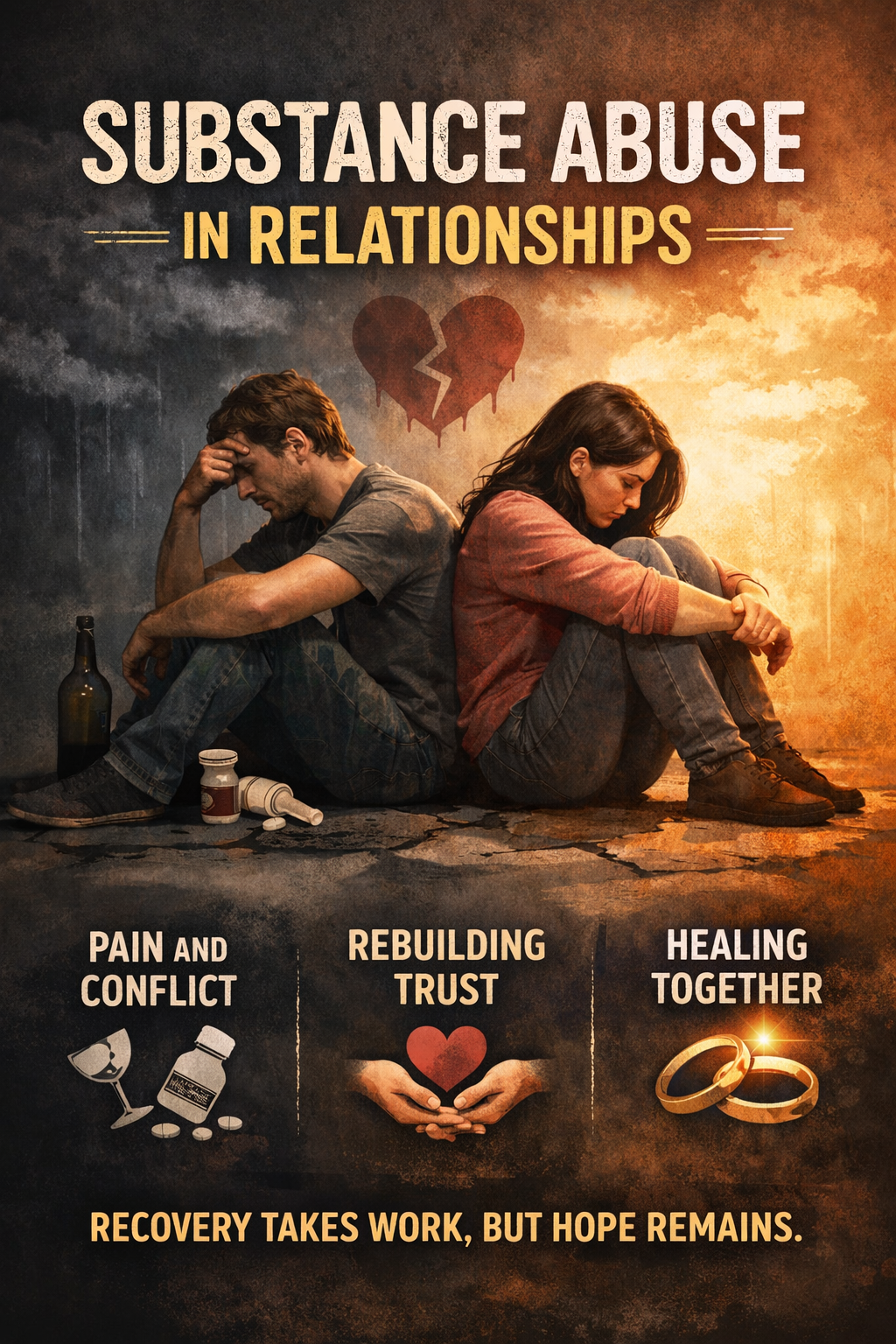
Substance abuse in marriage: Healthy and effective ways to address the challenges of addiction while keeping family dynamic intact. How can couples counseling can help navigate through these hurdles!
Substance abuse within a marriage is rarely an isolated issue; it is a deeply layered challenge that affects emotional connection, communication, trust, and the overall stability of the family system. Addiction does not exist in a vacuum. It reshapes daily interactions, influences decision-making, and often introduces unpredictability into what should be a space of safety and partnership. Over time, both partners can find themselves caught in patterns that feel impossible to escape—one struggling with dependency, the other struggling with how to respond, support, or protect themselves and the family.
In many relationships, substance abuse gradually shifts roles and responsibilities. The non-using partner may take on more control, attempting to compensate for instability, while the partner struggling with addiction may withdraw, become defensive, or experience shame. This imbalance can lead to resentment, emotional fatigue, and a breakdown in mutual respect. Trust, once compromised, becomes one of the most difficult elements to rebuild. Broken promises, secrecy, and repeated disappointments can leave lasting emotional wounds that do not simply disappear once substance use is reduced or stopped.
At the same time, it is important to recognize that addiction is not solely a matter of willpower. It is often connected to underlying emotional pain, unresolved trauma, stress, or mental health challenges. When couples begin to understand this, the dynamic can shift from one of blame to one of awareness. This does not excuse harmful behavior, but it creates a more productive foundation for addressing it. Acknowledging the deeper roots of substance use allows both partners to approach the issue with greater clarity and intention.
Healthy and effective ways to address substance abuse in marriage require both structure and compassion. Open communication becomes a cornerstone, but it must be intentional and constructive. Conversations should focus on expressing feelings and needs rather than assigning fault. This helps reduce defensiveness and creates space for honest dialogue. At the same time, boundaries are essential. Boundaries are not about punishment; they are about protection. They define what is acceptable within the relationship and help maintain a sense of stability, especially when behaviors become unpredictable or harmful.
Another key element is consistency. Change does not happen overnight, and recovery is often a nonlinear process. There may be progress followed by setbacks, and both partners need to be prepared for this reality. Developing routines that support stability—such as regular check-ins, shared responsibilities, and healthy habits—can provide a sense of grounding. These routines help rebuild a sense of normalcy within the family and reinforce a shared commitment to moving forward.
Equally important is the ability to separate the person from the addiction. When a partner is struggling with substance use, their behavior may not reflect their true intentions or values. Holding onto the distinction between the individual and the addiction can prevent the relationship from becoming defined solely by the problem. This perspective allows for accountability without stripping away empathy, which is critical for long-term healing.
Couples counseling offers a structured and supportive environment to navigate these complexities. It brings both partners into the healing process, rather than isolating the issue to one individual. This shared approach can significantly reduce feelings of loneliness and misunderstanding that often arise in relationships affected by addiction. Within therapy, couples are guided to identify patterns that may be contributing to the cycle of substance use and conflict, and they are equipped with tools to interrupt those patterns.
One of the most powerful aspects of couples counseling is its focus on communication. Many couples dealing with substance abuse fall into cycles of criticism, defensiveness, or avoidance. Therapy helps replace these patterns with more effective ways of expressing needs and listening to one another. Learning how to communicate without escalating conflict can reduce emotional triggers that might otherwise contribute to relapse or further disconnection.
In addition to communication, counseling emphasizes rebuilding trust through consistent, observable actions. Trust is not restored through words alone; it is rebuilt through reliability, honesty, and follow-through over time. Therapists often help couples set realistic expectations, allowing trust to develop gradually rather than expecting immediate repair. This process can be challenging, but it is essential for restoring a sense of safety within the relationship.
Counseling also addresses the emotional toll that addiction takes on both partners. The individual struggling with substance use may experience guilt, shame, or fear of failure, while the other partner may carry feelings of anger, hurt, or helplessness. Providing space for both experiences to be acknowledged is crucial. When both partners feel heard and validated, it becomes easier to move forward without being anchored to past pain.
Beyond the couple itself, the family dynamic must also be considered. Children, if present, are often deeply affected by substance abuse, even if it is not openly discussed. Maintaining a stable and supportive environment for them requires intentional effort. This includes minimizing exposure to conflict, providing reassurance, and modeling healthy coping strategies. Couples counseling can help parents align on how to support their children while also addressing their own challenges.
Recovery within a marriage is not just about eliminating substance use; it is about redefining the relationship. It involves creating new patterns of interaction, rediscovering shared values, and rebuilding a sense of partnership. This process can lead to a stronger and more resilient connection, one that is rooted in honesty, mutual support, and a deeper understanding of one another.
There will be moments of difficulty, and progress may feel slow at times. However, the willingness to confront the issue together, to seek support, and to remain committed to growth can transform even the most strained relationships. When both partners engage in the process with intention, it becomes possible not only to address the challenges of addiction but to emerge from them with a renewed sense of strength and unity.
A marriage tested by substance abuse carries the weight of hardship, but it also holds the potential for profound transformation. With patience, structure, and the right support, couples can move beyond survival and begin to build a relationship that is healthier, more stable, and deeply connected.
Learn More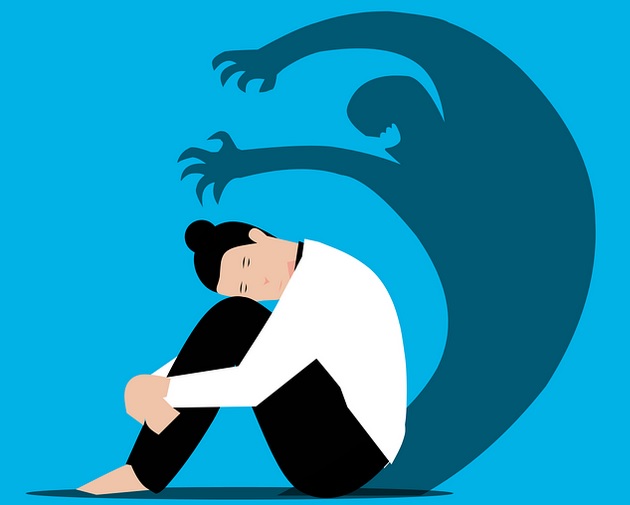
Knowing oneself: The importance in understanding your body’s physiological responses to anxiety: Differentiate between reality and make belief!
Understanding oneself, particularly in the context of anxiety and its physiological responses, is crucial for mental health and overall well-being. The distinction between reality and make-believe in the experience of anxiety is fundamental to managing and overcoming it. Let’s delve more into this topic and decide what is real or make-belief!.
1. Introduction to Self-Awareness and Anxiety
1.1. Self-Awareness
Self-awareness refers to the ability to recognize and understand one’s emotions, thoughts, and behaviors. It is a critical component of emotional intelligence and involves being in tune with your internal states and how you react to external stimuli. Self-awareness is the foundation for personal growth, as it enables individuals to identify areas of strength and areas that require development.
1.2. Anxiety and Its Role in Human Experience
Anxiety is a natural response to stress or perceived danger, triggering the body’s fight-or-flight response. While occasional anxiety is a normal part of life, chronic anxiety can be debilitating. Understanding anxiety involves recognizing its physiological manifestations and learning to differentiate between real threats and imagined ones.
2. Physiological Responses to Anxiety
2.1. The Fight-or-Flight Response
When the brain perceives a threat, it activates the autonomic nervous system, releasing stress hormones like adrenaline and cortisol. This triggers the fight-or-flight response, which includes:
- Increased heart rate: The heart pumps more blood to muscles, preparing the body for quick action.
- Rapid breathing: The lungs take in more oxygen to fuel muscles.
- Sweating: The body cools itself down to prevent overheating during exertion.
- Muscle tension: Muscles tighten to prepare for potential physical activity.
- Dilated pupils: Eyes widen to improve vision and focus on potential threats.
- Digestive changes: The body diverts energy from digestion to more critical functions, leading to symptoms like nausea or a “knot” in the stomach.
2.2. Chronic Anxiety and Its Effects
When anxiety becomes chronic, the constant activation of the fight-or-flight response can lead to long-term health issues, such as:
- Cardiovascular problems: Persistent high blood pressure and heart rate can strain the heart.
- Sleep disturbances: Anxiety often leads to insomnia or restless sleep, further exacerbating stress.
- Weakened immune system: Chronic stress suppresses immune function, making the body more susceptible to illness.
- Muscle pain and tension: Continuous muscle tension can cause pain, particularly in the neck, shoulders, and back.
- Gastrointestinal issues: Ongoing anxiety can lead to chronic digestive problems, such as irritable bowel syndrome (IBS).
3. Differentiating Between Reality and Make-Belief
3.1. Perception vs. Reality
Anxiety can distort perception, making imagined threats seem as real as actual dangers. This is due to the brain’s inability to distinguish between real and perceived threats when anxious. Understanding this distinction is crucial for managing anxiety effectively.
3.2. Cognitive Distortions
Cognitive distortions are irrational thought patterns that fuel anxiety. Some common distortions include:
- Catastrophizing: Expecting the worst possible outcome, even if it’s unlikely.
- Overgeneralization: Drawing broad conclusions from a single event (e.g., believing you always fail because of one failure).
- Mind Reading: Assuming you know what others are thinking, often imagining they think negatively about you.
- Fortune Telling: Predicting the future negatively, assuming things will go wrong.
- Black-and-White Thinking: Seeing things in extremes, without recognizing the gray areas in between.
3.3. Reality Testing
Reality testing is a cognitive-behavioral technique that helps individuals differentiate between real threats and imagined ones. It involves:
- Questioning the Evidence: Ask yourself, “What evidence do I have that this fear is true?” Often, the evidence will be scant or based on assumptions rather than facts.
- Considering Alternative Explanations: Look for other possible reasons for the situation. For example, if someone doesn’t reply to your message immediately, it doesn’t necessarily mean they’re upset with you—they might simply be busy.
- Evaluating the Likelihood: Assess the actual probability of your feared outcome occurring. Is it as likely as your anxiety suggests?
- Seeking Feedback: Sometimes, talking to someone you trust can help provide a more objective perspective on your fears.
4. The Importance of Knowing Your Body’s Responses
4.1. Early Detection and Intervention
Recognizing the early signs of anxiety is vital for managing it before it escalates. Each individual has unique physiological responses to anxiety, and being aware of these can help in early detection. For instance:
- Recognize Triggers: Identifying what triggers your anxiety can help you prepare for or avoid certain situations.
- Physical Cues: Notice your body’s cues—such as muscle tension, a racing heart, or shallow breathing—that signal rising anxiety.
4.2. Developing Personalized Coping Strategies
Understanding your specific responses allows you to tailor coping strategies that work best for you. Common techniques include:
- Deep Breathing: Slow, deep breaths can counteract the rapid breathing associated with anxiety, helping to calm the nervous system.
- Progressive Muscle Relaxation: This involves tensing and then relaxing each muscle group, reducing overall tension.
- Mindfulness and Meditation: These practices help you stay present, reducing the impact of worries about the past or future.
- Grounding Techniques: Grounding exercises, like focusing on the five senses, can anchor you in the present moment and reduce anxiety.
- Physical Exercise: Regular exercise helps manage stress hormones and releases endorphins, which improve mood.
5. The Mind-Body Connection
5.1. Understanding the Interaction Between Mind and Body
The mind and body are deeply interconnected. Emotional states can manifest physically, and physical states can influence emotions. Anxiety is a prime example of this interaction, where mental stress leads to physical symptoms, which in turn can exacerbate the mental experience.
5.2. Yoga and Meditation
Practices like yoga and meditation are particularly effective in strengthening the mind-body connection. They teach you to be more aware of your body’s signals and help in regulating the stress response.
5.3. Journaling
Keeping a journal where you document your thoughts, feelings, and physical responses to anxiety can be incredibly helpful. It allows you to track patterns, identify triggers, and see progress over time.
6. The Role of Therapy and Professional Support
6.1. Cognitive-Behavioral Therapy (CBT)
CBT is a widely used therapeutic approach for anxiety. It focuses on identifying and changing negative thought patterns and behaviors that contribute to anxiety. Through CBT, individuals learn to test the reality of their thoughts and develop healthier ways of thinking.
6.2. Biofeedback and Neurofeedback
These techniques involve using electronic monitoring devices to gain awareness of physiological functions, such as heart rate or brain wave patterns. By learning to control these responses, individuals can reduce anxiety.
6.3. Medication
In some cases, medication may be necessary to manage anxiety. Antidepressants, benzodiazepines, and beta-blockers are commonly prescribed. However, medication should be used in conjunction with therapy for the best results.
7. Practical Applications
7.1. Daily Mindfulness Practice
Incorporating mindfulness into your daily routine can significantly reduce anxiety. Start with a few minutes of focused breathing each morning or before bed.
7.2. Routine Physical Activity
Regular exercise is not only good for physical health but also crucial for mental well-being. Aim for at least 30 minutes of moderate exercise most days of the week.
7.3. Healthy Sleep Habits
Adequate sleep is essential for managing anxiety. Develop a consistent sleep routine, and create a restful environment to improve sleep quality.
What’s important to remember!
Understanding oneself, particularly how your body responds to anxiety, is a cornerstone of mental health. Differentiating between real and imagined threats allows you to manage anxiety more effectively. By becoming more self-aware, recognizing physiological cues, and employing appropriate coping strategies, you can reduce anxiety’s impact on your life. This knowledge empowers you to live more fully and confidently, knowing that you have the tools to handle whatever challenges arise.
The journey to knowing oneself and managing anxiety is ongoing. It requires patience, practice, and often professional support. However, the rewards—greater peace of mind, improved physical health, and a more fulfilling life—are well worth the effort. Embrace the process of self-discovery and trust in your ability to navigate the complexities of anxiety.
