
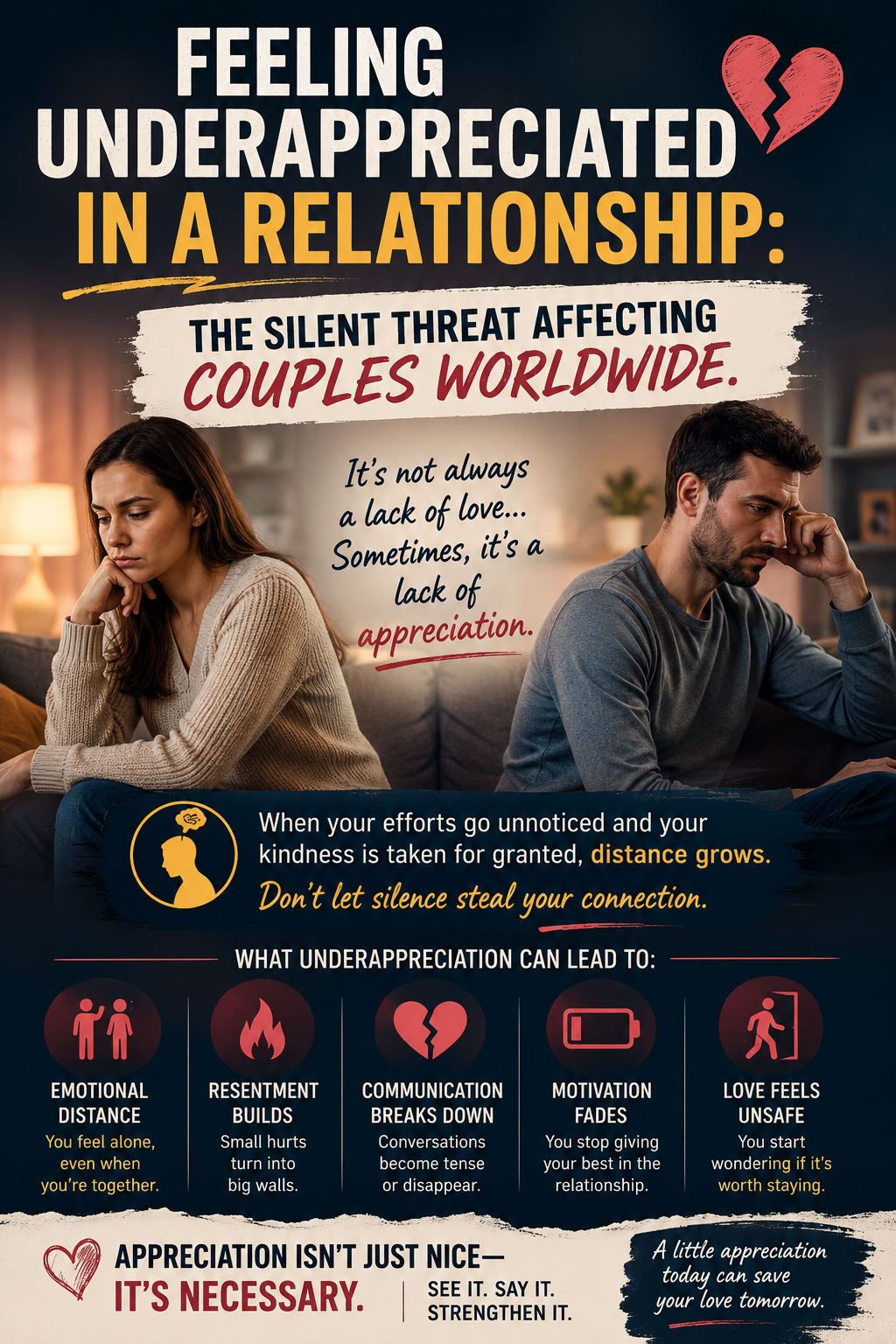
Feeling underappreciated in a relationship: The silent threat affecting couples worldwide. Discover effective strategies to strengthen appreciation, deepen connection, and avoid becoming part of this growing statistic.
When people think about the reasons relationships fail, they often imagine dramatic events such as infidelity, financial hardship, constant conflict, or irreconcilable differences. While these issues certainly play a role in many breakups, one of the most damaging relationship threats is often far less visible. It develops quietly over time, frequently unnoticed until emotional distance has already taken hold. That threat is the feeling of being underappreciated.
At the beginning of a relationship, appreciation tends to come naturally. Partners notice and acknowledge even the smallest gestures. A thoughtful text message, a compliment, a surprise gift, or a simple act of kindness can create feelings of gratitude and connection. During this stage, both individuals often feel seen, valued, and important. However, as relationships mature and life becomes increasingly demanding, many couples unintentionally shift their focus away from appreciation and toward responsibility, routine, and obligation.
What was once viewed as a loving gesture gradually becomes expected. The partner who consistently prepares meals, manages household responsibilities, works long hours, provides emotional support, or makes sacrifices for the family may stop receiving acknowledgment for these contributions. Instead of being appreciated, their efforts become part of the background noise of daily life. Over time, this lack of recognition can create feelings of frustration, disappointment, and emotional exhaustion.
The painful reality is that many people do not leave relationships because they have stopped loving their partner. They leave because they no longer feel valued by the person they love. Feeling invisible within a relationship can be one of the loneliest experiences a person can endure. It creates a sense of emotional isolation that often leads individuals to question their worth, their efforts, and sometimes even the future of the relationship itself.
Underappreciation rarely appears overnight. It develops gradually through countless small moments. A thank you that goes unspoken. An effort that goes unnoticed. A sacrifice that is taken for granted. Although each individual incident may seem insignificant, their cumulative effect can be profound. Emotional wounds often result not from a single major event but from a series of small disappointments that accumulate over months or years.
One of the most effective ways to prevent this pattern is through the intentional practice of gratitude. Appreciation is not something that should be assumed; it must be expressed. Many people mistakenly believe that their partner already knows how much they are valued. While this may be partially true, hearing words of appreciation has a powerful psychological impact. A sincere acknowledgment of effort, support, or commitment can strengthen emotional bonds and reinforce feelings of connection. Simple statements such as “I appreciate everything you do” or “Thank you for always being there for me” can have a greater impact than many realize.
Another important strategy involves shifting attention from shortcomings to strengths. Human beings possess a natural tendency to notice problems more readily than positive experiences. In relationships, this often means that mistakes receive more attention than successes. Over time, couples may become experts at identifying what is wrong while overlooking what is right. Healthy relationships thrive when partners actively seek opportunities to recognize each other’s positive qualities, efforts, and contributions.
Communication also plays a critical role in fostering appreciation. Many couples engage in conversations focused primarily on logistics, responsibilities, finances, schedules, and problem-solving. While these discussions are necessary, they should not replace meaningful emotional communication. Taking time to listen attentively, express genuine curiosity, and validate each other’s experiences helps create an environment where both partners feel respected and understood. Feeling heard is one of the most powerful forms of appreciation a person can receive.
Equally important is understanding that people experience appreciation in different ways. Some individuals feel most valued through verbal affirmation, while others experience appreciation through quality time, physical affection, thoughtful gestures, or acts of service. Relationship difficulties often arise when one partner expresses appreciation in a way that feels meaningful to them but not necessarily to the other person. Learning how a partner receives and interprets appreciation can dramatically strengthen emotional intimacy and reduce misunderstandings.
Another common challenge occurs when couples begin keeping score. Relationships can become strained when individuals constantly compare who is giving more, sacrificing more, or contributing more. This transactional mindset often fuels resentment and competition rather than cooperation and connection. Healthy relationships flourish when both partners focus less on measuring contributions and more on supporting one another as members of the same team. Mutual generosity creates a stronger foundation than constant accounting.
Regular relationship check-ins can also help prevent feelings of underappreciation from escalating. Life moves quickly, and many couples become so busy managing responsibilities that they neglect the health of the relationship itself. Setting aside dedicated time to discuss emotional needs, concerns, and positive experiences creates opportunities to address issues before they become deeply rooted. These conversations allow partners to express what makes them feel loved, valued, and appreciated while strengthening trust and understanding.
It is equally important to celebrate progress rather than waiting for major milestones. Many people reserve recognition for significant achievements while overlooking the small victories that occur every day. Acknowledging effort, resilience, growth, and persistence can create a culture of appreciation within the relationship. Whether it is overcoming a challenge, reaching a personal goal, or simply navigating a difficult week together, celebrating these moments reinforces partnership and emotional connection.
The most successful relationships are not those that avoid problems altogether. Rather, they are relationships in which both individuals consistently feel seen, valued, respected, and appreciated. Appreciation acts as an emotional buffer during difficult times, helping couples navigate stress, disagreements, and life’s inevitable challenges. When people feel valued, they become more patient, more forgiving, and more willing to invest in the relationship.
Ultimately, appreciation is one of the simplest yet most powerful tools available to couples. It costs nothing, requires little time, and has the potential to transform the emotional climate of a relationship. In a world where many individuals feel disconnected despite being surrounded by others, taking the time to genuinely acknowledge a partner’s efforts can make all the difference.
The silent threat of underappreciation continues to affect couples across the globe, but it is far from inevitable. By practicing gratitude, communicating openly, recognizing effort, and intentionally making appreciation a daily habit, couples can deepen their connection, strengthen their bond, and avoid becoming part of a growing statistic. In the end, people flourish where they feel valued, and relationships thrive when appreciation is not assumed but consistently expressed.

dr.dan
Related Posts

Dating challenges of the 21st century. What to avoid at all cost when going back into the dating scene.
We understand that dating can be challenging, and many people might opt to...

Small painful remarks or actions in romantic partnership can add up to severe mental health issues: How to heal micro-hurts that add up in long-term relationships and avoid resentment or revenge.
Small, painful remarks or subtle actions in a romantic partnership rarely...

Building emotional intimacy after the spark is gone. The many struggles couples face in the 21st century! Finding effective strategies that can work when putting in the effort!
Emotional intimacy is the bedrock of a healthy, long-lasting relationship. It...

How cultivating self-intimacy contributes greatly into the development of more robust and healthier relationships long term.
Self-intimacy, also known as self-awareness and a deep understanding of oneself,...