
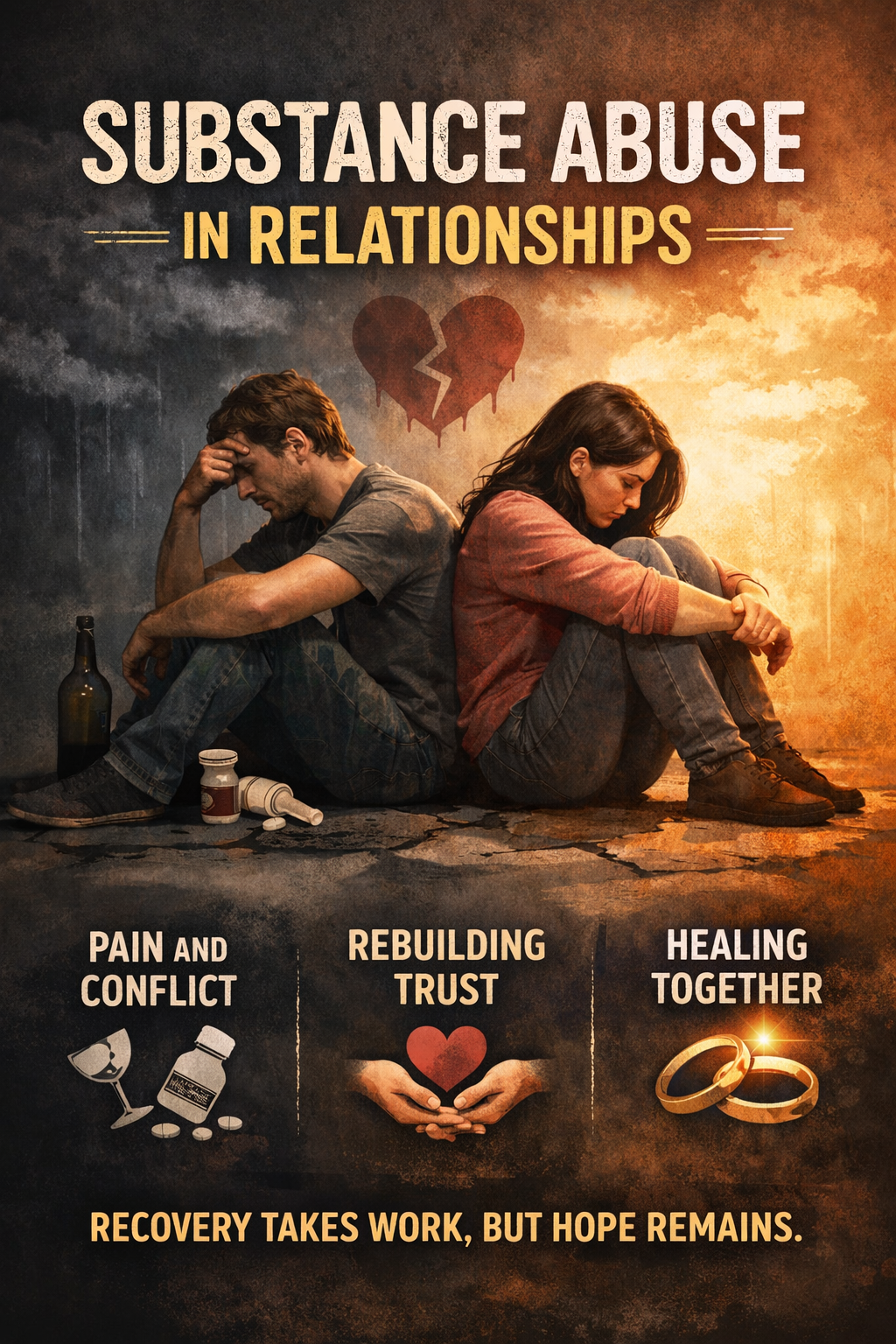
Substance abuse in marriage: Healthy and effective ways to address the challenges of addiction while keeping family dynamic intact. How can couples counseling can help navigate through these hurdles!
Substance abuse within a marriage is rarely an isolated issue; it is a deeply layered challenge that affects emotional connection, communication, trust, and the overall stability of the family system. Addiction does not exist in a vacuum. It reshapes daily interactions, influences decision-making, and often introduces unpredictability into what should be a space of safety and partnership. Over time, both partners can find themselves caught in patterns that feel impossible to escape—one struggling with dependency, the other struggling with how to respond, support, or protect themselves and the family.
In many relationships, substance abuse gradually shifts roles and responsibilities. The non-using partner may take on more control, attempting to compensate for instability, while the partner struggling with addiction may withdraw, become defensive, or experience shame. This imbalance can lead to resentment, emotional fatigue, and a breakdown in mutual respect. Trust, once compromised, becomes one of the most difficult elements to rebuild. Broken promises, secrecy, and repeated disappointments can leave lasting emotional wounds that do not simply disappear once substance use is reduced or stopped.
At the same time, it is important to recognize that addiction is not solely a matter of willpower. It is often connected to underlying emotional pain, unresolved trauma, stress, or mental health challenges. When couples begin to understand this, the dynamic can shift from one of blame to one of awareness. This does not excuse harmful behavior, but it creates a more productive foundation for addressing it. Acknowledging the deeper roots of substance use allows both partners to approach the issue with greater clarity and intention.
Healthy and effective ways to address substance abuse in marriage require both structure and compassion. Open communication becomes a cornerstone, but it must be intentional and constructive. Conversations should focus on expressing feelings and needs rather than assigning fault. This helps reduce defensiveness and creates space for honest dialogue. At the same time, boundaries are essential. Boundaries are not about punishment; they are about protection. They define what is acceptable within the relationship and help maintain a sense of stability, especially when behaviors become unpredictable or harmful.
Another key element is consistency. Change does not happen overnight, and recovery is often a nonlinear process. There may be progress followed by setbacks, and both partners need to be prepared for this reality. Developing routines that support stability—such as regular check-ins, shared responsibilities, and healthy habits—can provide a sense of grounding. These routines help rebuild a sense of normalcy within the family and reinforce a shared commitment to moving forward.
Equally important is the ability to separate the person from the addiction. When a partner is struggling with substance use, their behavior may not reflect their true intentions or values. Holding onto the distinction between the individual and the addiction can prevent the relationship from becoming defined solely by the problem. This perspective allows for accountability without stripping away empathy, which is critical for long-term healing.
Couples counseling offers a structured and supportive environment to navigate these complexities. It brings both partners into the healing process, rather than isolating the issue to one individual. This shared approach can significantly reduce feelings of loneliness and misunderstanding that often arise in relationships affected by addiction. Within therapy, couples are guided to identify patterns that may be contributing to the cycle of substance use and conflict, and they are equipped with tools to interrupt those patterns.
One of the most powerful aspects of couples counseling is its focus on communication. Many couples dealing with substance abuse fall into cycles of criticism, defensiveness, or avoidance. Therapy helps replace these patterns with more effective ways of expressing needs and listening to one another. Learning how to communicate without escalating conflict can reduce emotional triggers that might otherwise contribute to relapse or further disconnection.
In addition to communication, counseling emphasizes rebuilding trust through consistent, observable actions. Trust is not restored through words alone; it is rebuilt through reliability, honesty, and follow-through over time. Therapists often help couples set realistic expectations, allowing trust to develop gradually rather than expecting immediate repair. This process can be challenging, but it is essential for restoring a sense of safety within the relationship.
Counseling also addresses the emotional toll that addiction takes on both partners. The individual struggling with substance use may experience guilt, shame, or fear of failure, while the other partner may carry feelings of anger, hurt, or helplessness. Providing space for both experiences to be acknowledged is crucial. When both partners feel heard and validated, it becomes easier to move forward without being anchored to past pain.
Beyond the couple itself, the family dynamic must also be considered. Children, if present, are often deeply affected by substance abuse, even if it is not openly discussed. Maintaining a stable and supportive environment for them requires intentional effort. This includes minimizing exposure to conflict, providing reassurance, and modeling healthy coping strategies. Couples counseling can help parents align on how to support their children while also addressing their own challenges.
Recovery within a marriage is not just about eliminating substance use; it is about redefining the relationship. It involves creating new patterns of interaction, rediscovering shared values, and rebuilding a sense of partnership. This process can lead to a stronger and more resilient connection, one that is rooted in honesty, mutual support, and a deeper understanding of one another.
There will be moments of difficulty, and progress may feel slow at times. However, the willingness to confront the issue together, to seek support, and to remain committed to growth can transform even the most strained relationships. When both partners engage in the process with intention, it becomes possible not only to address the challenges of addiction but to emerge from them with a renewed sense of strength and unity.
A marriage tested by substance abuse carries the weight of hardship, but it also holds the potential for profound transformation. With patience, structure, and the right support, couples can move beyond survival and begin to build a relationship that is healthier, more stable, and deeply connected.

dr.dan
Related Posts

Strategic ways to make your marriage divorce proof. Hang on, it should be a wild ride.
Our older generation became experts when it comes to relationships, marriages...

The Magic of Loyalty and Faithfulness: Why Trust Needs Constant Nurturing in Long-Term Relationships
In the symphony of love, trust is the steady rhythm that keeps everything...

When something becomes damaged, repair it instead of opting for a replacement. The same principle applies to relationships and marriages. Continue reading to find guidance on preserving your partnership if you’re genuinely dedicated to its success
In modern society, there's a prevailing tendency to replace things when they...

Is it possible to forgive and move on after infidelity? Some effective strategies in repairing relationships after betrayal, despite popular belief of” Once a cheater, ALWAYS a cheater”!
Infidelity has long been regarded as one of the most painful betrayals in a...