
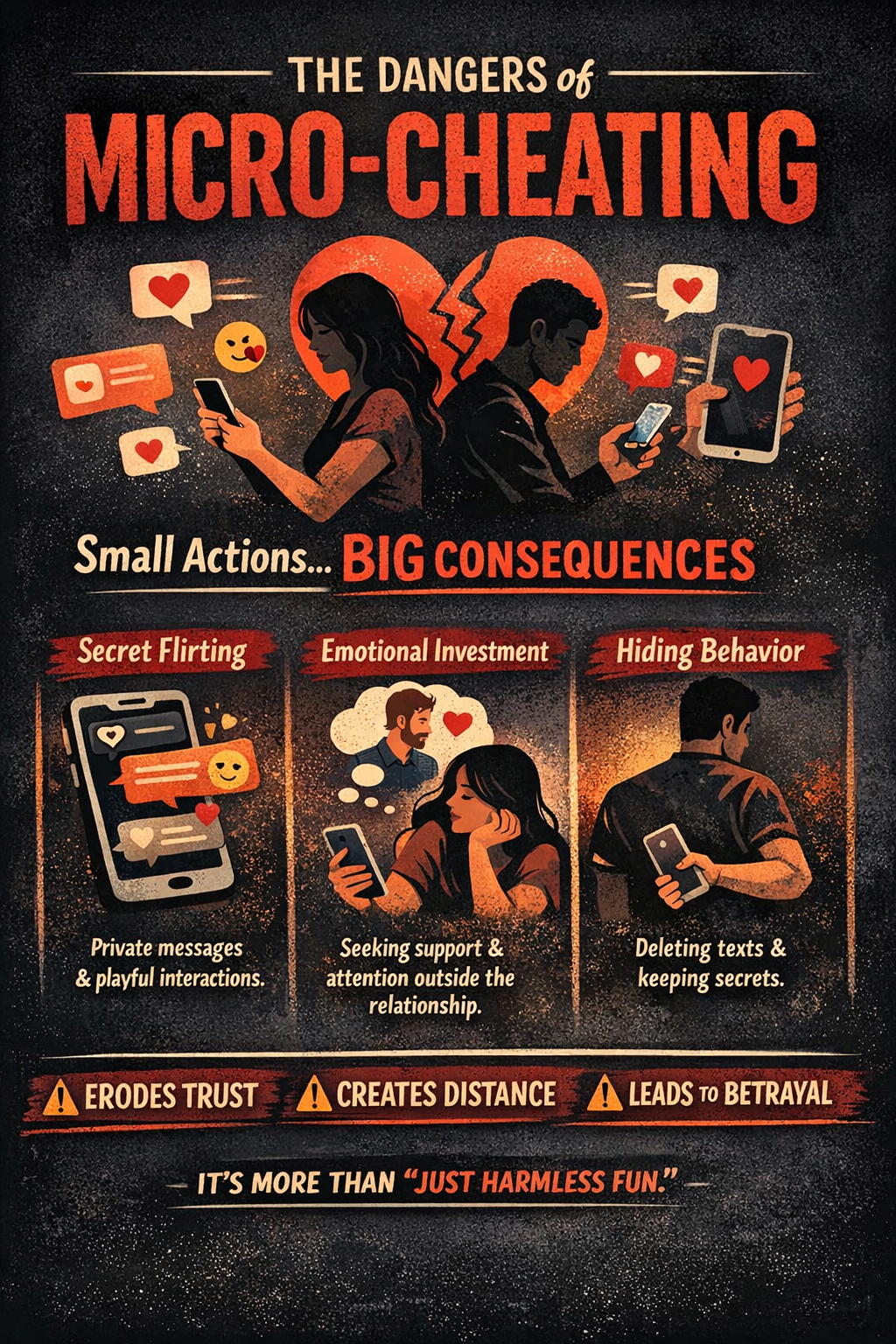
Small acts of cheating: The rise of “micro-cheating” and its impact on trust in relationship. What really constitute cheating and understand the nuances between all that is involved and at what level does micro-cheating actually happens ?
In an era where communication is instant and constant, relationships are being tested in ways that didn’t exist a generation ago. With smartphones, social media, and endless opportunities for connection, the definition of cheating has become less clear-cut. No longer confined to physical intimacy, betrayal can now occur in subtle, almost invisible ways. This is where the concept of “micro-cheating” has emerged—small, often ambiguous behaviors that may not seem significant on the surface, yet can have a profound impact on trust and emotional security within a relationship.
Micro-cheating is not about a single, obvious act of infidelity. It’s about patterns of behavior that suggest attention, energy, or emotional investment is being directed outside the relationship in ways that feel inappropriate or secretive. These behaviors can include consistently engaging with a specific person online in a flirtatious manner, maintaining private conversations that are intentionally hidden, seeking validation or emotional support from someone else instead of a partner, or presenting oneself differently to attract outside attention. On their own, these actions may appear harmless or even dismissible. But over time, they can create a subtle shift in loyalty and connection.
What makes micro-cheating particularly complex is its ambiguity. Unlike traditional cheating, which is widely recognized and often universally condemned, micro-cheating lives in a gray area. One partner may view certain behaviors as innocent or insignificant, while the other may experience them as a breach of trust. This disconnect can lead to confusion, defensiveness, and emotional distance. The issue is not always the behavior itself, but the lack of shared understanding around what is acceptable within the relationship.
At the core of this issue lies a fundamental question: what truly constitutes cheating? The answer is not universal. For some, cheating begins the moment physical boundaries are crossed. For others, emotional intimacy with someone outside the relationship can feel equally, if not more, damaging. In many cases, the defining factor is not the specific act, but the presence of secrecy. When someone feels the need to hide interactions, delete messages, or downplay connections, it often signals that a boundary—spoken or unspoken—has already been crossed.
Intent also plays a crucial role in understanding micro-cheating. There is a significant difference between casual, transparent interaction and behavior driven by a desire for validation, attention, or emotional escape. When someone begins to seek fulfillment outside of their relationship—whether through flirtation, emotional connection, or external approval—it can indicate that something within the relationship is either lacking or being avoided. This doesn’t always mean the relationship is failing, but it does highlight areas that require attention and honest conversation.
The impact of micro-cheating on trust is often gradual rather than immediate. Unlike a single act of betrayal that creates a clear rupture, micro-cheating erodes trust over time. It introduces doubt, fuels insecurity, and creates a sense of emotional distance. A partner may begin to question not only specific behaviors, but the overall integrity of the relationship. Even if no physical boundaries are crossed, the emotional consequences can be significant. Trust, once shaken, becomes harder to rebuild when the lines of betrayal are unclear or continuously shifting.
Another layer to consider is the role of modern technology. Social media platforms encourage constant interaction, comparison, and validation. The line between public and private life has blurred, making it easier for individuals to engage in behaviors that may feel harmless but carry deeper implications. A message that might have once been a passing conversation can now turn into an ongoing connection. A simple “like” can evolve into consistent attention. Over time, these small interactions can form patterns that resemble emotional investment.
However, it is important to recognize that not all external interactions are inherently harmful. Healthy relationships allow for individuality, friendships, and social engagement outside the partnership. The difference lies in transparency, intention, and boundaries. When interactions are open, respectful, and do not detract from the primary relationship, they are less likely to cause harm. It is when these interactions become secretive, prioritized, or emotionally charged that they begin to cross into problematic territory.
Understanding the nuances of micro-cheating requires couples to move away from assumptions and toward clear communication. Many conflicts arise not because of intentional betrayal, but because expectations were never clearly defined. What one person considers harmless, another may find deeply hurtful. Without open dialogue, both partners operate within their own definitions, increasing the likelihood of misunderstanding and emotional disconnect.
Cheating, in its truest sense, begins when trust is compromised. This can happen through physical actions, but it can also occur through emotional withdrawal, secrecy, or the gradual redirection of attention and energy away from the relationship. It is not always a dramatic event, but often a series of small choices that collectively weaken the foundation of connection.
The rise of micro-cheating reflects a broader shift in how relationships function in the modern world. It challenges individuals to be more intentional, more self-aware, and more communicative about their needs and boundaries. It also invites a deeper reflection on what loyalty and commitment truly mean—not just in action, but in attention, intention, and emotional presence.
Ultimately, the health of a relationship is not determined by the absence of temptation or external interaction, but by the presence of trust, respect, and clarity. Micro-cheating serves as a reminder that it is often the smallest actions, repeated over time, that have the greatest impact. Whether those actions build trust or slowly erode it depends on the awareness and choices of both individuals involved.
In a world where connection is constant, protecting the integrity of a relationship requires more than avoiding obvious betrayal. It requires mindfulness in the subtle moments—the conversations, the intentions, and the decisions that shape where your energy truly goes.

dr.dan
Related Posts

The ONE of many challenges in Parenting: The art of active listening with teenage kids and create healthy and engaging conversations within family dynamics. The do’s and don’ts of interactions.
Parenting teenagers is often considered one of the most rewarding yet...
Small acts of cheating: The rise of “micro-cheating” and its impact on trust in relationship. What really constitute cheating and understand the nuances between all that is involved and at what level does micro-cheating actually happens ?
In an era where communication is instant and constant, relationships are...

The hidden dangers of insomnia: How can it relate to some case of depression?
Insomnia, characterized by persistent difficulty falling or staying asleep,...

What Is “Walkaway Wife Syndrome, And Could It Happen To You”?
Imagine realizing that the love you thought would last forever is fading away....