
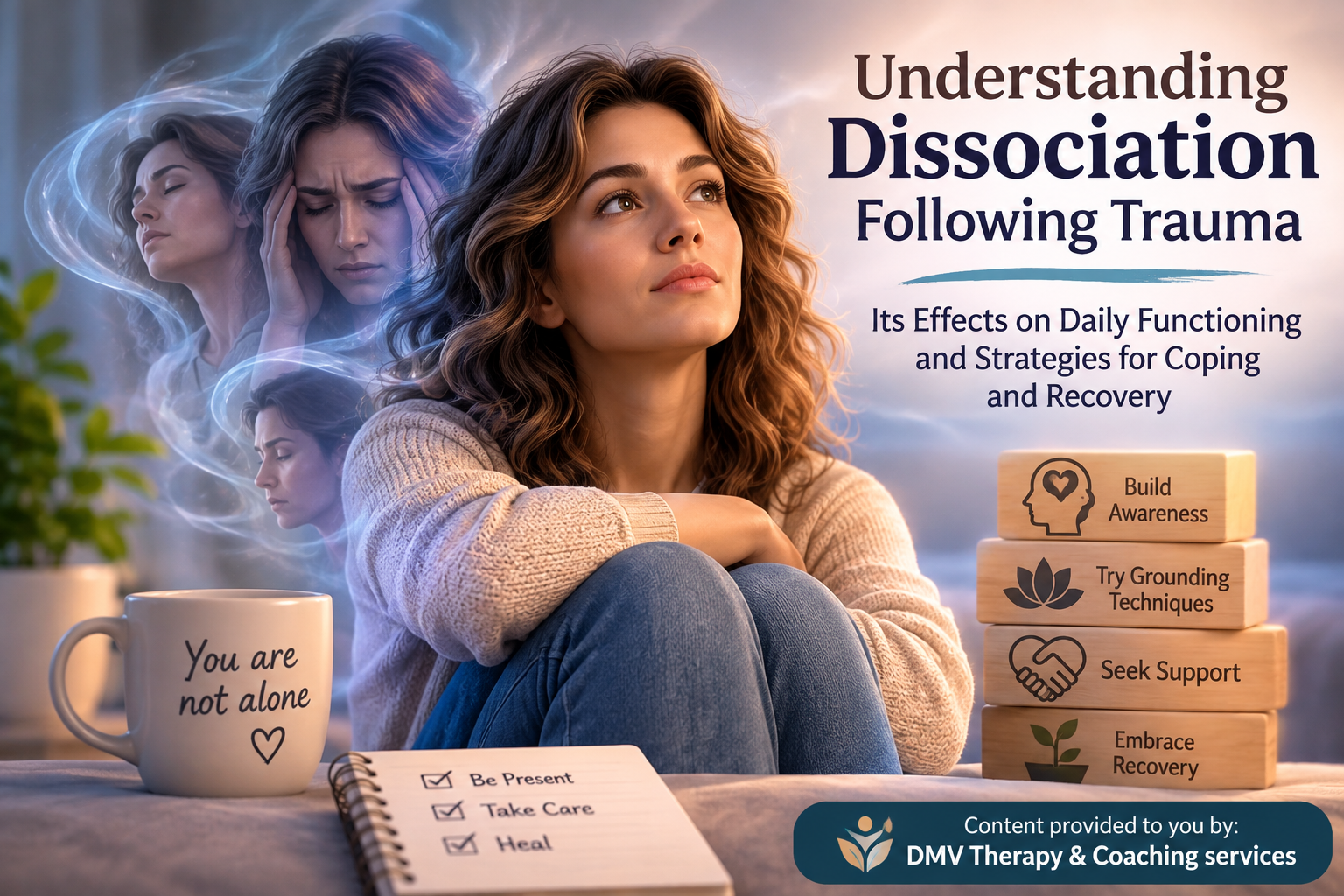
Understanding Dissociation Following Trauma: Its Effects on Daily Functioning and Evidence-Based Strategies for Coping and Recovery
Traumatic experiences can affect people in ways that are not always immediately visible. While some individuals experience anxiety, fear, or emotional distress, others may develop a response known as dissociation. Dissociation can influence how a person experiences their thoughts, emotions, memories, surroundings, and sense of identity. For some, it may occur occasionally during periods of stress; for others, it can become a recurring experience that interferes with everyday life. Understanding why dissociation happens, recognizing its effects, and learning practical coping strategies can help individuals take meaningful steps toward recovery.
What is dissociation following trauma?
Dissociation is a psychological experience in which a person feels disconnected from their thoughts, emotions, memories, body, identity, or surroundings. It can occur as a response to overwhelming stress or trauma, although not everyone who experiences trauma develops dissociative symptoms. In some circumstances, dissociation may function as a protective response when an individual feels unable to process an overwhelming or threatening situation.
Dissociation can take different forms. Depersonalization involves feeling disconnected from oneself, as though observing one’s thoughts, feelings, or actions from a distance. Derealization creates a sense that the surrounding environment is unreal, unfamiliar, distant, or dreamlike. Other experiences may include emotional numbness, difficulty recalling certain events, losing track of time, or feeling mentally absent during conversations or daily activities. These experiences can vary in intensity and frequency, and they do not necessarily indicate the presence of a dissociative disorder. A qualified mental health professional can help determine what may be contributing to them.
How can dissociation affect everyday life?
When dissociation occurs frequently, it can make ordinary activities more challenging. A person may struggle to remain focused during conversations, follow instructions, complete work assignments, or remember details of everyday events. They may find themselves physically present but mentally disconnected, making it difficult to engage fully with family members, colleagues, or friends. These experiences can sometimes create misunderstandings, particularly when others interpret emotional distance or forgetfulness as disinterest or a lack of attention.
Dissociation may also affect emotional well-being and relationships. Some individuals experience difficulty identifying or expressing their feelings, while others feel disconnected from people they care about. Activities that once felt familiar or enjoyable may become difficult to engage in because of emotional numbness, anxiety, or a persistent sense of disconnection. In some cases, individuals may avoid certain environments, conversations, or situations because they fear experiencing dissociation again. Over time, these difficulties can contribute to isolation, frustration, reduced confidence, and challenges with maintaining daily routines.
Why does dissociation happen?
Dissociation can develop when the brain and nervous system respond to experiences perceived as overwhelming, frightening, or emotionally unbearable. During a traumatic event, a person may feel unable to escape, fight back, or process what is happening. Disconnection from emotions, sensations, or immediate surroundings may temporarily reduce the intensity of the experience.
Although this response may serve a protective purpose during overwhelming circumstances, it can sometimes continue after the original threat has passed. Reminders of trauma, stressful situations, interpersonal conflict, or feelings of vulnerability may trigger similar reactions. The individual may experience disconnection without immediately understanding what caused it. It is important to recognize that dissociation is not a conscious choice or a personal weakness. It is an experience that deserves understanding, appropriate assessment, and compassionate support. Dissociative symptoms can also have causes unrelated to trauma, including other mental health or medical conditions, which is why professional evaluation can be important.
Evidence-based strategies for coping and recovery
Recovery from trauma-related dissociation often begins with developing a greater sense of safety and learning to recognize the situations or sensations that may trigger disconnection. Grounding techniques can help individuals reconnect with the present moment when they begin feeling detached. One commonly used approach is the 5-4-3-2-1 technique: identify five things you can see, four things you can physically feel, three things you can hear, two things you can smell, and one thing you can taste. Other grounding strategies include holding a familiar object, noticing the sensation of your feet touching the floor, describing your surroundings, or gently naming the current date and location. These techniques are not guaranteed to stop dissociation, but they may help some individuals regain a sense of connection with their immediate environment.
Establishing predictable daily routines can also support emotional stability. Consistent sleep patterns, regular meals, gentle physical activity, and manageable daily goals may help reduce additional stress. Some individuals benefit from keeping a journal to identify patterns, emotional triggers, and situations associated with dissociative experiences. However, journaling about traumatic memories should be approached carefully, particularly if revisiting those experiences increases distress. The goal is not to force memories or emotions to surface, but to develop awareness at a manageable pace.
Professional support is particularly important when dissociation is frequent, distressing, or interfering with daily functioning. A trauma-informed mental health professional can assess symptoms, explore possible contributing factors, and develop an individualized treatment plan. Depending on the person’s needs and clinical presentation, treatment may include trauma-focused cognitive behavioral therapy, cognitive processing therapy, or eye movement desensitization and reprocessing (EMDR). These approaches are not interchangeable, and the most appropriate treatment depends on a careful clinical assessment. Some individuals may also benefit from learning emotional regulation skills, developing distress-tolerance strategies, and gradually strengthening their ability to remain connected to the present.
Support from trusted friends and family members can contribute to recovery as well. Having someone who listens without judgment, respects personal boundaries, and understands that dissociation is not intentional can make it easier to navigate difficult experiences. Loved ones do not need to have all the answers; patience, consistency, and emotional reassurance can make a meaningful difference.
Recovery is a process, not a race
Healing from trauma and managing dissociation rarely happen overnight. Progress may involve learning to recognize early warning signs, responding to triggers with greater awareness, and gradually rebuilding a sense of safety and connection. Some days may feel easier than others, and occasional setbacks do not mean that recovery has failed. What matters is developing strategies that are appropriate for the individual’s needs and allowing progress to happen without unnecessary pressure.
Dissociation can affect relationships, concentration, emotional well-being, and everyday functioning, but it does not have to define a person’s life. With appropriate professional support, practical coping strategies, and a compassionate understanding of the trauma response, individuals can work toward feeling more present, emotionally connected, and confident in their daily experiences. If dissociative episodes involve significant memory gaps, safety concerns, or substantial disruption to daily life, seeking a professional assessment is especially important.
Disclaimer: This article is intended for educational purposes only and should not replace professional mental health assessment, diagnosis, or treatment.

dr.dan
Related Posts

The many ways that depression influences sleep patterns: From insomnia to hypersomnia (not always symptom of narcolepsy).
Depression can significantly influence your daily sleep in various ways....

The Unseen Struggles of Anxiety: Understanding Intrusive Thoughts and How to Overcome Them
Anxiety is a common mental health condition that affects millions of people...

Complexities of S.A.D (Seasonal Affective Disorders): Coping with mood disorders related to winters and cold temperatures. Effective Strategies that can work during these long winter months to alleviate these moods.
Seasonal Affective Disorder (SAD) is a type of mood disorder that recurs...
Trauma and Validation: Understanding How Past Emotional Wounds Create a Subconscious Need to Overexplain, Defend, and Justify Your Behavior to Others
Human beings naturally seek understanding, acceptance, and connection. We all...