
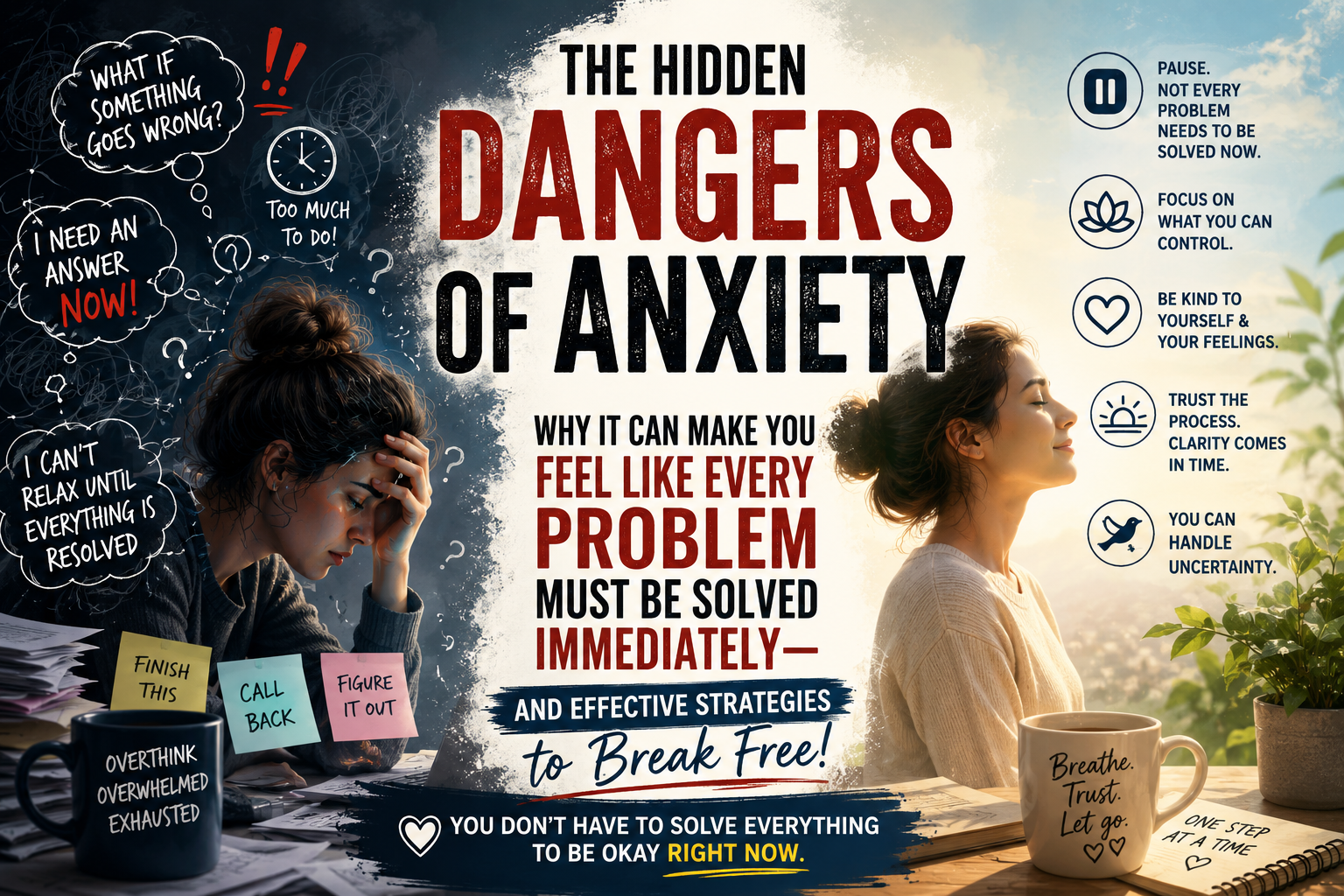
The Hidden Dangers of Anxiety: Why It Can Make You Feel Like Every Problem Must Be Solved Immediately—And Effective Strategies to Break Free From the Cycle
Anxiety is often described as worry, fear, nervousness, or a feeling that something bad might happen. But anxiety can be much more complicated than simply feeling worried. One of its less obvious effects is the intense pressure it can create to fix, resolve, analyze, or control every problem immediately. When anxiety takes over, an unresolved issue can feel almost unbearable. Your mind may tell you that you cannot relax until you have found an answer, made a decision, clarified a misunderstanding, completed a task, or eliminated whatever is causing discomfort. The problem is that life rarely provides immediate solutions. Many situations require time, patience, uncertainty, or simply the willingness to let things unfold. When anxiety convinces you that every uncomfortable feeling must disappear right now, you can become trapped in a cycle that actually makes anxiety stronger.
At the heart of this experience is an understandable desire: you want relief. When something feels uncertain or threatening, the brain naturally looks for ways to restore a sense of safety. Anxiety can intensify this process until the mind begins treating uncertainty itself as a problem that must be eliminated. You might repeatedly replay a conversation, search for reassurance, check your phone, research an issue, plan every possible outcome, send another message to make sure someone is okay, or mentally rehearse what you will do if something goes wrong. These behaviors can provide a temporary sense of control. For a few moments, you may feel calmer because you have done something. Yet the relief often does not last. Soon another question appears, another possibility comes to mind, or another uncertainty demands your attention.
This is one of anxiety’s most deceptive characteristics. The anxious mind can make excessive problem-solving feel productive even when it is actually keeping you stuck. You may believe that thinking about something more will eventually make you feel better, but sometimes additional thinking simply creates additional questions. You solve one hypothetical problem and discover three more. You look for certainty and find more reasons to doubt. You try to eliminate every negative possibility and end up becoming increasingly aware of everything that could potentially go wrong.
The cycle often begins with a trigger. It could be an uncomfortable conversation, an unanswered text message, a mistake at work, a financial concern, a relationship issue, an upcoming event, a health concern, or even a vague feeling that something is not right. The trigger itself may be relatively small, but anxiety can quickly assign enormous importance to it. The mind starts asking, “What if something is wrong?” Then comes the urge to figure it out. “What should I do?” “What does this mean?” “What if I made things worse?” “What if I wait and something happens?” The questions can continue until the person feels compelled to take action. This urgency is important because anxiety often does not merely say, “There is a problem.” It says, “There is a problem, and you must solve it immediately.” That second message is what can turn ordinary uncertainty into emotional exhaustion. You may notice that you have difficulty concentrating on anything else while an unresolved issue is hanging over you. Even when you are watching television, spending time with family, working, or trying to sleep, part of your attention remains locked onto the problem. Your mind keeps returning to it because it believes that continuing to think is necessary. You may even feel guilty when you attempt to relax because a part of you says, “How can you relax when this still hasn’t been figured out?”
This is where anxiety can begin taking away something extremely valuable: your ability to experience the present moment without constantly trying to protect yourself from the future. The human brain is designed to notice potential threats. That ability is incredibly useful. If there is an immediate danger, recognizing it and responding quickly can be lifesaving. But anxiety can activate this threat-detection system in situations where immediate action is unnecessary or impossible. The brain can respond to uncertainty as though uncertainty itself were a threat. Instead of distinguishing between “This is uncomfortable” and “This is dangerous,” anxiety can blur the two.
As a result, an uncomfortable emotion may begin to feel like an emergency.
You might think, “I can’t stand feeling this way,” or “I need to get rid of this feeling.” The natural response is then to do something that promises relief. You seek reassurance. You distract yourself. You analyze. You check. You avoid. You try to control another person’s reaction. You make a decision simply to end the uncertainty, even if you are not ready to make it. The specific behavior can vary, but the underlying goal is often the same: make the uncomfortable feeling stop. There is nothing wrong with wanting to feel better. The difficulty begins when your brain learns that negative emotions are intolerable and must always be removed as quickly as possible. When that happens, ordinary emotional experiences can become frightening in their own right. Ironically, constantly trying to eliminate anxiety can teach the brain to become more afraid of anxiety. Imagine that every time you feel uncertain, you immediately begin researching. Every time you worry that someone is upset with you, you ask for reassurance. Every time you make a mistake, you repeatedly review what happened. Every time you experience an uncomfortable thought, you try to prove that it is not true. Your brain may gradually learn a pattern: “Whenever this feeling appears, we need to do something immediately.” The behavior provides short-term relief, which reinforces the habit. The next time anxiety appears, the urge to act can become even stronger. This is why learning to tolerate uncertainty and uncomfortable emotions can be so powerful. The goal is not to become careless, indifferent, or passive. The goal is to develop the ability to recognize when action is genuinely necessary and when anxiety is simply demanding action because it wants immediate relief. There is an important difference between solving a problem and trying to eliminate uncertainty. If your car has a flat tire, there is a practical problem that requires action. If you have an important deadline tomorrow, creating a plan can be helpful. If you hurt someone’s feelings, having an honest conversation may be appropriate. But many of life’s most distressing questions cannot be solved through immediate mental effort. You cannot always know exactly what another person is thinking. You cannot guarantee that every decision will produce the desired outcome. You cannot control how everyone will respond to you. You cannot predict every future event. You cannot completely eliminate the possibility of disappointment.
Trying to achieve that level of certainty can become an exhausting full-time job.
One of the most helpful strategies is learning to pause before responding to the anxious urge. When you feel the pressure to immediately solve something, give yourself a moment and ask, “Is there actually something I need to do right now, or am I trying to make this uncomfortable feeling disappear?” That question can create valuable space between the emotion and the reaction. Sometimes there is a genuine action you can take. If so, take it calmly and intentionally. But if there is nothing productive to do at that moment, practice allowing the uncertainty to exist without immediately responding to it. This can feel uncomfortable at first. In fact, it may feel extremely uncomfortable. But discomfort is not failure. It is part of learning. You are teaching your mind that uncertainty can be experienced without automatically turning into an emergency.
Another powerful shift is changing the question from “How can I make this feeling go away?” to “How can I take care of myself while this feeling is here?” Those questions may sound similar, but psychologically they are very different. The first treats the emotion as something that must be defeated. The second acknowledges that emotions can be present without controlling your behavior. You might say to yourself, “I am anxious right now, and I don’t have to solve everything this minute.” You might remind yourself, “I can handle not knowing.” You might recognize, “My mind is looking for certainty because it feels threatened, but that doesn’t mean I need to give it certainty.” These statements are not about pretending that everything is fine. They are about creating a healthier relationship with your thoughts and emotions. It can also help to distinguish between thinking and worrying. Thinking generally moves toward something useful: a decision, a plan, an understanding, or an action. Worry often circles around the same questions without producing meaningful resolution. You may repeatedly ask yourself the same thing in slightly different ways, hoping that one more round of thinking will finally create certainty. When you notice yourself going in circles, try asking, “Has this thinking produced anything new?” If the answer is no, continuing to think may not be problem-solving anymore. It may simply be anxiety seeking reassurance. Another important strategy is setting boundaries around problem-solving. Anxiety often tells you that you must think about an issue whenever it appears. Instead, you can consciously decide when you are going to address it. If something does not require immediate attention, you might tell yourself, “I will give this my attention later, but I don’t need to solve it right now.” This can be especially useful when anxious thoughts appear at night. Rather than allowing your mind to turn bedtime into a strategy session, remind yourself that tomorrow is a more appropriate time to address what can actually be addressed.
Learning to tolerate uncertainty does not happen overnight. It is a skill, and like any skill, it develops through practice. The first time you resist an anxious urge, you may feel more anxious rather than less. That does not mean the strategy is not working. Your brain has become accustomed to receiving immediate reassurance or taking immediate action. When you change the pattern, your anxiety may temporarily protest. With repeated practice, however, you can begin discovering something important: you can feel anxious without obeying anxiety. That realization can be transformative.
You may still experience worry. You may still have moments when uncertainty feels uncomfortable. You may still want to know exactly how something will turn out. The goal is not to become a person who never worries. The goal is to become someone who does not allow every anxious thought to dictate what happens next. It is also important to remember that not every thought deserves an answer. Anxiety can produce thoughts that feel urgent, convincing, and important simply because they are emotionally intense. But intensity is not the same thing as truth. A thought such as “Something must be wrong” is a mental event, not automatically a fact. A thought such as “I have to figure this out right now” is an instruction from your anxious mind, not a command you are required to follow. Developing this perspective can create psychological freedom. Instead of arguing with every anxious thought, you can notice it and choose how much attention to give it.
There is also tremendous value in returning your attention to what is happening in front of you. Anxiety frequently pulls attention into imagined futures or endless reviews of the past. Grounding yourself in the present can interrupt that cycle. Notice your surroundings. Pay attention to your breathing. Feel your feet against the floor. Listen to the sounds around you. Focus on the task you are actually doing. These simple acts can remind your nervous system that, in this particular moment, you are here rather than inside every possible future scenario your mind has created. Healthy problem-solving also requires accepting that some answers take time. Sometimes the best decision is not to decide immediately. Sometimes clarity arrives after you sleep, gather more information, speak with someone you trust, or simply allow emotions to settle. Immediate action is not always wise action. There is a difference between urgency and importance. Anxiety can make something feel urgent simply because it feels uncomfortable. But an emotionally urgent feeling does not necessarily mean that immediate action is required.
This distinction can change the way you approach difficult situations. Instead of asking, “How do I make this go away?” you can ask, “What is actually within my control?” You can then direct your energy toward that small area of control and release what is outside it. Perhaps you can communicate clearly, but you cannot control another person’s response. Perhaps you can prepare for an event, but you cannot guarantee the outcome. Perhaps you can make a thoughtful decision, but you cannot guarantee that every consequence will be perfect. Perhaps you can apologize sincerely, but you cannot force someone else to forgive you immediately. Life becomes considerably less exhausting when you stop demanding certainty from situations that cannot provide it.
For some people, anxiety can become severe enough to significantly interfere with daily life, relationships, work, sleep, or the ability to function. When persistent anxiety feels overwhelming or difficult to manage independently, reaching out to a qualified mental-health professional can be an important and courageous step. Approaches such as cognitive behavioral therapy and other evidence-based treatments can help people understand anxiety patterns, change unhelpful responses, and develop greater tolerance for uncertainty. Seeking support is not a sign that you are weak or incapable. Sometimes the strongest decision is recognizing that you do not have to figure everything out alone.
Ultimately, one of the most important lessons about anxiety is that you do not have to solve every problem in order to be okay in this moment. Some problems can wait. Some questions will remain unanswered for a while. Some feelings will come and go without requiring immediate action. Some situations will resolve themselves in ways you could not have predicted. And some challenges will require you to accept uncertainty rather than defeat it. The goal is not to eliminate every negative emotion from your life. That would be impossible, and attempting to do so can create even more suffering. The goal is to develop the confidence to experience difficult emotions without immediately becoming their servant. You can feel worried and still breathe. You can feel uncertain and still continue your day. You can have unanswered questions and still rest. You can experience fear without allowing fear to make every decision.
And you can remind yourself that a problem does not become more solvable simply because you worry about it more intensely. Sometimes the most powerful response to anxiety is not another hour of analysis, another search for reassurance, or another attempt to control the uncontrollable. Sometimes it is a pause. A breath. A decision to wait. A willingness to say, “I don’t know yet, and I can handle not knowing.”
That is not giving up. That is learning to trust yourself.
And with practice, you may discover that the peace you were desperately trying to create by solving everything immediately was never dependent on having every answer. It was built, instead, on developing the courage to face uncertainty and realizing that you are capable of moving forward even when you don’t know exactly what happens next.
Learn More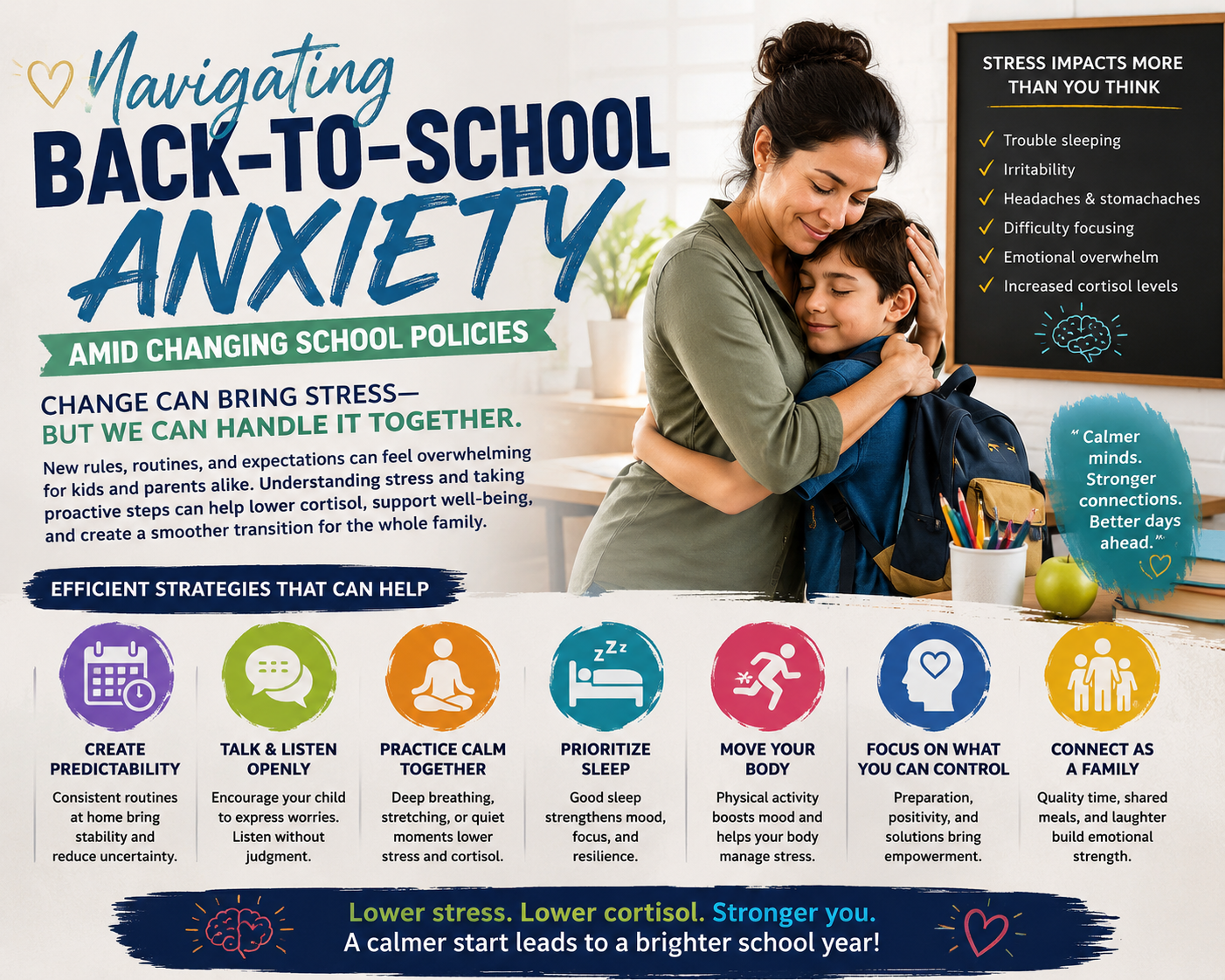
Navigating back-to-school anxiety amid changing school policies. Imminent changes that can bring stress to kids and parents and knowing what to do to reduce the levels of cortisol in your body. Efficient strategies that can help you for school year 2026-2027.
The return to school can be an exciting time filled with new opportunities, friendships, and personal growth, but it can also create anxiety for both children and parents. Changes in school policies, schedules, classroom expectations, transportation, technology, academic requirements, or safety procedures can make an already stressful transition feel even more uncertain. For children, changes to familiar routines may create feelings of fear, confusion, or frustration. For parents, concerns about how their children will adjust can lead to worry, sleepless nights, and emotional exhaustion. Understanding how stress affects the mind and body can help families approach the new school year with greater confidence and resilience.
One of the body’s primary responses to stress involves the release of cortisol, a hormone that plays an important role in helping us respond to challenges. Cortisol itself is not harmful; in fact, it is essential for maintaining energy, alertness, and an appropriate response to stressful situations. The concern arises when stress becomes prolonged and the body remains in a heightened state of alertness without enough opportunities for recovery. When children or adults experience ongoing worry, uncertainty, poor sleep, emotional pressure, and constant stimulation, they may begin to feel mentally and physically overwhelmed. The objective should not be to eliminate cortisol, because that is neither realistic nor desirable. Instead, the goal is to develop healthy habits that help the body regulate its stress response and return to a calmer state.
One of the most effective ways to manage back-to-school anxiety is to create a sense of predictability at home. When many things outside the home are changing, a consistent family routine can provide a powerful feeling of stability. Regular sleep and wake times, predictable meals, preparation for the next day, designated homework periods, family conversations, and opportunities for relaxation can help children feel more secure. Children do not need every moment of their day controlled, but knowing what to expect can reduce uncertainty and make transitions easier. A stable home environment can become an emotional anchor when other parts of life feel unpredictable.
Communication is equally important. Parents should create opportunities for children to talk openly about what they are experiencing without immediately dismissing their concerns or trying to fix everything. A child who says, “I don’t want to go back to school,” may not simply be expressing dislike. They may be worried about making friends, dealing with academic pressure, adjusting to a new teacher, being separated from their parents, or dealing with changes they do not fully understand. Instead of responding with, “Don’t worry, everything will be fine,” parents can ask, “What part of going back to school worries you the most?” This simple question can open the door to a much deeper conversation and help identify what is actually causing the anxiety.
Parents should also be mindful of how they communicate their own concerns. Children are extremely sensitive to the emotional states of the adults around them. If parents constantly express fear, frustration, or uncertainty about school changes, children may interpret those emotions as evidence that something dangerous is happening. This does not mean parents should hide their feelings or pretend that everything is perfect. Instead, parents can model healthy emotional regulation by saying something like, “I know there are some changes this year, and I have questions too. We will learn what we need to know and figure things out together.” This teaches children that uncertainty does not automatically mean danger and that difficult situations can be approached calmly and constructively.
Another important strategy is helping children distinguish between what they can control and what they cannot. School policies, decisions made by administrators, the behavior of other students, and unexpected changes are not always within a family’s control. Spending excessive time worrying about these things can increase stress without producing a solution. Instead, families can focus on the areas they can influence, such as preparing school supplies, establishing routines, communicating with teachers, maintaining healthy sleep habits, and helping children develop problem-solving skills. A useful question for both parents and children is, “Is there something I can do about this right now?” If the answer is yes, take an appropriate action. If the answer is no, learning to accept the uncertainty can prevent unnecessary emotional exhaustion.
Physical health also plays an important role in managing stress. Adequate sleep, regular physical activity, proper hydration, and balanced nutrition can support the body’s ability to cope with daily challenges. When children are tired, hungry, dehydrated, or physically inactive, they may have greater difficulty regulating their emotions and concentrating. The same is true for parents. A parent who is constantly exhausted and running on caffeine may have less emotional capacity to respond calmly to a child’s anxiety. Establishing healthy routines before school begins can therefore benefit the entire family.
Breathing and relaxation techniques can also help individuals manage moments of heightened anxiety. Slow, comfortable breathing with a slightly longer exhale can encourage the body to shift away from a heightened stress response. Parents can practice these techniques with their children rather than presenting them as something the child needs to do because they are “anxious.” Taking several slow breaths together, stretching, going for a walk, listening to calming music, or spending a few quiet minutes together can become simple family rituals that promote emotional regulation.
It is also important to teach children that experiencing anxiety does not mean they are incapable of handling a situation. Sometimes adults unintentionally reinforce anxiety by trying to eliminate every uncomfortable experience for their children. While protecting children is a natural parental instinct, children also need opportunities to develop confidence through manageable challenges. Allowing them to solve age-appropriate problems, communicate with teachers, make decisions, recover from mistakes, and experience normal frustrations can help them discover that they are more capable than they may initially believe. Resilience develops when people learn that discomfort is something they can move through rather than something they must always avoid.
Parents can further help children by teaching them how to challenge catastrophic thinking. Anxiety often focuses on the worst possible outcome. A child might think, “What if nobody likes me?” or “What if I can’t do the work?” Instead of simply saying, “That won’t happen,” parents can help the child consider what they would do if the challenge occurred. They might discuss how the child could approach a classmate, ask a teacher for assistance, seek support from a counselor, or practice a difficult academic skill. This shifts the focus from predicting disaster to developing confidence in one’s ability to respond. The message becomes, “We don’t know exactly what will happen, but we know that we can figure things out.”
Parents should also be careful about consuming too much information about school changes. During uncertain periods, it is natural to repeatedly check emails, social media, school announcements, and online discussions. However, constantly monitoring information can sometimes increase anxiety rather than reduce it. Families can establish reasonable times to review school communications and then return their attention to everyday life. Being informed is valuable, but being consumed by information can keep the brain in a constant state of alertness.
Perhaps one of the most important lessons for families is that stress cannot always be avoided. The goal is not to create a completely stress-free childhood or a perfectly predictable school year. Instead, the goal is to develop the emotional skills necessary to navigate uncertainty. Children need to learn that they can experience nervousness and still move forward. Parents need to recognize that they do not have to know every answer immediately. Families need to understand that change can be uncomfortable without necessarily being harmful.
Back-to-school anxiety can therefore become an opportunity for growth. Instead of viewing every challenge as something that must be eliminated, families can use these experiences to teach emotional awareness, communication, problem-solving, resilience, and self-regulation. When children see their parents responding to uncertainty with patience and confidence, they learn that they too can face difficult situations without becoming overwhelmed by them.
If anxiety becomes persistent or begins to significantly interfere with a child’s ability to attend school, sleep, eat, socialize, concentrate, or function normally, professional support may be appropriate. The same applies to parents whose own anxiety becomes overwhelming or interferes with their daily lives. Seeking support is not a sign of weakness; it can be an important step toward developing healthier coping strategies.
As another school year begins, families should remember that they cannot control every policy, decision, change, or challenge that may arise. What they can control is how they prepare, how they communicate, how they care for their physical and emotional well-being, and how they respond when uncertainty appears. The ultimate goal is not to eliminate stress or cortisol from our lives, but to teach ourselves and our children how to move from stress back toward balance.
We cannot always control what changes around us, but we can learn to control how we respond to those changes. And sometimes, the greatest lesson a new school year can teach us is that we are far more capable of handling change than we ever realized.
Learn More
The Impact of Parenting Disagreements on Marital Satisfaction: Navigating Differences in Parenting Styles and Developing Healthy Strategies for Compromise
Parenting is one of the most rewarding experiences a couple can share, but it can also become one of the greatest sources of conflict in a marriage. Two people may deeply love one another and share the same hopes and dreams for their children while having very different ideas about how those goals should be achieved. One parent may believe in structure, rules, and consistent consequences, while the other may prioritize flexibility, emotional expression, and independence. One may be more protective, while the other encourages exploration and risk-taking. These differences do not necessarily mean that one parent is right and the other is wrong. However, when couples cannot communicate effectively or find common ground, disagreements about parenting can create tension that extends far beyond the immediate issue and can gradually affect marital satisfaction, emotional intimacy, and family harmony.
Why Parenting Disagreements Become So Emotional
Parenting disagreements are rarely just about the specific issue being discussed. A disagreement about bedtime, discipline, screen time, homework, or a child’s behavior may actually represent deeper beliefs about what makes a good parent. One parent may believe, “If I don’t establish strict rules, my child will become disrespectful,” while the other may think, “If we are too strict, our child will stop trusting us.” Both parents may be trying to protect their child, but they may be approaching parenting from completely different perspectives. These differences are often influenced by childhood experiences, cultural backgrounds, personality, personal values, previous relationships, education, and the way each individual was raised. Someone who grew up in a highly structured household may naturally believe that discipline and obedience create responsible adults, while someone who experienced overly strict or controlling parenting may intentionally choose a gentler and more emotionally supportive approach with their own children. Understanding these underlying influences is essential because couples often argue about what to do without taking time to understand why their partner believes a particular approach is important.
Common Sources of Parenting Conflict
Discipline is one of the most common areas of disagreement between parents. One partner may believe in immediate consequences, while the other prefers discussion, emotional coaching, or natural consequences. Problems become particularly damaging when parents undermine one another in front of the child. For example, if one parent says, “You’re grounded for the weekend,” and the other responds, “That’s ridiculous; you don’t need to be grounded,” the child may quickly learn that the parents can be played against one another. A healthier approach is for parents to discuss major disagreements privately and, whenever possible, present a reasonably consistent message to their children.
Technology and screen time have also become major sources of conflict for modern families. Parents may disagree about how much screen time children should have, what applications they should be allowed to use, whether they should have smartphones, and how closely their online activities should be monitored. One parent may see technology as an important educational and social tool, while the other may be concerned about excessive use, inappropriate content, social media, gaming, sleep disruption, or reduced family interaction. Instead of arguing about whether technology is simply “good” or “bad,” couples can establish clear family guidelines that address appropriate use, time limits, online safety, responsibilities, and privacy.
Education and academic expectations can create another source of tension. One parent may emphasize high grades, academic achievement, extracurricular activities, and preparation for the future, while the other may prioritize emotional well-being, creativity, social development, or allowing the child to explore interests without excessive pressure. Household responsibilities can also create conflict when parents have different expectations about chores, independence, allowances, and responsibilities. Extended family can add another layer of complexity when couples disagree about the influence of grandparents, family traditions, visitation, or how relatives should interact with their children. In all of these situations, the objective should not be determining which parent is right but identifying what approach best supports the child’s development while protecting the relationship between the parents.
How Parenting Conflict Can Affect Marital Satisfaction
Occasional disagreement is normal in a healthy marriage. The concern arises when parenting conflict becomes chronic, hostile, dismissive, or unresolved. Repeated disagreements can gradually create emotional distance between partners. Instead of experiencing one another as romantic partners, couples may begin functioning primarily as co-managers of the household. Their conversations become focused on schedules, homework, discipline, appointments, chores, finances, and responsibilities, while affection, emotional connection, and meaningful conversations receive less attention.
Unresolved parenting disagreements can also create resentment. One partner may begin thinking, “I’m always the one enforcing the rules,” while the other may feel, “My partner never supports me.” Over time, these perceptions can create a sense of loneliness within the marriage. Parents may also begin undermining one another, intentionally or unintentionally, which can place children in the middle of marital conflict. A child may learn to approach whichever parent is more likely to say yes, avoid consequences, or reverse the other parent’s decision. This dynamic can weaken parental authority while increasing tension between the adults. Persistent parenting conflict can also reduce intimacy because it becomes difficult to feel emotionally or physically connected when most interactions are characterized by criticism, frustration, defensiveness, or disagreement.
Healthy Disagreement Versus Destructive Conflict
Couples do not need to agree on everything to have a healthy marriage. In fact, differences can be beneficial when handled with respect because they allow partners to consider perspectives they may not have considered themselves. Healthy disagreement sounds like, “I understand why you think that approach would work. My concern is…” or “I don’t completely agree, but I’m willing to find a solution that works for both of us.” Destructive conflict sounds more like, “You’re a terrible parent,” “You never know what you’re doing,” or “I can’t trust you with the children.” The critical difference is not whether couples disagree but how they communicate during the disagreement. Respectful communication keeps the focus on the issue, while destructive communication attacks the person’s character and creates defensiveness.
Healthy Strategies for Reaching Parenting Compromises
One of the most important shifts couples can make is moving away from the question, “How can I prove that I’m right?” and toward, “What approach is most likely to help our child?” Parenting should not become a competition between two adults. The objective is to create an environment where children feel safe, loved, supported, accountable, and appropriately challenged. Couples should identify their shared parenting values before debating specific strategies. Even parents with very different styles often agree that they want their children to become responsible, respectful, independent, compassionate, emotionally healthy, confident, and resilient. Once these shared goals are identified, couples can discuss different methods for reaching them.
It is also helpful to distinguish between non-negotiable issues and areas where flexibility is appropriate. Safety concerns, serious behavioral issues, major medical decisions, and certain educational matters may require both parents to reach a clear agreement. Other issues, such as clothing preferences, recreational activities, minor household choices, or different ways of connecting emotionally with a child, may allow each parent to have some individual flexibility. Not every parenting difference needs to become a major marital discussion. Learning to determine which issues truly require agreement can significantly reduce unnecessary conflict.
Couples should also avoid fighting about parenting in front of their children whenever possible. Parents will inevitably disagree, but publicly criticizing or undermining one another can create confusion and insecurity. If a disagreement occurs, a parent can say, “Your mother and I have different perspectives about this. We’re going to discuss it privately and get back to you.” This teaches children that disagreement does not have to become disrespect and demonstrates healthy conflict resolution.
Another effective strategy is creating a simple family parenting agreement. This does not need to be a rigid rulebook. Couples can establish general expectations regarding discipline, bedtime, screen time, homework, chores, curfews, rewards, consequences, social activities, and family routines. Having these expectations established in advance reduces the likelihood that parents will debate their decisions in the middle of an emotionally charged situation. It also provides children with greater consistency.
Pause Before Reacting
When a parenting disagreement becomes emotionally charged, taking a pause can prevent a minor disagreement from escalating into a major marital conflict. Before responding, each partner can ask themselves: What am I feeling? What am I afraid might happen? What does my partner believe? What does our child need right now? Am I responding to this situation, or am I reacting to something from my own childhood? These questions can help parents recognize when their emotional response is connected to personal history rather than the current situation. Sometimes what appears to be an argument about a child’s behavior is actually a disagreement about fear, control, protection, independence, or unresolved experiences from the past.
Replace Criticism With Curiosity
One of the most effective communication strategies for couples is replacing criticism with curiosity. Instead of saying, “Why are you so strict?” a partner might ask, “Can you help me understand why this consequence feels important to you?” Instead of saying, “You let our child get away with everything,” a parent could ask, “What are you hoping our child learns by giving them more flexibility?” Curiosity creates an opportunity for understanding, while criticism tends to create defensiveness. The goal is to understand the belief behind the behavior rather than immediately judging the behavior itself.
Couples should also remind themselves that they are partners, not opponents. The problem is the problem—not each other. Instead of saying, “You and I disagree,” they can say, “We have two different perspectives. How can we combine them?” This simple shift in language reinforces collaboration. In many cases, parents discover that their differences can actually complement one another. One parent’s structure can work well alongside another parent’s emotional flexibility. For example, parents might agree that a child must complete homework before using electronics while allowing the child to choose when to complete the assignment within an agreed-upon timeframe. This approach provides both structure and autonomy.
Compromise Does Not Always Mean Meeting in the Middle
Healthy compromise does not necessarily mean that each parent gets exactly half of what they want. Sometimes one approach may be more appropriate based on the child’s age, developmental needs, safety, personality, or circumstances. The better question is, “What is the healthiest solution for our child in this particular situation?” When both approaches are reasonable, couples can also experiment. They might agree to try one strategy for two weeks and then evaluate whether it is working. This transforms a disagreement into a collaborative experiment rather than a battle over who is right.
Creating a Weekly Parenting Check-In
A simple weekly parenting meeting can also prevent small disagreements from becoming major sources of resentment. Couples can dedicate 15 to 20 minutes to discussing what went well during the week, what challenges they encountered, where they disagreed, what their child may need from them, and whether anything should change during the following week. They can also ask one another, “How can I better support you as a parent?” This question is particularly valuable because parenting can sometimes feel isolating. Feeling supported by one’s partner can strengthen both marital satisfaction and confidence as a parent.
When Professional Support May Help
Sometimes parenting disagreements become so persistent that couples struggle to resolve them independently. Professional counseling can provide a neutral and supportive environment where both partners can express concerns, understand the underlying causes of their disagreements, and develop healthier communication strategies. Couples may benefit from professional support when arguments about parenting occur frequently, communication has become hostile or disrespectful, one parent consistently undermines the other, parenting disagreements are affecting intimacy, one partner feels unsupported, children are repeatedly placed in the middle of marital conflict, or couples cannot reach agreements about significant parenting decisions. Seeking counseling is not a sign that a marriage has failed. In many cases, it is a proactive investment in the relationship and the overall well-being of the family.
The Goal Is Not Perfect Parenting
There is no perfect parenting style and no perfect parent. Children do not need parents who agree on every detail. They need parents who are willing to communicate, learn, apologize, adapt, and work together. Healthy parenting is not about eliminating every disagreement; it is about developing the ability to navigate disagreements without damaging the relationship or placing children in the middle. A strong marriage does not require two people to think exactly alike. It requires two people who respect one another enough to listen, understand, compromise, and continue working toward shared goals.
Parenting disagreements are inevitable, but marital disconnection does not have to be. When couples recognize that their different parenting styles often come from different experiences, values, personalities, and concerns, they can begin replacing criticism with understanding and competition with cooperation. The strongest families are not necessarily those where parents agree on everything; they are often the families where parents have learned how to disagree respectfully while remaining united in their love and commitment to their children.
Ultimately, the goal is not to determine which parent is right. The goal is to create a parenting partnership where both adults feel heard, respected, and supported, while children experience the consistency, emotional safety, boundaries, encouragement, and unconditional love they need to thrive. When couples learn to parent as a team rather than compete as individuals, they strengthen not only their children’s development but also the emotional foundation of their marriage. Different parenting styles do not have to divide a couple; with communication, empathy, flexibility, and a shared commitment to the well-being of the family, those differences can become strengths that make the family more balanced and resilient.
Learn More
Stuck in survival: How trauma disconnects you from feeling safe inside. Strategies to regain control and feel at peace.
When a person experiences trauma, the mind does not simply remember the event as a story from the past. The nervous system often continues to respond as if the threat is still present. This is why many people describe feeling “stuck in survival,” even long after the danger is gone. Instead of returning to a baseline of safety and calm, the body remains alert, scanning for signs of danger, even in ordinary or safe environments. This internal state can be confusing and exhausting because the outside world may appear normal, yet the inner world feels tense, reactive, or unsettled.
Trauma is not only a psychological experience; it is also a physiological one. The brain’s alarm system, primarily involving the amygdala, becomes highly sensitized after overwhelming experiences. When this system is activated, the body shifts into survival responses such as fight, flight, freeze, or fawn. These responses are not choices—they are automatic survival mechanisms designed to protect the individual. However, when they become overactive or chronic, they can disconnect a person from their sense of safety, even in situations that are no longer dangerous.
One of the most significant impacts of trauma is the disruption of internal safety cues. The body’s ability to interpret calm signals becomes impaired. For some, relaxation may even feel uncomfortable or unfamiliar, because their nervous system has adapted to constant vigilance. Silence might feel unsafe. Stillness might feel threatening. Even positive experiences can feel destabilizing if the body has learned to associate predictability with danger and unpredictability with survival.
This disconnect often shows up in daily life through anxiety, emotional reactivity, hypervigilance, difficulty trusting others, or feeling emotionally numb. Some individuals may feel detached from their bodies altogether, as if they are observing life rather than fully inhabiting it. Others may feel constantly “on edge,” reacting strongly to minor triggers that resemble past experiences. These patterns are not signs of weakness; they are signs of an overworked nervous system trying to protect itself.
The process of healing begins with understanding that the body is not broken—it is protective. The goal is not to eliminate the survival response, but to gently retrain the nervous system to recognize safety again. This requires consistency, patience, and experiences that gradually reintroduce the body to calm without overwhelming it.
One of the foundational steps in regaining internal safety is developing awareness of the body’s signals. Many trauma survivors learn to disconnect from physical sensations because they feel overwhelming or unpredictable. Rebuilding this connection begins with noticing small, non-threatening sensations such as breathing patterns, posture, or points of contact with the ground. Over time, this awareness helps re-establish communication between the mind and body.
Another important aspect of healing involves creating experiences of safety in real time. This is not about convincing oneself intellectually that everything is fine, but about allowing the nervous system to experience safety through repetition. Safe relationships, predictable routines, and environments that feel emotionally stable all contribute to this recalibration. The body learns through experience, not just insight.
Emotional regulation also plays a central role. Trauma often reduces the window of tolerance, meaning individuals may swing quickly between emotional overwhelm and emotional shutdown. Expanding this window involves practicing grounding techniques that bring attention back to the present moment. These can include noticing sensory details in the environment, engaging in slow breathing, or orienting the body to physical stability. These practices help signal to the nervous system that the present moment is not the past.
A key part of recovery is also learning to work with thoughts differently. Trauma often produces internal narratives shaped by fear, mistrust, or self-protection. Instead of engaging these thoughts as absolute truths, healing involves learning to observe them as mental patterns shaped by past experiences. This creates space between what is remembered and what is currently real.
As the nervous system gradually learns that not all moments are dangerous, the body begins to soften its defensive posture. This does not happen all at once, and it is not linear. There may be progress followed by setbacks, especially when new stressors appear. However, over time, repeated experiences of safety begin to rewire the internal system.
Ultimately, healing from trauma is not about returning to who you were before the experience, but about building a new relationship with yourself where safety is no longer rare or uncertain. It is about teaching the body that it no longer has to stay locked in survival mode to protect you. With time, patience, and consistent support, the nervous system can learn that peace is not only possible—it is sustainable.
Learn More
The way you stand expresses everything: How physical posture can influence mood states and strategies to keep yourself aligned, both mentally and physically.
The way you stand is never just physical. It is communication, not only to the world around you, but to your own mind. Before a single word is spoken, before a thought is fully formed, your body has already taken a position—and that position quietly shapes how you feel, how you think, and how you show up.
Posture is often dismissed as a matter of appearance, something corrected for aesthetics or etiquette. But beneath that surface lies something far more influential. The human body and mind are deeply interconnected, constantly exchanging signals in both directions. When you stand tall, your brain interprets that stance as readiness, confidence, and control. When you collapse inward, your nervous system reads it as withdrawal, uncertainty, even defeat. Over time, these signals don’t just reflect your state—they begin to define it.
Think about the last time you felt overwhelmed or discouraged. Chances are, your shoulders dropped, your gaze lowered, your chest tightened. Now consider moments when you felt capable, focused, or energized. Your spine likely lengthened, your breathing deepened, and your presence expanded. These are not coincidences. They are patterns wired into your biology.
Your posture influences your breathing, and your breathing influences your emotional regulation. A compressed posture restricts airflow, keeping breaths shallow and rapid, which can amplify stress responses. An open posture allows for fuller breaths, signaling safety to your brain and helping stabilize your mood. In this way, something as simple as lifting your chest or aligning your spine becomes a lever you can use to shift your internal state.
But the impact goes even deeper. The way you hold yourself affects how you perceive challenges and opportunities. When your body is aligned and grounded, your thinking tends to follow suit. You become more decisive, more present, and more capable of handling pressure. When your body is tense or collapsed, your thoughts often mirror that contraction, narrowing your perspective and limiting your sense of possibility.
Alignment, then, is not just physical—it is a full-system experience. It is the integration of body, mind, and intention.
To cultivate this alignment, awareness is the starting point. You don’t need to overhaul your posture all at once. Instead, begin by noticing. Notice how you sit when you’re working, how you stand when you’re waiting, how you carry yourself when you walk into a room. Awareness creates choice, and choice creates change.
From there, introduce small but deliberate adjustments. Lengthen your spine as if gently being pulled upward. Relax your shoulders without letting them collapse. Keep your chin level, allowing your gaze to meet the world directly. These are not rigid corrections but subtle shifts—signals to your body that you are present and engaged.
Equally important is the rhythm of movement. Staying aligned doesn’t mean staying still. The body thrives on motion. Regular stretching, walking, and mindful movement help release tension and reset posture naturally. When you move with intention, you reinforce the connection between physical alignment and mental clarity.
Mental alignment follows a similar principle. Just as the body can drift into unhelpful patterns, so can the mind. Thoughts of doubt, distraction, or negativity can pull you out of alignment just as easily as poor posture. The key is not to eliminate these thoughts entirely, but to notice them without becoming anchored to them. When you bring your attention back—whether through your breath, your posture, or your focus—you reestablish alignment.
There is also power in consistency. A single moment of standing tall can shift your mood briefly, but repeated moments build a new baseline. Over time, aligned posture and aligned thinking become your default rather than your exception. This is where transformation happens—not in dramatic gestures, but in steady, intentional practice.
What makes this especially powerful is that it is always available to you. No matter the environment, no matter the circumstances, you have the ability to adjust your posture, to take a deeper breath, to realign yourself in real time. It is a quiet form of control in a world that often feels unpredictable.
The way you stand truly does express everything, because it reflects the relationship you have with yourself. When you stand with intention, you send a message that you are grounded, capable, and ready. And as that message repeats, your mind begins to believe it, your actions begin to reflect it, and your life begins to align with it.
So the next time you find yourself drifting—physically or mentally—don’t underestimate the power of a simple reset. Straighten your spine. Open your chest. Breathe fully. In that moment, you’re not just adjusting your posture. You’re reclaiming your state, your focus, and your direction.
And that’s where lasting change begins.
Learn More
Depression and the Fear of False Improvement: The Hidden Cost of Rapid Self-Growth
Personal growth has become one of the defining pursuits of modern life. From social media feeds filled with inspirational quotes to an endless supply of podcasts, books, and courses promising rapid transformation, the idea of “becoming your best self” is omnipresent. On the surface, this emphasis on self-improvement seems positive—encouraging individuals to reflect, learn, and grow. Yet, beneath the surface lies a subtle, often overlooked danger: the fear of false improvement and the emotional toll it can take, particularly for those already struggling with depression.
Depression is not simply sadness; it is a pervasive sense of emptiness, hopelessness, and self-doubt. When individuals dealing with depression encounter the modern culture of rapid self-improvement, the pressure to “fix themselves” quickly can feel unbearable. They are constantly confronted with the expectation that change should be visible, measurable, and swift. Social media amplifies this effect, showing carefully curated snapshots of other people’s growth—smooth transformations, perfect routines, and seemingly effortless success. The unspoken message is clear: if you are not improving at the same pace, you are failing.
This expectation sets the stage for a phenomenon that could be called the fear of false improvement. Individuals may attempt to follow the self-help advice, adopt new routines, or push themselves toward ambitious goals, but the results rarely appear as quickly as promised. Progress in personal growth, particularly when dealing with mental health challenges, is rarely linear or instantaneous. Yet the constant comparison to idealized timelines can create a sense of inadequacy, triggering self-criticism, frustration, and, paradoxically, deepening depressive symptoms. Instead of feeling empowered by growth, people may feel more stuck, more hopeless, and more like they are failing at life itself.
The problem is compounded by the culture of overachievement that often accompanies personal growth rhetoric. High expectations, when unmet, inevitably bring high disappointment. The more one internalizes the belief that they should be improving rapidly, the more painful every perceived failure becomes. The very tools designed to inspire growth—goal-setting, self-tracking, affirmations, visualization—can transform into instruments of pressure, amplifying feelings of guilt, shame, and inadequacy. Depression, already a condition that feeds on negative self-perception, is uniquely vulnerable to this trap.
Moreover, the notion of “false improvement” introduces another layer of stress. Individuals may fear that even when they make progress, it is only superficial—performative rather than genuine. They may question whether their growth is real or just a temporary mask to appear functional, capable, or happy. This fear can lead to anxiety, self-doubt, and emotional paralysis, creating a vicious cycle where the pressure to improve fuels the very symptoms they are attempting to overcome.
The cultural obsession with rapid results also undermines patience and self-compassion, both essential components of authentic personal growth. Real change—whether in mindset, behavior, or emotional regulation—requires time, consistent effort, and often the willingness to experience setbacks. The promise of instant improvement not only misrepresents reality but can also make slow progress feel like failure. When every small misstep is magnified by the expectation of fast transformation, individuals may retreat from growth altogether, reinforcing feelings of hopelessness and depression.
Addressing this problem requires a shift in how personal growth is approached. Growth should be reframed as a journey rather than a race. Progress, particularly when it involves mental health or deep-seated behavioral change, is rarely linear, and the timeline is unique to each individual. Emphasizing small, sustainable improvements, celebrating incremental successes, and accepting setbacks as part of the process can reduce the emotional toll of high expectations. Equally important is fostering self-compassion, the ability to treat oneself with patience, kindness, and understanding even in moments of perceived failure.
Ultimately, the fear of false improvement highlights a critical paradox of modern self-help culture: the very tools designed to empower can inadvertently exacerbate distress when expectations outpace reality. Personal growth remains a valuable pursuit, but it must be approached with mindfulness, patience, and realistic goals. By embracing the slow, often messy process of genuine transformation, individuals can protect themselves from the hidden dangers of rapid improvement culture and cultivate meaningful, lasting change without the added burden of depression and self-doubt.
Learn More
The space-time continuum. How depression can distort your sense of time and ways to fall back on the right path to feel whole again. Strategies that works!
Have you ever noticed how, when you’re feeling low, time seems to slip through your fingers—or stretch endlessly before you? A single hour can feel like an eternity, while a week can vanish in a blur. For those struggling with depression, this isn’t just a feeling; it’s a profound distortion of reality, a shifting of the very fabric of time and space that makes life feel unmoored, disconnected, and heavy.
Imagine waking up on a Monday, looking at the clock, and feeling as though you’ve been lying in bed for days, even though only hours have passed. You plan your day, hoping to accomplish tasks, reach out to friends, maybe take a walk, but everything feels slow, distant, as if you are moving through a dream. This is one way depression warps the time continuum—it stretches the present, turning simple moments into mountains that seem impossible to climb.
Other times, life feels like it’s rushing past, uncontrollable and relentless. Weeks disappear without leaving any memory, responsibilities pile up, and you feel behind, even though you haven’t moved. You wake up one morning surprised it’s Friday, wondering where the time went. Depression has a strange duality: it can make time drag when your mind is clouded by sadness, yet make it vanish when the weight of disengagement blinds you to the present.
Space can feel just as distorted. Your home, once a place of comfort, might feel like a cage. Simple decisions—what to eat, what to wear, whether to step outside—suddenly feel monumental. Corridors feel longer, rooms feel empty, and even familiar streets seem alien. This altered perception amplifies isolation, as the world feels both oppressive and distant at the same time.
But there is hope. There is a path back to the sense of rhythm, grounding, and wholeness. The first step is awareness—recognizing that the distortions of time and space are not failures on your part, but symptoms of depression. Understanding this can shift the narrative from self-blame to self-compassion.
The next step is grounding routines. Start small. Wake up at roughly the same time each day. Eat meals at regular intervals. Step outside for even a few minutes of fresh air or sunlight. These simple acts anchor you to the world, giving structure to the days that may otherwise feel shapeless. When your body begins to sense routine, your mind slowly starts to catch up, and the distorted flow of time becomes more manageable.
Engaging in focused activities can also restore a sense of temporal coherence. Reading a book, cooking a meal, gardening, or working on a creative project forces your mind to inhabit the present. As you concentrate on tasks, the stretched minutes of depression begin to compress, and the lost days start to feel tangible again. Each small accomplishment, no matter how minor, becomes a marker in the timeline of your life, reminding you that you are moving forward.
Mindfulness and meditation are equally powerful tools. By practicing awareness of your body, your breath, and the world around you, you reconnect with the present moment, gently dissolving the haze of distorted time. A mindful walk, noticing the rhythm of your steps and the feel of the air, can reconnect you with the world and your place in it. Even just five minutes of focused breathing can interrupt the spiral of rumination, helping time regain its natural flow.
Physical activity and exposure to sunlight further reinforce this realignment. Exercise triggers the release of mood-regulating chemicals in the brain, while sunlight helps regulate circadian rhythms, the body’s internal clock. Both interventions subtly recalibrate your perception of time and reinforce your connection to the natural cycles of day and night.
Human connection, too, is a lifeline. Depression isolates, stretching moments of loneliness into unbearable spans, but interactions with others—friends, family, support groups—provide external anchors in time and space. A conversation, a shared laugh, or a simple check-in reminds your brain that life continues, that time has meaning, and that you are not alone in navigating it.
Professional support amplifies these strategies. Therapists can help identify thought patterns that distort perception of time and space and teach coping tools to counteract them. Cognitive-behavioral techniques can train the mind to recognize and reframe moments that feel endless or fleeting. Sometimes, medication is needed to correct chemical imbalances that exacerbate these distortions. Professional guidance does not remove the struggle, but it lights the way toward balance and clarity.
Recovery from these distortions is a gradual journey, not a single leap. It begins with small, intentional steps: noticing the sunrise, making a cup of tea, laughing at a friend’s joke, taking a deep breath and feeling your feet on the ground. Each moment, each choice, rebuilds the bridge between you and the continuity of your life. Time begins to flow more naturally, space feels more navigable, and the world becomes less like a foreign land and more like home again.
Depression may warp your perception of time and space, but it does not define your reality. By practicing awareness, establishing routines, connecting with others, and seeking guidance, you can reclaim the rhythm of life. Moments of stillness, laughter, and achievement accumulate, gradually restoring your sense of presence and wholeness. The continuum of time and space may have felt broken, but it can be rebuilt—moment by moment—until you feel grounded, alive, and fully connected to your world once more.
Learn More
Staying on the Mental Edge: How a “Threat-Focused” brain keeps you wired—stressed, anxious and what to do about it. Some strategies that can work!
Have you ever felt like your mind is always on high alert, scanning for problems, risks, or danger, even when everything seems perfectly fine? If so, you’re not imagining it. What you’re experiencing is what psychologists call a “threat-focused” brain—a mind wired to detect threats, anticipate challenges, and stay vigilant at all times. This hyper-alert state may have been essential for our ancestors, keeping them alive in dangerous environments, but in today’s world, it can leave you feeling exhausted, anxious, and perpetually on edge. Understanding why your brain stays in this mode, and learning how to calm it, is key to maintaining focus, resilience, and mental well-being.
A threat-focused brain is always scanning for what could go wrong. It prioritizes negative stimuli and asks questions like, “Is this safe?” or “What could happen if I fail?” While this heightened awareness can help you plan and avoid mistakes, it also keeps your body’s stress systems—cortisol and adrenaline—constantly activated. Over time, chronic stress wears on your mind and body, affecting sleep, focus, decision-making, and even physical health. Headaches, high blood pressure, muscle tension, and digestive issues are all common byproducts of a brain stuck in survival mode. Recognizing the signs of a threat-focused mind—racing thoughts, irritability, and a constant sense of tension—is the first step toward regaining control.
The good news is that there are proven strategies to calm a threat-focused brain without dulling your awareness. One of the most effective methods is mindfulness. By intentionally bringing your attention to the present moment, you signal to your nervous system that it is safe to relax. Mindfulness can take many forms: focused breathing, guided meditation, or simply observing your surroundings without judgment. Even a few minutes a day can retrain your brain to notice opportunities, gratitude, and positive experiences instead of constantly scanning for danger.
Alongside mindfulness, cognitive reframing offers another powerful approach. This involves noticing fear-driven or negative thoughts and consciously questioning their accuracy. Instead of letting your mind spiral into worst-case scenarios, you can remind yourself of your skills, preparation, and past successes. Over time, reframing changes the way your brain interprets stressors, shifting from seeing every challenge as a threat to viewing them as opportunities for growth and problem-solving.
Physical activity also plays a vital role in managing a threat-focused mind. Exercise reduces the buildup of stress hormones, releases endorphins, and improves overall nervous system regulation. Whether it’s a brisk walk, a yoga session, or a swim, movement provides a tangible outlet for tension and mental fatigue. Consistent activity also supports restorative sleep, which is often disrupted in a hyper-vigilant state.
Equally important is the role of social connection. Humans are hardwired to respond to support and reassurance. Talking through worries with trusted friends, family, or support networks provides perspective, emotional release, and the sense that you’re not facing challenges alone. Feeling connected and understood sends a powerful signal to the brain that it’s safe, reducing the constant fight-or-flight response that a threat-focused mind tends to maintain.
What’s key to remember is that a threat-focused brain doesn’t have to be your enemy. It’s a tool—a highly tuned radar system that can help you stay alert and prepared—but it needs guidance. By practicing mindfulness, reframing negative thoughts, moving your body, and nurturing supportive relationships, you can retrain your mind to stay alert without being anxious. You can reclaim control over your mental state, sharpen your focus, and build resilience without living in constant tension.
Ultimately, living with a threat-focused brain is about balance. It’s about harnessing the benefits of vigilance while learning when to relax, when to trust yourself, and when to let go of imagined dangers. By consistently applying strategies that soothe and recalibrate your nervous system, you can stay mentally sharp, emotionally grounded, and ready to thrive in a world that often demands your attention but doesn’t have to drain your peace of mind. Your mind may be wired to notice threats, but with the right practices, you can teach it to notice possibilities too.
Learn More
The many negative outcomes of untreated chronic depression: How can it affect your emotional memory and ways to recover them when it does happen: Strategies that can work!
Chronic depression is not simply a prolonged period of sadness; it is a complex condition that, when left untreated, can quietly reshape how a person thinks, feels, remembers, and experiences life. Over time, untreated depression affects emotional memory, distorts self-perception, and alters the brain’s natural ability to process emotions in a balanced way. The longer it persists, the more deeply it can influence behavior, relationships, and overall quality of life.
One of the most significant negative outcomes of untreated chronic depression is its impact on emotional memory. Emotional memory is the way the brain stores and retrieves experiences that carry emotional weight. In depression, the brain develops a strong bias toward negative emotional memories. Painful experiences, failures, losses, and moments of rejection are recalled more easily and with greater intensity than positive or neutral events. Meanwhile, memories associated with joy, success, or connection often fade, feel distant, or seem less meaningful. This imbalance reinforces the belief that life has always been painful and will remain that way, even when evidence suggests otherwise.
Over time, this negative filtering reshapes identity. Individuals may begin to define themselves through their lowest moments, believing that past struggles are proof of personal inadequacy rather than circumstances they survived. This distorted emotional memory can fuel hopelessness, making it difficult to imagine a future that feels different from the past. As a result, motivation declines, decision-making becomes impaired, and avoidance behaviors increase. People may withdraw socially, abandon goals, or stop engaging in activities that once brought fulfillment, further reinforcing depressive patterns.
Untreated chronic depression also affects emotional regulation. The brain becomes less flexible in responding to stress, leading to heightened emotional reactivity or emotional numbness. Small setbacks may feel overwhelming, while positive events fail to register fully. This emotional blunting is particularly damaging because it robs individuals of reinforcement that could otherwise support healing. Relationships often suffer as well, as depression can distort perceptions of others’ intentions, increase sensitivity to criticism, and reduce emotional availability.
Physiologically, prolonged depression is associated with changes in brain chemistry and neural pathways, particularly in areas involved in memory, mood regulation, and stress response. Elevated stress hormones over long periods can impair the brain’s ability to form new positive emotional memories, trapping individuals in a loop where the past feels heavier than the present. Sleep disturbances, fatigue, and cognitive fog further weaken resilience, making recovery feel even more out of reach.
Despite these challenges, emotional memory is not fixed. The brain remains capable of change, even after years of depression. Reversing the effects begins with recognizing that the depressive lens is not an accurate reflection of reality but a learned pattern shaped by untreated illness. Awareness alone can create distance between the individual and the negative narrative depression promotes.
One effective strategy involves intentionally rebuilding emotional memory through repeated positive experiences paired with conscious attention. Depression often prevents positive moments from being fully encoded in memory, so slowing down and deliberately acknowledging moments of safety, connection, or accomplishment helps the brain register them more deeply. Over time, this practice weakens the dominance of negative recall and strengthens emotional balance.
Therapeutic interventions play a critical role in reversing these patterns. Cognitive-based therapies help individuals identify distorted thinking linked to emotional memory and challenge beliefs rooted in past pain rather than present truth. Trauma-informed approaches can help process unresolved emotional experiences that continue to influence current reactions. Mindfulness-based practices train the brain to stay anchored in the present, reducing the tendency to relive emotionally charged memories that no longer serve a purpose.
Behavioral activation is another powerful tool. Even when motivation is low, engaging in meaningful or values-based activities can gradually reintroduce positive emotional input into the brain. These actions create new experiences that, with repetition, begin to reshape memory networks and emotional responses. Over time, the brain learns that effort can lead to reward, even if that reward initially feels muted.
Addressing chronic depression also requires attention to lifestyle factors that support brain health. Consistent sleep, physical movement, proper nutrition, and social connection all influence emotional regulation and memory processing. While these changes may seem simple, they directly support the brain’s ability to heal and adapt.
Most importantly, reversing the effects of untreated chronic depression requires compassion. Many individuals blame themselves for how long they have struggled, unaware that depression itself interferes with the ability to seek help or recognize alternatives. Healing does not mean erasing painful memories; it means integrating them without allowing them to dominate identity or future expectations.
When chronic depression is treated, emotional memory becomes more balanced. The past no longer defines the present, and the future feels open rather than predetermined by pain. With the right strategies, support, and persistence, the brain can relearn hope, restore emotional flexibility, and reconnect individuals with a sense of meaning and possibility that depression once obscured.
Learn More
The many ugly faces of trauma. How past traumatic events and circumstances can disrupt motivation and follow-through. Effective strategies to bypass these challenges
Trauma rarely announces itself in obvious ways. While many people associate trauma with extreme or catastrophic events, its influence often shows up quietly, embedded in everyday behaviors, thought patterns, and emotional reactions. One of the most overlooked impacts of trauma is how it disrupts motivation and follow-through. People may appear lazy, inconsistent, uncommitted, or self-sabotaging, when in reality they are navigating an internal nervous system shaped by past experiences that taught them it was safer not to try, not to hope, or not to fully engage.
Trauma reshapes the brain’s relationship with safety, effort, and reward. When someone has lived through chronic stress, neglect, abandonment, betrayal, or repeated failure, their nervous system learns to associate action with danger rather than opportunity. Motivation becomes complicated because taking initiative once led to pain, disappointment, or punishment. Follow-through becomes difficult because finishing something means exposure: to judgment, loss, visibility, or even success, which itself can feel unsafe if stability was never guaranteed. In this way, trauma doesn’t eliminate desire; it interrupts the bridge between intention and action.
One of trauma’s ugliest faces is avoidance disguised as rational thinking. The mind creates convincing explanations for procrastination, perfectionism, or disengagement, masking the deeper fear underneath. Another face is emotional exhaustion, where the body is perpetually braced for threat, leaving little energy for long-term goals. Trauma can also fragment focus, making it difficult to sustain attention or trust oneself to stay consistent. In many cases, people genuinely want change but feel internally blocked, as if pressing the gas while the brakes are still engaged.
Understanding this dynamic is the first step toward healing. Motivation cannot be forced in a system that feels unsafe. True progress begins by addressing regulation before discipline. Learning to calm the nervous system through grounding practices, breathwork, somatic awareness, or mindful pauses allows the body to experience action without alarm. When safety increases, motivation naturally follows. This is why small, low-risk actions are more effective than dramatic goal setting. Consistency at a manageable scale retrains the brain to associate movement with safety rather than threat.
Another powerful strategy is reframing follow-through as self-trust rather than performance. Trauma often erodes trust in oneself, especially when past efforts did not lead to protection or reward. Rebuilding follow-through means setting promises that are realistic and honoring them, even when they feel insignificant. Each kept commitment sends a message to the nervous system that effort no longer equals danger. Over time, this restores confidence not through positive thinking, but through lived evidence.
It is also essential to address the inner narratives formed during traumatic periods. Many people carry unconscious beliefs such as “Nothing I do will matter,” “I will fail anyway,” or “Success will cost me connection.” These beliefs quietly sabotage motivation. Challenging them requires compassion rather than confrontation. When individuals learn to observe these thoughts without identifying with them, they create space for new patterns to emerge. Therapy, coaching, journaling, and reflective practices can help untangle these narratives and replace them with grounded, realistic perspectives.
Ultimately, bypassing trauma-related motivation blocks is not about pushing harder; it is about moving smarter and kinder. Healing does not mean erasing the past, but learning how to act in the present without being governed by old survival strategies. When people understand that their struggle with follow-through is not a character flaw but a nervous system response, shame loosens its grip. In that space, motivation becomes less about willpower and more about alignment. Progress then unfolds not through force, but through patience, safety, and self-respect.
Learn More