

The way you stand expresses everything: How physical posture can influence mood states and strategies to keep yourself aligned, both mentally and physically.
The way you stand is never just physical. It is communication, not only to the world around you, but to your own mind. Before a single word is spoken, before a thought is fully formed, your body has already taken a position—and that position quietly shapes how you feel, how you think, and how you show up.
Posture is often dismissed as a matter of appearance, something corrected for aesthetics or etiquette. But beneath that surface lies something far more influential. The human body and mind are deeply interconnected, constantly exchanging signals in both directions. When you stand tall, your brain interprets that stance as readiness, confidence, and control. When you collapse inward, your nervous system reads it as withdrawal, uncertainty, even defeat. Over time, these signals don’t just reflect your state—they begin to define it.
Think about the last time you felt overwhelmed or discouraged. Chances are, your shoulders dropped, your gaze lowered, your chest tightened. Now consider moments when you felt capable, focused, or energized. Your spine likely lengthened, your breathing deepened, and your presence expanded. These are not coincidences. They are patterns wired into your biology.
Your posture influences your breathing, and your breathing influences your emotional regulation. A compressed posture restricts airflow, keeping breaths shallow and rapid, which can amplify stress responses. An open posture allows for fuller breaths, signaling safety to your brain and helping stabilize your mood. In this way, something as simple as lifting your chest or aligning your spine becomes a lever you can use to shift your internal state.
But the impact goes even deeper. The way you hold yourself affects how you perceive challenges and opportunities. When your body is aligned and grounded, your thinking tends to follow suit. You become more decisive, more present, and more capable of handling pressure. When your body is tense or collapsed, your thoughts often mirror that contraction, narrowing your perspective and limiting your sense of possibility.
Alignment, then, is not just physical—it is a full-system experience. It is the integration of body, mind, and intention.
To cultivate this alignment, awareness is the starting point. You don’t need to overhaul your posture all at once. Instead, begin by noticing. Notice how you sit when you’re working, how you stand when you’re waiting, how you carry yourself when you walk into a room. Awareness creates choice, and choice creates change.
From there, introduce small but deliberate adjustments. Lengthen your spine as if gently being pulled upward. Relax your shoulders without letting them collapse. Keep your chin level, allowing your gaze to meet the world directly. These are not rigid corrections but subtle shifts—signals to your body that you are present and engaged.
Equally important is the rhythm of movement. Staying aligned doesn’t mean staying still. The body thrives on motion. Regular stretching, walking, and mindful movement help release tension and reset posture naturally. When you move with intention, you reinforce the connection between physical alignment and mental clarity.
Mental alignment follows a similar principle. Just as the body can drift into unhelpful patterns, so can the mind. Thoughts of doubt, distraction, or negativity can pull you out of alignment just as easily as poor posture. The key is not to eliminate these thoughts entirely, but to notice them without becoming anchored to them. When you bring your attention back—whether through your breath, your posture, or your focus—you reestablish alignment.
There is also power in consistency. A single moment of standing tall can shift your mood briefly, but repeated moments build a new baseline. Over time, aligned posture and aligned thinking become your default rather than your exception. This is where transformation happens—not in dramatic gestures, but in steady, intentional practice.
What makes this especially powerful is that it is always available to you. No matter the environment, no matter the circumstances, you have the ability to adjust your posture, to take a deeper breath, to realign yourself in real time. It is a quiet form of control in a world that often feels unpredictable.
The way you stand truly does express everything, because it reflects the relationship you have with yourself. When you stand with intention, you send a message that you are grounded, capable, and ready. And as that message repeats, your mind begins to believe it, your actions begin to reflect it, and your life begins to align with it.
So the next time you find yourself drifting—physically or mentally—don’t underestimate the power of a simple reset. Straighten your spine. Open your chest. Breathe fully. In that moment, you’re not just adjusting your posture. You’re reclaiming your state, your focus, and your direction.
And that’s where lasting change begins.
Learn More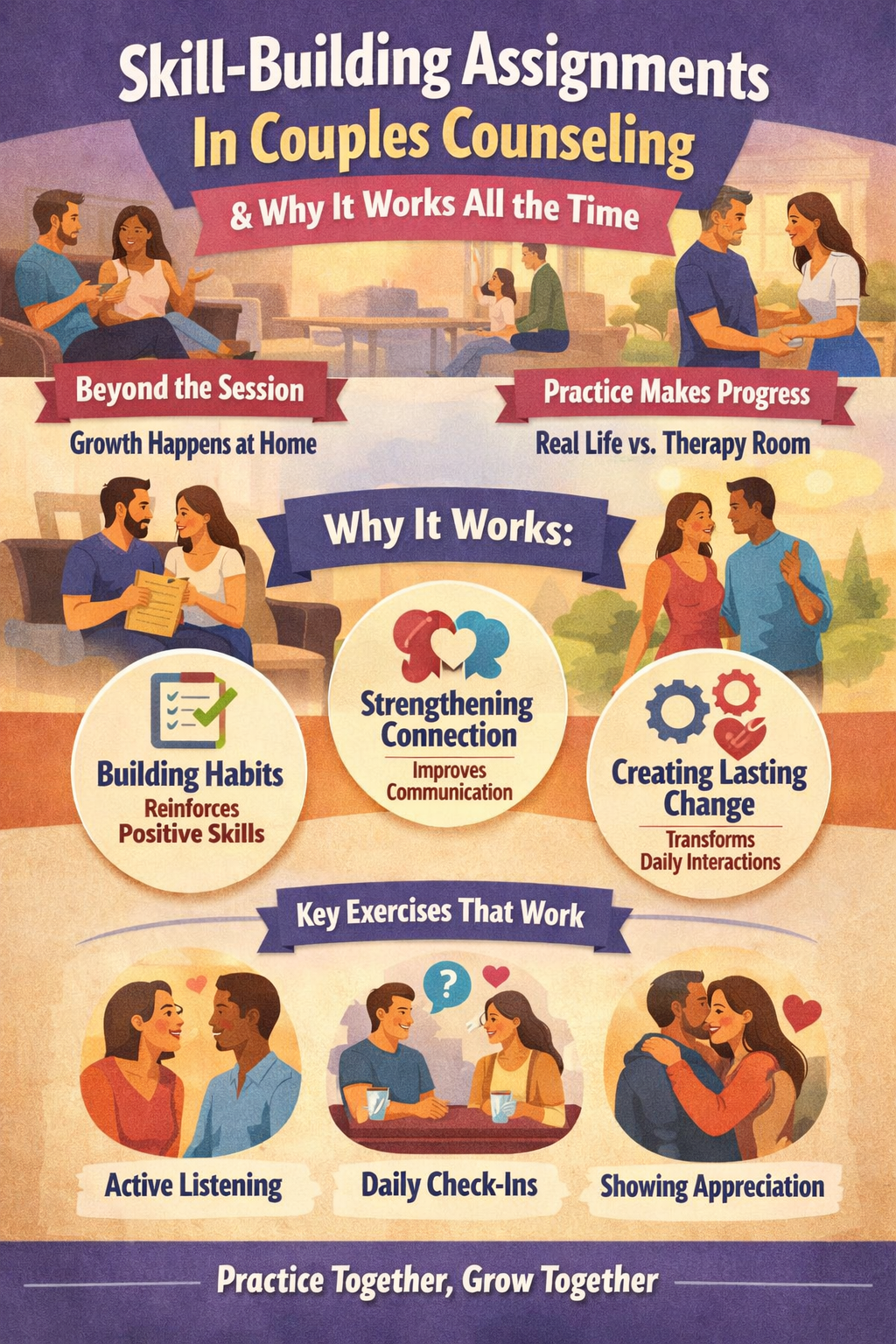
The importance of skill-building assignments in couples therapy: Why collaborative practice outside of therapy sessions has greater impact than in-session work, and universally effective strategies for relationship growth
Couples therapy is often misunderstood as something that happens only inside the therapist’s office, within the boundaries of a weekly session. In reality, the most meaningful change rarely happens in that one hour of guided conversation. Instead, it unfolds in the days and moments between sessions, when couples are living their real lives—navigating stress, miscommunication, emotional triggers, and daily responsibilities. This is where “skill training” assignments become essential. They bridge the gap between insight and transformation, turning awareness into behavior and intention into habit.
Skill training assignments are structured exercises given by the therapist for couples to practice outside of sessions. These assignments are not busy work; they are the core mechanism through which therapy becomes effective. During sessions, couples often gain clarity. They may understand patterns, identify emotional triggers, and even experience moments of connection and resolution. However, understanding something intellectually is very different from applying it under real-life emotional pressure. Skill training assignments create opportunities to practice new behaviors in the exact environments where old patterns used to dominate.
One of the primary reasons work outside the therapy room is more impactful than work inside it is context. In a therapy session, the environment is controlled, calm, and facilitated by a professional whose role is to guide and mediate. Couples are often more regulated emotionally, more reflective, and more intentional in their communication. But real relational difficulty does not occur in controlled environments. It happens in moments of fatigue after a long workday, during financial stress, in parenting disagreements, or when unresolved emotional wounds are triggered unexpectedly. Skill training assignments allow couples to rehearse healthier responses directly within these real-life conditions, where change actually matters.
Another reason external practice is more powerful is repetition. Change in relationships is not created through single insights, but through repeated experiences that reshape emotional memory. When couples practice communication tools, emotional regulation techniques, or conflict resolution strategies only during therapy, the learning remains theoretical. But when they repeatedly apply those same skills at home, in real arguments or emotional conversations, the brain begins to rewire. Over time, new relational habits replace old defensive patterns. This repetition builds confidence and reduces reactivity, which is often one of the biggest barriers in distressed relationships.
Skill training also empowers couples to take ownership of their growth. Therapy sessions can sometimes unintentionally create dependency on the therapist as the “mediator of truth” or the “only safe space” for difficult conversations. While guidance is important, lasting change requires autonomy. When couples are given structured exercises to complete between sessions, they begin to internalize the process of repair and connection. They learn that healing does not depend on the therapist being present, but on their willingness to practice new ways of relating to each other consistently.
One of the most effective strategies in skill training is structured communication practice. This involves setting aside intentional time at home to talk without interruption, defensiveness, or problem-solving pressure. Couples are often guided to use reflective listening, where one partner speaks while the other listens and then repeats back what they heard before responding. This simple structure slows down emotional escalation and creates a sense of being understood, which is often the foundation of conflict resolution.
Another powerful approach is emotional check-ins. Instead of only discussing problems when conflict arises, couples are encouraged to regularly share their emotional state, stress levels, and needs. This reduces emotional buildup, which often leads to explosive arguments. When partners become more attuned to each other’s emotional world in small, consistent ways, the relationship becomes more stable and less reactive over time.
Behavioral assignments that focus on appreciation and positive reinforcement are also highly effective. Many struggling couples fall into patterns where most communication becomes problem-focused or critical. Structured exercises that require partners to intentionally acknowledge what they appreciate about each other help rebalance emotional perception. This does not ignore problems, but it creates a healthier emotional foundation from which problems can be addressed.
Another important element is repair practice. Every couple will experience misunderstandings or emotional missteps even during healing. Skill training assignments often include learning how to pause, revisit a disagreement, and repair emotional ruptures without escalating into blame or withdrawal. This teaches couples that conflict does not have to end in distance; it can end in reconnection.
Ultimately, the power of skill training assignments lies in their ability to transform therapy from an intellectual experience into a lived one. The therapist’s office becomes a place of learning, while real life becomes the practice field. Without this bridge, couples may leave sessions with insight but little change. With it, they begin to build new relational habits that gradually replace the patterns that once created disconnection.
True relationship growth does not come from perfect conversations in therapy. It comes from imperfect conversations at home that are handled differently than before. It is in those repeated moments of choosing patience over reaction, understanding over defensiveness, and connection over withdrawal that real transformation takes place.
Learn More
The real ONLINE psychological killer: Social media comparison: How anxiety therapy can assist people comparing themselves to fake online social media successes. Social media DETOX is a must.
The phenomenon often referred to as the “real online killer”—social media comparison—can be most effectively understood through the framework of Social Comparison Theory, originally proposed by Leon Festinger. This theory explains that individuals possess an inherent drive to evaluate themselves, often in relation to others, particularly when objective standards are absent. In the context of social media, this natural psychological tendency becomes amplified and distorted due to the highly curated, filtered, and performative nature of online identities. What individuals are comparing themselves to is not reality, but an edited projection of success, beauty, and happiness, carefully constructed to maximize social approval.
This dynamic fosters a persistent pattern of upward social comparison, in which individuals measure themselves against those they perceive as more successful or fulfilled. Unlike balanced real-world comparisons, social media disproportionately exposes users to highlight reels—vacations, achievements, relationships, and aesthetic ideals—while concealing struggle, failure, and emotional complexity. This asymmetry creates a skewed cognitive environment that reinforces maladaptive beliefs such as “I am not enough,” “I am behind,” or “Everyone else has it figured out.” These beliefs are rooted in cognitive distortions, including selective abstraction, overgeneralization, and catastrophizing, which collectively distort an individual’s perception of self and reality.
Over time, repeated engagement in these distorted comparisons can activate and strengthen negative core schemas, particularly those related to inadequacy, rejection, and unworthiness. These schemas operate at a deep, often unconscious level, influencing emotional responses and behavioral patterns. Individuals may begin to experience chronic self-doubt, diminished self-esteem, and a heightened sensitivity to perceived social evaluation. In more severe cases, this can contribute to the development or exacerbation of anxiety-related conditions, including Generalized Anxiety Disorder and social anxiety, characterized by persistent worry, hypervigilance, and physiological symptoms such as restlessness, muscle tension, and difficulty concentrating.
From a neurobiological standpoint, social media platforms are designed to exploit the brain’s reward circuitry, particularly the dopaminergic system. Intermittent reinforcement—through likes, comments, and shares—creates a variable reward schedule similar to that seen in gambling behaviors. This unpredictability strengthens compulsive engagement, as users repeatedly check their devices in anticipation of social validation. However, this external reinforcement gradually shifts the individual’s locus of self-worth from internal to external sources, making self-esteem increasingly contingent upon digital feedback. The result is a fragile and unstable sense of identity that fluctuates based on perceived online approval.
Additionally, the constant exposure to idealized images and lifestyles can lead to identity diffusion, particularly among individuals in formative developmental stages. Rather than cultivating an authentic sense of self, individuals may begin to model their identity based on external templates, striving to replicate what is socially rewarded online. This process can create internal conflict, as the “performed self” diverges from the “experienced self,” leading to emotional dissonance, dissatisfaction, and a sense of inauthenticity.
Therapeutic intervention plays a critical role in addressing the psychological impact of social media comparison. Approaches grounded in Cognitive Behavioral Therapy are particularly effective in targeting the cognitive and behavioral mechanisms underlying this phenomenon. CBT focuses on identifying and restructuring maladaptive thought patterns, helping individuals challenge the validity of their comparisons and reframe their interpretations of online content. For example, clients are guided to recognize that social media posts represent selective self-presentation rather than objective reality, thereby reducing the emotional intensity associated with upward comparison.
Beyond cognitive restructuring, therapy also emphasizes the development of metacognitive awareness—the ability to observe one’s thoughts without becoming fully identified with them. This awareness allows individuals to disengage from automatic comparison processes and cultivate a more balanced and compassionate self-perspective. Techniques such as mindfulness-based interventions further support emotional regulation by grounding individuals in the present moment and reducing rumination on perceived inadequacies.
A social media detox emerges as a crucial behavioral intervention within this framework. From a psychological standpoint, detoxification functions as a form of stimulus control, reducing exposure to triggers that perpetuate comparison and emotional distress. By intentionally limiting or eliminating social media use for a defined period, individuals create space for cognitive recalibration and emotional recovery. This process allows the nervous system to stabilize, decreases reliance on external validation, and encourages the reestablishment of intrinsic sources of self-worth.
Importantly, a detox is not merely about avoidance, but about intentional re-engagement with one’s internal world. During this period, individuals are encouraged to reconnect with values, goals, and activities that foster a sense of competence, autonomy, and authenticity. This aligns with principles from self-determination theory, which emphasizes the importance of intrinsic motivation in psychological well-being. As individuals shift their focus from external comparison to internal alignment, they begin to rebuild a more stable and resilient sense of identity.
To put it in layman terms, social media comparison happens because of a mix of how we think, how we feel, and how social media is designed to keep us engaged. The platforms themselves aren’t the real problem, but the way they highlight perfect, edited moments can make our natural habits—like comparing ourselves—much stronger and more harmful. This can slowly affect how we see ourselves and lower our confidence or happiness.
Fixing this isn’t just about one change—it takes a few things working together. It means becoming aware of your thoughts, learning how to manage your emotions, and changing certain habits, like how often or why you use social media. With support, like therapy, and by taking intentional breaks from social media, people can step out of the constant comparison cycle. Over time, this helps them reconnect with who they truly are, build real confidence, and develop a healthier relationship with both themselves and the online world.
Learn More
How cognitive distortions drive anxiety and how therapy can address them: the various ways we interpret everyday challenges and their impact on our emotions
Anxiety is more than just occasional worry—it’s a persistent, often invisible burden that can shape how we view ourselves, others, and the world around us. One of the key reasons anxiety takes hold is the way our minds interpret daily experiences. Our thoughts are not always neutral; they are filtered through mental shortcuts and patterns known as cognitive distortions. These distortions are habitual ways of thinking that exaggerate danger, personalize negative events, or twist reality in ways that fuel emotional distress. While everyone experiences them from time to time, when these distorted thoughts become automatic, they can make ordinary challenges feel overwhelming, unmanageable, or even threatening.
Take, for instance, a common scenario: a person receives a brief critique from their manager on a work project. A neutral mind might interpret this as constructive feedback, a chance to improve, or simply a normal part of professional growth. Someone under the influence of cognitive distortions, however, might immediately think, “I’m terrible at my job. I’ll never succeed. Everyone thinks I’m incompetent.” Suddenly, a simple piece of feedback has escalated into a full-blown crisis in the mind, sparking anxiety, sleeplessness, and even avoidance of future projects. This pattern illustrates the distortion of “catastrophizing,” where the mind automatically jumps to the worst-case scenario, ignoring context or evidence.
Another common example can be found in social situations. Imagine receiving a text from a friend that is brief or delayed. A rational interpretation might be, “They’re busy; they’ll reply later.” Cognitive distortions, however, can transform this into spiraling worry: “They must be upset with me. I probably did something wrong. They don’t like me anymore.” This distortion, known as “mind reading,” assumes we know others’ thoughts and intentions, often in a negative and inaccurate way. Anxiety grows because the mind fabricates threats that may not exist, and the body responds as if danger is real.
Cognitive distortions can also distort how we interpret setbacks. Picture missing a workout because of a busy schedule. A balanced perspective might say, “I’ll get back on track tomorrow.” A distorted interpretation could be, “I can never stick to anything. I’m lazy and undisciplined. I’ll never reach my goals.” Suddenly, a single missed day feels like evidence of permanent failure, and anxiety about long-term outcomes intensifies. Over time, these small daily distortions compound, creating a persistent sense of worry and inadequacy.
Therapy offers a structured and effective way to address these distorted thinking patterns. Cognitive Behavioral Therapy (CBT), one of the most researched and widely used approaches, helps individuals identify when their thoughts are inaccurate or exaggerated. It then guides them in examining the evidence for and against these beliefs, teaching them to replace automatic distortions with more balanced, realistic interpretations. For example, in the workplace critique scenario, therapy can help the client reframe their thinking: “One critique doesn’t define my abilities. I’ve successfully completed many projects, and this is a chance to improve.” Over time, this practice rewires thought patterns, reducing the emotional intensity that previously accompanied minor triggers.
Therapy also incorporates tools for regulating the physical and emotional response to anxiety. Mindfulness techniques help people stay present, preventing the mind from spiraling into catastrophic future scenarios. Grounding exercises anchor attention to the present, easing the rush of worry. Breathing techniques calm the nervous system, reducing the physical symptoms that often accompany distorted thinking, such as heart palpitations, rapid breathing, or tense muscles. These strategies create a feedback loop: calmer physical states help the mind interpret situations more realistically, further reducing anxiety.
Relatable examples of cognitive distortions abound in everyday life. Students may interpret a single low grade as proof they are “not smart enough,” ignoring the context of overall performance. Parents may see a child’s tantrum and immediately think, “I’m failing as a parent,” despite evidence of consistent nurturing and care. People navigating relationships may misinterpret neutral expressions or delayed responses as rejection or disinterest, fueling anxiety in ways that undermine connection. In each case, the distortion amplifies emotional reactions, making ordinary life experiences feel fraught with danger or failure.
Over time, the cumulative effect of cognitive distortions is profound. They affect not just mental health but decision-making, relationships, work performance, and overall quality of life. They can lead to avoidance behaviors—skipping social events, postponing tasks, or withdrawing from loved ones—because the mind predicts negative outcomes that may never occur. In essence, cognitive distortions create a self-reinforcing cycle: distorted thoughts trigger anxiety, anxiety confirms distorted thinking, and the cycle continues.
The good news is that therapy can break this cycle. By making the mind’s distortions visible, giving clients tools to challenge them, and teaching practical coping strategies, therapy empowers individuals to take control of their emotional lives. They learn to see challenges as manageable rather than catastrophic, setbacks as temporary rather than permanent, and social cues as neutral rather than threatening. Gradually, this fosters resilience, confidence, and a sense of emotional stability.
In conclusion, cognitive distortions are often silent drivers of anxiety, shaping our interpretations of everyday events in ways that magnify stress, fear, and self-doubt. They turn minor challenges into major crises in the mind and fuel emotional patterns that interfere with life. Therapy, particularly evidence-based approaches like CBT, provides tools to identify, challenge, and reframe these distorted thoughts, restoring balance and perspective. By learning to reinterpret daily experiences more accurately, individuals can reclaim a sense of control over their emotions, navigate life’s challenges with confidence, and experience less anxiety in the moments that matter most.
Learn More
Depression and the Fear of False Improvement: The Hidden Cost of Rapid Self-Growth
Personal growth has become one of the defining pursuits of modern life. From social media feeds filled with inspirational quotes to an endless supply of podcasts, books, and courses promising rapid transformation, the idea of “becoming your best self” is omnipresent. On the surface, this emphasis on self-improvement seems positive—encouraging individuals to reflect, learn, and grow. Yet, beneath the surface lies a subtle, often overlooked danger: the fear of false improvement and the emotional toll it can take, particularly for those already struggling with depression.
Depression is not simply sadness; it is a pervasive sense of emptiness, hopelessness, and self-doubt. When individuals dealing with depression encounter the modern culture of rapid self-improvement, the pressure to “fix themselves” quickly can feel unbearable. They are constantly confronted with the expectation that change should be visible, measurable, and swift. Social media amplifies this effect, showing carefully curated snapshots of other people’s growth—smooth transformations, perfect routines, and seemingly effortless success. The unspoken message is clear: if you are not improving at the same pace, you are failing.
This expectation sets the stage for a phenomenon that could be called the fear of false improvement. Individuals may attempt to follow the self-help advice, adopt new routines, or push themselves toward ambitious goals, but the results rarely appear as quickly as promised. Progress in personal growth, particularly when dealing with mental health challenges, is rarely linear or instantaneous. Yet the constant comparison to idealized timelines can create a sense of inadequacy, triggering self-criticism, frustration, and, paradoxically, deepening depressive symptoms. Instead of feeling empowered by growth, people may feel more stuck, more hopeless, and more like they are failing at life itself.
The problem is compounded by the culture of overachievement that often accompanies personal growth rhetoric. High expectations, when unmet, inevitably bring high disappointment. The more one internalizes the belief that they should be improving rapidly, the more painful every perceived failure becomes. The very tools designed to inspire growth—goal-setting, self-tracking, affirmations, visualization—can transform into instruments of pressure, amplifying feelings of guilt, shame, and inadequacy. Depression, already a condition that feeds on negative self-perception, is uniquely vulnerable to this trap.
Moreover, the notion of “false improvement” introduces another layer of stress. Individuals may fear that even when they make progress, it is only superficial—performative rather than genuine. They may question whether their growth is real or just a temporary mask to appear functional, capable, or happy. This fear can lead to anxiety, self-doubt, and emotional paralysis, creating a vicious cycle where the pressure to improve fuels the very symptoms they are attempting to overcome.
The cultural obsession with rapid results also undermines patience and self-compassion, both essential components of authentic personal growth. Real change—whether in mindset, behavior, or emotional regulation—requires time, consistent effort, and often the willingness to experience setbacks. The promise of instant improvement not only misrepresents reality but can also make slow progress feel like failure. When every small misstep is magnified by the expectation of fast transformation, individuals may retreat from growth altogether, reinforcing feelings of hopelessness and depression.
Addressing this problem requires a shift in how personal growth is approached. Growth should be reframed as a journey rather than a race. Progress, particularly when it involves mental health or deep-seated behavioral change, is rarely linear, and the timeline is unique to each individual. Emphasizing small, sustainable improvements, celebrating incremental successes, and accepting setbacks as part of the process can reduce the emotional toll of high expectations. Equally important is fostering self-compassion, the ability to treat oneself with patience, kindness, and understanding even in moments of perceived failure.
Ultimately, the fear of false improvement highlights a critical paradox of modern self-help culture: the very tools designed to empower can inadvertently exacerbate distress when expectations outpace reality. Personal growth remains a valuable pursuit, but it must be approached with mindfulness, patience, and realistic goals. By embracing the slow, often messy process of genuine transformation, individuals can protect themselves from the hidden dangers of rapid improvement culture and cultivate meaningful, lasting change without the added burden of depression and self-doubt.
Learn More
Some Negative Outcomes of Long-Term Relationships Related to Physical Desires: Strategies for Keeping the Spark Alive and Healthy
Long-term relationships and marriages are often built on deep emotional bonds, shared experiences, and mutual support. Over time, however, many couples face challenges when it comes to physical desire. It’s a natural aspect of human relationships that sexual attraction and intimacy can fluctuate, and without conscious effort, these changes can lead to frustration, emotional distance, or even resentment. Understanding the negative outcomes and applying strategies to maintain a healthy sexual connection is essential for sustaining a thriving long-term relationship.
One of the most common negative outcomes in long-term relationships is the decline in sexual frequency or desire. Daily responsibilities, work stress, childcare, and aging can contribute to a reduced libido for one or both partners. When sexual needs are unmet or mismatched, partners may feel rejected, unappreciated, or emotionally disconnected. Over time, this can erode trust and intimacy, making partners less likely to openly communicate their desires and frustrations. In some cases, individuals may seek fulfillment outside the relationship, either emotionally or physically, which can create further tension and risk the stability of the partnership.
Another challenge is the development of sexual monotony. Couples who have been together for many years often fall into predictable routines, where sexual activity becomes habitual rather than exciting. While familiarity is comforting, it can dull the thrill of physical intimacy and reduce emotional excitement. Over time, this can lead to dissatisfaction, even if the relationship is otherwise strong. Additionally, physical changes such as hormonal shifts, weight fluctuations, or health issues can affect sexual performance or self-confidence, further complicating the dynamic.
Despite these challenges, there are effective strategies for keeping the spark alive in long-term relationships. Open and honest communication is the cornerstone. Couples who regularly discuss their desires, fantasies, and concerns create a safe space where intimacy can flourish. This includes discussing not only physical needs but emotional needs, as both are deeply intertwined. Active listening, empathy, and non-judgmental dialogue help partners feel understood and valued, enhancing sexual and emotional connection.
Another strategy is prioritizing quality time and novelty in the relationship. Physical desire thrives on excitement, anticipation, and emotional closeness. Scheduling date nights, weekend getaways, or even small, intimate moments at home can help maintain a sense of romance. Exploring new sexual experiences together, whether through trying new positions, role-playing, or introducing sensual elements like massage or shared fantasies, can reignite passion and curiosity. Creativity and playfulness often counteract monotony and make intimacy feel fresh and rewarding.
Physical and emotional self-care also plays a vital role. Maintaining individual health, fitness, and confidence directly impacts sexual desire and performance. Partners who feel good about themselves are more likely to engage actively and positively in physical intimacy. Similarly, practicing stress management, mindfulness, and emotional regulation can prevent external pressures from undermining sexual connection.
Lastly, couples may benefit from seeking professional guidance when challenges persist. Sex therapy, counseling, or relationship coaching can provide structured tools to address desire discrepancies, rekindle intimacy, and develop strategies for long-term satisfaction. Therapy can also help partners navigate sensitive issues like trauma, performance anxiety, or sexual dissatisfaction in a safe and constructive environment.
In conclusion, long-term relationships are vulnerable to declines in physical desire due to routine, stress, life changes, and personal insecurities. While these challenges are common, they are far from insurmountable. Through open communication, intentional romance, creative exploration, self-care, and professional support when necessary, couples can sustain a healthy, passionate, and fulfilling physical connection. The key is to treat intimacy as an ongoing journey rather than a static achievement—keeping the spark alive requires curiosity, commitment, and care, but the rewards are a deeper bond and a more vibrant partnership. Being adventurous in the bedroom goes beyond just the physical act. When both partners put time and energy into intimacy, the possibilities are endless for a healthy, exciting, and creatively fulfilling sexual journey.
Learn More
Why anxiety can make you fear happiness or calm and strategies on how to eliminate this fear with psychotherapy. Take control of your mental health with the right modality!
It sounds contradictory, but many people who struggle with anxiety are not only afraid of stress—they are afraid of calm. Moments of happiness, peace, or emotional stability can trigger discomfort, racing thoughts, or even panic. Instead of enjoying the quiet, the mind begins scanning for danger. Instead of embracing joy, the body tightens as if preparing for impact. If this has happened to you, you are not broken. You are conditioned.
Anxiety is not just an emotion; it is a survival response. Over time, when someone experiences chronic stress, trauma, unpredictability, or repeated disappointment, the nervous system adapts. It learns that vigilance equals safety. Hyperawareness becomes protective. Worry becomes preparation. Tension becomes readiness. When this pattern is repeated long enough, the brain wires itself to believe that staying on guard prevents pain.
The problem is that once the nervous system is trained to operate in survival mode, calm feels unfamiliar. And what is unfamiliar often feels unsafe. If your body has spent years bracing for impact, relaxation can feel like vulnerability. The silence after chaos can feel suspicious. Peace can feel like “the calm before the storm.” The mind may whisper, “Something bad is about to happen,” simply because things are going well.
There is also a phenomenon known as fear of positive emotion. For some individuals, happiness in the past was followed by loss, criticism, betrayal, or trauma. The brain connects joy with danger, not because joy is dangerous, but because it was once paired with pain. If you allowed yourself to feel hopeful and were later hurt, your system may have concluded that hope is risky. Anxiety then steps in as a shield. It dulls excitement. It questions good news. It creates “what if” scenarios. It believes it is protecting you from future disappointment.
Control plays another powerful role. Anxiety gives an illusion of control. When you worry, you feel like you are preparing. When you analyze every possible outcome, you feel proactive. Calm, however, requires surrender. It requires trusting the present moment without rehearsing catastrophe. For someone accustomed to controlling outcomes through hypervigilance, letting go can feel terrifying. The mind may think, “If I stop worrying, I’ll miss something important.” This belief keeps the anxiety cycle intact.
Neurologically, this makes sense. The amygdala, the brain’s alarm system, becomes hypersensitive with chronic anxiety. It scans constantly for threats, even neutral or positive ones. Meanwhile, the prefrontal cortex, responsible for rational thinking and emotional regulation, can become overridden by survival responses. The body reacts before logic has a chance to intervene. This is why anxiety during happy moments feels automatic and difficult to control.
Psychotherapy is powerful because it addresses both the cognitive patterns and the physiological conditioning behind this fear. It does not simply tell you to “relax.” It helps retrain your entire system to experience safety again.
One of the first steps in therapy is psychoeducation. Understanding how anxiety works reduces secondary fear. When you learn that your nervous system is reacting out of habit—not because danger is present—you begin separating sensation from reality. Knowledge alone can reduce intensity because the unknown becomes understood.
Cognitive-based therapies help uncover the unconscious beliefs driving fear of calm. Thoughts such as “If I’m happy, something bad will follow,” “I don’t deserve peace,” or “Relaxing makes me weak” are brought into awareness. These beliefs are not criticized; they are explored. Where did they originate? What experiences shaped them? Are they still accurate today? Through restructuring and reframing, the brain gradually adopts healthier interpretations.
For individuals whose anxiety is rooted in trauma or chronic stress, somatic and trauma-informed approaches are essential. Anxiety is not only stored in thoughts; it is stored in the body. Muscle tension, shallow breathing, digestive issues, and sleep disturbances are all signs of a system stuck in survival mode. Therapeutic modalities that focus on body awareness, breath regulation, and gradual nervous system recalibration allow calm to be introduced slowly and safely. The goal is not forced relaxation but regulated safety.
Exposure-based strategies are also useful, but in a nuanced way. Instead of exposing someone to feared external situations, therapy can involve exposure to positive internal states. For example, practicing sitting with calm for short periods and noticing the urge to escape. Gradually increasing tolerance for peaceful sensations teaches the nervous system that nothing catastrophic happens when you relax. This builds emotional resilience.
Mindfulness-based therapies help individuals observe anxious thoughts without immediately reacting to them. Rather than fighting the thought “This won’t last,” you learn to notice it as a mental event, not a prophecy. Over time, this decreases the brain’s reactivity and increases emotional flexibility.
For some clients, deeper work involves identity reconstruction. When anxiety has been present for many years, it can become part of self-concept. You may unconsciously believe that being vigilant is who you are. Therapy helps separate identity from symptoms. You are not your anxiety; you are someone who developed anxiety as an adaptive response.
The process of eliminating fear of happiness does not happen overnight. It requires consistency, patience, and the right modality tailored to your history and nervous system. However, the brain is neuroplastic. It can rewire. Patterns learned through repetition can be unlearned through new repetition. Each time you allow yourself to experience calm without fleeing into worry, you are reshaping neural pathways.
Taking control of your mental health means recognizing that anxiety is not a life sentence. It is a pattern that can be reconditioned. The right psychotherapeutic approach provides structure, safety, and strategy. Whether through cognitive modalities, trauma-focused therapy, somatic work, or integrative approaches, the key is alignment with your specific needs.
Happiness is not a threat. Calm is not a warning sign. Peace does not mean you are unprepared. With effective psychotherapy, you can retrain your mind and body to interpret safety as safety. You can learn that joy does not need to be braced for, and quiet moments do not need to be questioned. When your nervous system feels secure, you no longer fear losing happiness—you learn how to sustain it.
Learn More
Staying on the Mental Edge: How a “Threat-Focused” brain keeps you wired—stressed, anxious and what to do about it. Some strategies that can work!
Have you ever felt like your mind is always on high alert, scanning for problems, risks, or danger, even when everything seems perfectly fine? If so, you’re not imagining it. What you’re experiencing is what psychologists call a “threat-focused” brain—a mind wired to detect threats, anticipate challenges, and stay vigilant at all times. This hyper-alert state may have been essential for our ancestors, keeping them alive in dangerous environments, but in today’s world, it can leave you feeling exhausted, anxious, and perpetually on edge. Understanding why your brain stays in this mode, and learning how to calm it, is key to maintaining focus, resilience, and mental well-being.
A threat-focused brain is always scanning for what could go wrong. It prioritizes negative stimuli and asks questions like, “Is this safe?” or “What could happen if I fail?” While this heightened awareness can help you plan and avoid mistakes, it also keeps your body’s stress systems—cortisol and adrenaline—constantly activated. Over time, chronic stress wears on your mind and body, affecting sleep, focus, decision-making, and even physical health. Headaches, high blood pressure, muscle tension, and digestive issues are all common byproducts of a brain stuck in survival mode. Recognizing the signs of a threat-focused mind—racing thoughts, irritability, and a constant sense of tension—is the first step toward regaining control.
The good news is that there are proven strategies to calm a threat-focused brain without dulling your awareness. One of the most effective methods is mindfulness. By intentionally bringing your attention to the present moment, you signal to your nervous system that it is safe to relax. Mindfulness can take many forms: focused breathing, guided meditation, or simply observing your surroundings without judgment. Even a few minutes a day can retrain your brain to notice opportunities, gratitude, and positive experiences instead of constantly scanning for danger.
Alongside mindfulness, cognitive reframing offers another powerful approach. This involves noticing fear-driven or negative thoughts and consciously questioning their accuracy. Instead of letting your mind spiral into worst-case scenarios, you can remind yourself of your skills, preparation, and past successes. Over time, reframing changes the way your brain interprets stressors, shifting from seeing every challenge as a threat to viewing them as opportunities for growth and problem-solving.
Physical activity also plays a vital role in managing a threat-focused mind. Exercise reduces the buildup of stress hormones, releases endorphins, and improves overall nervous system regulation. Whether it’s a brisk walk, a yoga session, or a swim, movement provides a tangible outlet for tension and mental fatigue. Consistent activity also supports restorative sleep, which is often disrupted in a hyper-vigilant state.
Equally important is the role of social connection. Humans are hardwired to respond to support and reassurance. Talking through worries with trusted friends, family, or support networks provides perspective, emotional release, and the sense that you’re not facing challenges alone. Feeling connected and understood sends a powerful signal to the brain that it’s safe, reducing the constant fight-or-flight response that a threat-focused mind tends to maintain.
What’s key to remember is that a threat-focused brain doesn’t have to be your enemy. It’s a tool—a highly tuned radar system that can help you stay alert and prepared—but it needs guidance. By practicing mindfulness, reframing negative thoughts, moving your body, and nurturing supportive relationships, you can retrain your mind to stay alert without being anxious. You can reclaim control over your mental state, sharpen your focus, and build resilience without living in constant tension.
Ultimately, living with a threat-focused brain is about balance. It’s about harnessing the benefits of vigilance while learning when to relax, when to trust yourself, and when to let go of imagined dangers. By consistently applying strategies that soothe and recalibrate your nervous system, you can stay mentally sharp, emotionally grounded, and ready to thrive in a world that often demands your attention but doesn’t have to drain your peace of mind. Your mind may be wired to notice threats, but with the right practices, you can teach it to notice possibilities too.
Learn More
Parenting challenges of the 21st century: Emotional support strategies for stressed parents and ways to raise kids successfully without the damaging long term effect of stress.
Parenting in the 21st century presents a unique blend of pressures and paradoxes. Never before has the world changed so rapidly, shifted so unpredictably, or demanded so much instant connectivity while simultaneously isolating individuals from deeper support systems. Modern parents are navigating economic uncertainty, constantly connected digital landscapes, heightened social expectations, and fragmented community networks. At the same time, children grow up in environments filled with digital stimulation, academic competition, social comparison, and influences that previous generations could scarcely imagine. This complex context has created a new set of parenting stressors that can affect both parents’ and children’s emotional well-being.
One of the most pervasive challenges today is the influence of technology on family life. Smartphones and screens mediate many interactions, and social media often becomes a measuring stick against which parents compare their own performance. It is common for parents to scroll through curated images of other families, feeling pressure to emulate lifestyles that are often unrealistic and unrepresentative. While technology offers unprecedented access to information and connection, it also fuels anxiety, distraction, and an underlying fear of not doing “enough.” Meanwhile, children are exposed to digital environments at younger ages, increasing the need for parents to monitor online behavior and manage screen time, which can become an additional source of stress for caregivers.
Economic and work-related pressures further compound the emotional load. Many parents juggle demanding careers with caregiving responsibilities, striving to provide financially while also being emotionally available at home. The rise of hybrid and gig-based work models sometimes blurs the boundaries between professional commitments and family time. Long work hours away from home, or the strain of balancing responsibilities, can leave parents feeling exhausted, guilty, and stretched thin. When parents are under constant strain, it can affect their capacity to engage with children patiently, listen deeply, or model healthy stress management.
Adding to these pressures are heightened expectations around children’s achievements. Academic milestones, extracurricular success, and early specialization create an environment in which both parents and children feel the stakes are high. This can lead to over-scheduling, reduced downtime, and a constant sense of urgency. While intentions are rooted in love and aspiration, this persistent intensity can unwittingly transmit stress to children, influencing their own sense of self-worth and emotional regulation.
Despite the complexity of these challenges, it is possible for parents to cultivate emotional well-being for themselves and their children. A critical first step for parents is to care for their own mental health with the same intentionality they apply to their children’s needs. Recognizing personal stress signals, practicing self-awareness, and attending to emotional needs are not indulgences—they are prerequisites for effective caregiving. When parents learn to regulate their emotions, they model for their children how to navigate life’s inevitable ups and downs with resilience. Mindfulness, for example, does not require hours of meditation or special equipment; it can begin with simple moments of awareness between tasks, intentional breathing before responding to a child’s frustration, or sensing one’s own emotional reactions without judgment.
Supportive social connections play a vital role in reducing isolation and sustaining emotional health. Parents often underestimate the power of sharing experiences with others who understand the challenges of raising children in modern contexts. Reaching out to friends, family members, or community groups can provide both validation and perspective. In such interactions, parents can exchange coping strategies, offer encouragement, and remind one another that perfection is neither expected nor possible. Parenting communities, whether online or in person, can help normalize struggles and reduce the burden of feeling solely responsible.
Another key emotional support strategy is reevaluating internal expectations. Parents are often their own harshest critics, operating under unspoken rules about what “good parenting” should look like. Reframing these standards to focus on presence, connection, and attuned care can relieve unnecessary pressure. A parent who approaches challenges with curiosity, humility, and openness is likely to foster a secure emotional environment for their child—even on days when everything does not go as planned.
Children, for their part, thrive when they feel emotionally safe and supported. Emotional safety arises from consistent presence, empathetic listening, and validation of the child’s inner world. When parents acknowledge a child’s feelings and experiences without immediate dismissal or correction, children learn that their emotions are understood and acceptable. This foundational trust builds emotional intelligence, allowing children to recognize and regulate their feelings over time. Rather than striving for behavioral perfection, supporting a child’s emotional experience promotes long-term resilience.
Positive parenting also involves focusing on a child’s internal growth rather than external achievement. Praising curiosity, effort, and persistence—rather than only outcomes—encourages a growth mindset. Children who understand that effort and learning matter more than perfection are less susceptible to performance anxiety. This orientation toward learning, rather than only success, promotes joy, adaptability, and self-confidence.
Problem-solving skills are fundamental to emotional resilience. When children are guided through challenges with supportive dialogue rather than directive instruction, they build confidence in their own capacities. Asking thoughtful questions such as “What do you think could help?” or “How did that make you feel?” invites children to explore options, reflect on experiences, and strengthen their problem-solving abilities. These conversations model critical thinking and reinforce the idea that problems are opportunities for growth, not threats to self-worth.
Parents also play a crucial role in helping children manage stress physically and psychologically. Establishing consistent routines for sleep, meals, and downtime creates a sense of predictability and safety for children. Regular opportunities for play and creative expression provide natural outlets for processing emotions and tension. By creating safe spaces for both structured and unstructured activities, parents help children navigate the world without becoming overwhelmed by stress.
Reducing long-term damaging effects of stress also involves limiting overexposure to stress triggers. This might mean reevaluating overscheduling, setting boundaries around news and media consumption, and creating intentional family rituals that foster connection rather than performance. When stress is chronic and unaddressed, it can shape a child’s nervous system and influence future emotional and physical health. By attending to emotional needs early and consistently, parents create a buffer against the lasting impact of stress.
Ultimately, parenting in the 21st century is a journey of connection, resilience, and intentional presence. While the challenges are real and varied, so too are the opportunities for growth. Parents who attend to their own emotional well-being, cultivate supportive relationships, and foster secure, compassionate environments for their children are laying the foundation for healthy development. A vision of successful parenting does not revolve around perfection or control, but around attuned presence—being fully with one another, learning together, and creating a life shaped by connection rather than stress. When parents and children move through life with awareness, empathy, and mutual support, they build not only strong families but resilient futures.
Learn More
The many negative outcomes of untreated chronic depression: How can it affect your emotional memory and ways to recover them when it does happen: Strategies that can work!
Chronic depression is not simply a prolonged period of sadness; it is a complex condition that, when left untreated, can quietly reshape how a person thinks, feels, remembers, and experiences life. Over time, untreated depression affects emotional memory, distorts self-perception, and alters the brain’s natural ability to process emotions in a balanced way. The longer it persists, the more deeply it can influence behavior, relationships, and overall quality of life.
One of the most significant negative outcomes of untreated chronic depression is its impact on emotional memory. Emotional memory is the way the brain stores and retrieves experiences that carry emotional weight. In depression, the brain develops a strong bias toward negative emotional memories. Painful experiences, failures, losses, and moments of rejection are recalled more easily and with greater intensity than positive or neutral events. Meanwhile, memories associated with joy, success, or connection often fade, feel distant, or seem less meaningful. This imbalance reinforces the belief that life has always been painful and will remain that way, even when evidence suggests otherwise.
Over time, this negative filtering reshapes identity. Individuals may begin to define themselves through their lowest moments, believing that past struggles are proof of personal inadequacy rather than circumstances they survived. This distorted emotional memory can fuel hopelessness, making it difficult to imagine a future that feels different from the past. As a result, motivation declines, decision-making becomes impaired, and avoidance behaviors increase. People may withdraw socially, abandon goals, or stop engaging in activities that once brought fulfillment, further reinforcing depressive patterns.
Untreated chronic depression also affects emotional regulation. The brain becomes less flexible in responding to stress, leading to heightened emotional reactivity or emotional numbness. Small setbacks may feel overwhelming, while positive events fail to register fully. This emotional blunting is particularly damaging because it robs individuals of reinforcement that could otherwise support healing. Relationships often suffer as well, as depression can distort perceptions of others’ intentions, increase sensitivity to criticism, and reduce emotional availability.
Physiologically, prolonged depression is associated with changes in brain chemistry and neural pathways, particularly in areas involved in memory, mood regulation, and stress response. Elevated stress hormones over long periods can impair the brain’s ability to form new positive emotional memories, trapping individuals in a loop where the past feels heavier than the present. Sleep disturbances, fatigue, and cognitive fog further weaken resilience, making recovery feel even more out of reach.
Despite these challenges, emotional memory is not fixed. The brain remains capable of change, even after years of depression. Reversing the effects begins with recognizing that the depressive lens is not an accurate reflection of reality but a learned pattern shaped by untreated illness. Awareness alone can create distance between the individual and the negative narrative depression promotes.
One effective strategy involves intentionally rebuilding emotional memory through repeated positive experiences paired with conscious attention. Depression often prevents positive moments from being fully encoded in memory, so slowing down and deliberately acknowledging moments of safety, connection, or accomplishment helps the brain register them more deeply. Over time, this practice weakens the dominance of negative recall and strengthens emotional balance.
Therapeutic interventions play a critical role in reversing these patterns. Cognitive-based therapies help individuals identify distorted thinking linked to emotional memory and challenge beliefs rooted in past pain rather than present truth. Trauma-informed approaches can help process unresolved emotional experiences that continue to influence current reactions. Mindfulness-based practices train the brain to stay anchored in the present, reducing the tendency to relive emotionally charged memories that no longer serve a purpose.
Behavioral activation is another powerful tool. Even when motivation is low, engaging in meaningful or values-based activities can gradually reintroduce positive emotional input into the brain. These actions create new experiences that, with repetition, begin to reshape memory networks and emotional responses. Over time, the brain learns that effort can lead to reward, even if that reward initially feels muted.
Addressing chronic depression also requires attention to lifestyle factors that support brain health. Consistent sleep, physical movement, proper nutrition, and social connection all influence emotional regulation and memory processing. While these changes may seem simple, they directly support the brain’s ability to heal and adapt.
Most importantly, reversing the effects of untreated chronic depression requires compassion. Many individuals blame themselves for how long they have struggled, unaware that depression itself interferes with the ability to seek help or recognize alternatives. Healing does not mean erasing painful memories; it means integrating them without allowing them to dominate identity or future expectations.
When chronic depression is treated, emotional memory becomes more balanced. The past no longer defines the present, and the future feels open rather than predetermined by pain. With the right strategies, support, and persistence, the brain can relearn hope, restore emotional flexibility, and reconnect individuals with a sense of meaning and possibility that depression once obscured.
Learn More